
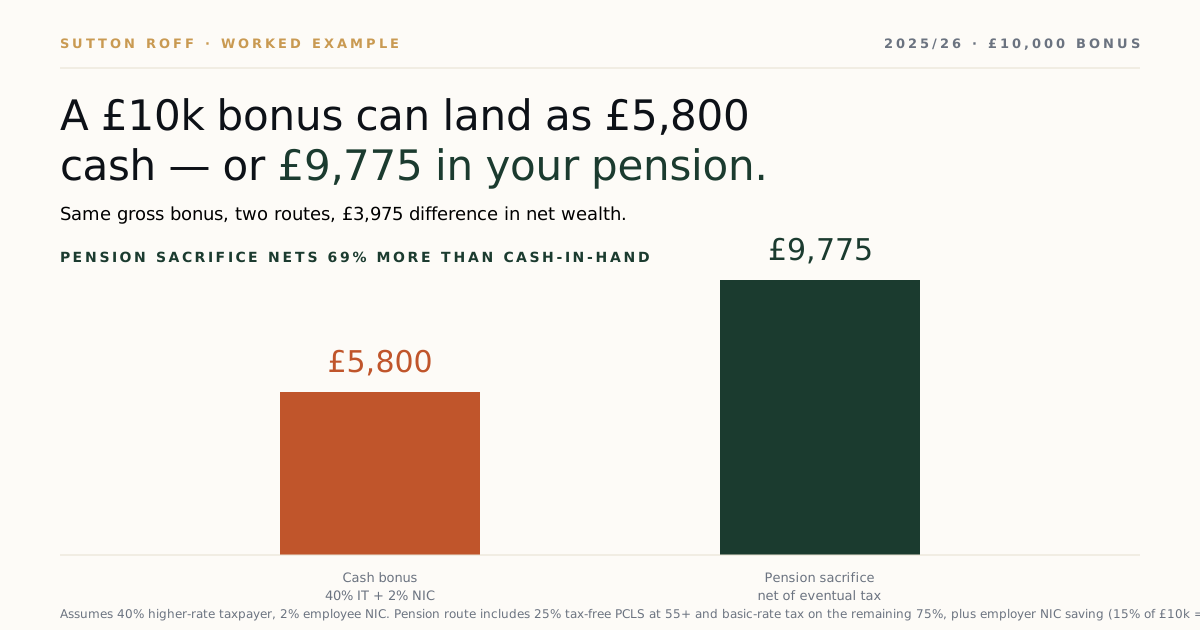
A £10,000 bonus nets £5,800 cash for a higher-rate employee. The same bonus sacrificed into pension nets £9,775 of long-run wealth — same gross, 69% bigger outcome. Higher up the income tree, in the £100k-£125k 60% trap zone, the gap stretches above 140%. We see employees take cash because no one’s modelled the pension version against their actual marginal rate.
The salary sacrifice mechanic
Salary sacrifice is a contractual reduction of your gross pay in exchange for an employer benefit — most commonly an employer pension contribution. You give up £X of salary; your employer pays £X (often plus their NIC saving) into your pension.
The tax magic comes from three savings that don’t apply when you take the money as cash:
- Income tax saved on the sacrificed amount (because gross pay drops).
- Employee NIC saved on the sacrificed amount (employee NIC is 2% on income above £50,270, 8% below).
- Employer NIC saved by the company at 15% — typically passed back into the pension contribution rather than kept by the employer.
The pension contribution itself comes out of pre-tax, pre-NIC income. Add it up and £1 of bonus sacrificed buys far more pension than the same £1 received as cash and then contributed.
Aaron’s £10,000 bonus — cash versus sacrifice
Aaron, a higher-rate-taxpayer marketing manager on £80,000 salary, has just been told he’s getting a £10,000 discretionary bonus. NIC at 2% above the upper limit. Employer NIC at 15% on the bonus.
| Step | Cash bonus | Pension sacrifice (NIC shared back) |
|---|---|---|
| Gross bonus | £10,000 | £10,000 |
| Income tax @ 40% | −£4,000 | £0 |
| Employee NIC @ 2% | −£200 | £0 |
| Employer NIC @ 15% (saved + shared back) | £0 | +£1,500 |
| Lands as | £5,800 cash | £11,500 in pension |
| Future tax (25% PCLS + 75% basic) | — | −£1,725 |
| Net long-run wealth | £5,800 | £9,775 |
Pension future value at access age:
- Of the £11,500, 25% (£2,875) comes out tax-free as PCLS (covered in our 25% pension tax-free guide)
- 75% (£8,625) is taxable on drawdown. At basic rate (most people in retirement): 20% tax = £1,725
- Net wealth from pension route: £11,500 − £1,725 = £9,775
The cash route nets £5,800. The pension sacrifice route nets £9,775. That’s £3,975 (or 69%) more wealth from the same gross bonus — without growth assumptions and without compounding.
In the 60% trap zone, the advantage stretches above 140%
For someone in the 60% trap zone (£100k–£125,140 of income), sacrificing £10,000 saves £6,000 of marginal tax plus restoring lost Personal Allowance, plus 2% NIC. The cash equivalent might be £4,000 net — versus £9,775 of pension wealth. Up over 140% advantage from the pension route. We covered the 60% trap mechanics in our 60% trap piece.
Sacrifice timing: bonuses are perfect
Bonuses are particularly good salary-sacrifice candidates for three reasons:
- You haven’t yet “depended” on the cash for monthly budgeting
- The bonus is often paid in March — just before tax-year end, when AA, HICBC and 60% trap calculations crystallise
- Most bonus schemes allow opt-in/opt-out per cycle, so it doesn’t lock you in for future years
Two things to check before sacrificing
1. Check your annual allowance has room. The standard AA is £60,000 for 2025/26. If you’ve already had £40,000 of pension contributions this year and want to sacrifice another £15,000, you’re fine. If you’ve had £55,000 and want to sacrifice £15,000, the £10,000 excess gets an AA charge that wipes out the relief. Carry-forward (covered in our AA + carry-forward guide) often gives extra headroom.
2. Check the impact on lender affordability. Salary sacrifice reduces your gross salary on the payslip — and most mortgage lenders use that gross salary for affordability calculations. Sacrificing 10-15% of pay can knock 4-5x that off your mortgage borrowing capacity. If you’re remortgaging or buying within 2 years, model this carefully.
What about the lifetime allowance / Lump Sum Allowance?
The Lifetime Allowance was abolished from April 2024. The replacement is the £268,275 Lump Sum Allowance — the cap on the 25% tax-free portion. For most pension savers, this won’t be an issue (you’d need a £1,073,100 pot to fill the LSA). For high earners with seven-figure pots, sacrificing more is still fine but the future tax-free portion is capped.
When this is a bad idea
Don’t sacrifice into pension if your annual allowance is already maxed — you’ll trigger a charge that cancels the relief.
Don’t sacrifice if you’re under 55 and likely to need the cash within a few years — pension money is locked until age 55 (rising to 57 in 2028).
Don’t sacrifice if it pushes your gross pay below the National Minimum Wage — illegal for the employer to allow, which means salary sacrifice doesn’t apply to NIC-or-tax-credit-affected lower earners.
Don’t ignore the mortgage-affordability impact if you’re in the buying or remortgaging window. A 12-month sacrifice pause can be worth tens of thousands of mortgage capacity.
Key takeaways
- Sacrificing a £10k bonus into pension produces £9,775 of long-run wealth versus £5,800 cash net.
- The advantage scales with marginal rate — 60% trap savers see 140%+ better outcomes.
- Employer NIC saving (15%) typically passes back into the pension contribution.
- Reduces adjusted net income — also helps with HICBC and Personal Allowance taper.
- Watch annual allowance ceiling — exceeding triggers a charge.
- Reduces gross salary — careful around mortgage application timing.
FAQ
Can I sacrifice my bonus retroactively?
No — the sacrifice agreement must be signed before the bonus is paid. Once received, it’s already been taxed via PAYE. Some employers have a window between announcement and payment date for sacrifice election.
What if my employer caps sacrifice at 30%?
You can sacrifice up to the cap, but the gross-pay floor (National Minimum Wage) is the absolute limit. Most caps are 30-50% of gross pay; check your employer’s scheme rules.
Does bonus sacrifice affect maternity pay?
Yes — reduced gross pay can lower maternity-pay calculations. Plan around your employer’s averaging period (typically 8 weeks before maternity). Pause sacrifice during the qualifying period if it would meaningfully reduce stat pay.
March bonus coming and you’re hovering around £100k or £150k of total income? Book a free 20-min review — we’ll model cash versus sacrifice against your marginal rate, AA headroom and mortgage-affordability timing so the right call is the obvious one. Specialist UK personal tax planners.