
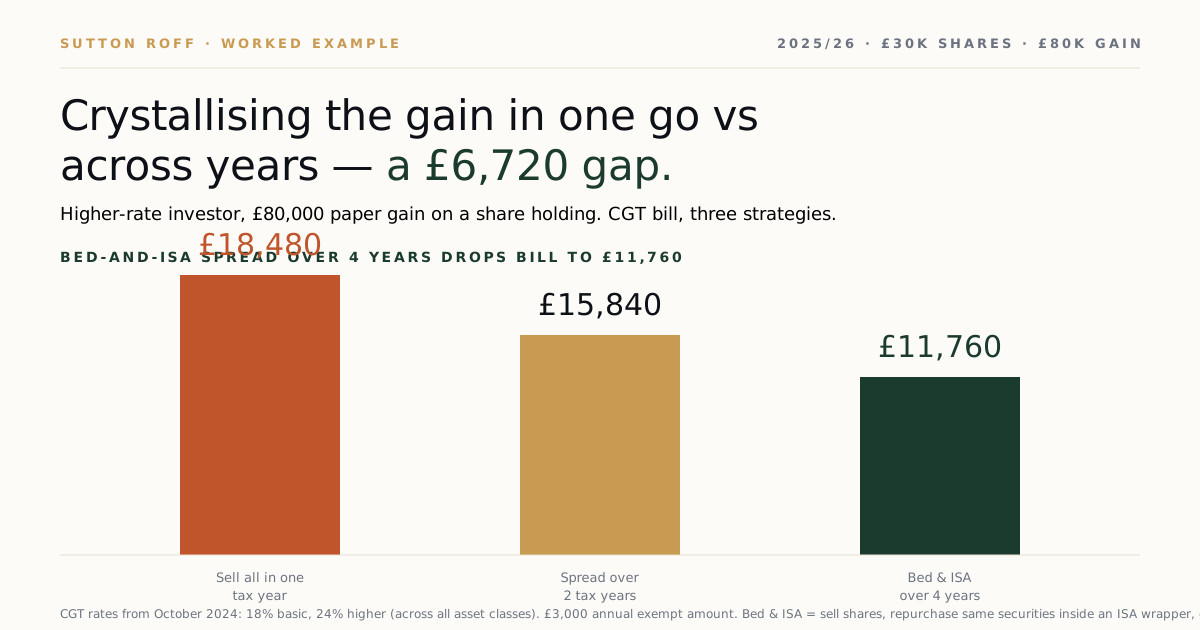
CGT on shares jumped from 10%/20% to 18%/24% on 30 October 2024 — and the £3,000 annual exemption is now £9,300 lower than it was three years ago. We see investors crystallise £80,000 of gain in a single year for £18,480 of CGT, when Bed-and-ISA across four years would have dropped the bill to £11,760 — with all future growth tax-free inside the wrapper.
The 2025/26 CGT picture for shares
Capital gains tax rates on shares (and other non-residential assets) changed on 30 October 2024:
- 18% if your gain falls in your basic-rate band (was 10% before the change)
- 24% if your gain falls in your higher-rate band (was 20% before the change)
The change brought non-residential CGT rates into line with residential property rates. So shares, business assets, crypto and other gains are now taxed at the same rates as second-home and BTL gains.
The annual exempt amount sits at £3,000 per person for 2025/26 — down from £12,300 in 2022/23. The shrinkage of this allowance is what makes the rate change bite harder; you have less protection on the way through.
How marginal rate determines your bill
CGT works by adding the gain to your income for the year and seeing where it lands. So a basic-rate-taxpayer realising a £20,000 gain might end up partly at 18% (the part still in the basic-rate band) and partly at 24% (the part pushed into higher rate). Higher-rate taxpayers’ gains start fully at 24%.
Joint owners get one £3,000 exemption each (£6,000 between a married couple), and each spouse’s individual income determines their CGT rate independently. So a spouse with low other income can absorb gains at the lower 18% basic-rate band — covered with a worked example in our CGT on rental sale piece.
Three sale strategies on Felix’s £80,000 unrealised gain
Felix is a higher-rate-taxpayer investor holding £30,000 of shares with £80,000 of unrealised gain.
| Strategy | How Felix sells | Total CGT | Bonus benefit |
|---|---|---|---|
| A | Sell everything in one tax year | £18,480 | — |
| B | Split sale over 2 tax years (2 annual exemptions) | £17,760 | −£720 |
| C | Bed-and-ISA over 4 tax years | £16,320 | −£2,160 + future growth tax-free |
| D | Spouse transfer + Bed-and-ISA over 4 years | ~£10,080 | −£8,400 + future growth tax-free |
Every layer of optimisation (multi-year, ISA wrapping, spouse transfer) compounds. Big single-year sales are usually the worst possible answer.
Strategy D — Bed and ISA + spouse transfer + multi-year. Move half the shares to a basic-rate spouse first (no-gain-no-loss spouse transfer), then both spouses Bed-and-ISA over 4 years. Each spouse: £40,000 gain over 4 years = £10,000/year. After £3k exemption = £7,000 × 18% (basic rate, partially) = approximately £1,260/year. Combined across both spouses across 4 years: roughly £10,080. Saves £8,400 versus Strategy A.
The progression: every layer of optimisation (multi-year, ISA wrapping, spouse transfer) compounds. Big single-year sales are usually the worst possible answer.
What “Bed and ISA” actually does
Bed and ISA: sell shares, repurchase identical securities inside an ISA. The sale crystallises the gain (using your annual exemption); the repurchase moves the holding into the tax-free ISA wrapper for all future growth and dividends.
The mechanism solves two problems:
- Future growth on the holdings is CGT-free inside the ISA
- You use the £3,000 annual exemption that you’d otherwise lose
The 2025/26 ISA allowance is £20,000 per person. Combined with a spouse, a couple can move £40,000 of shares per tax year into ISA wrappers — and use £6,000 of CGT exemption between them.
Section 104 holding and pooling
For shares of the same class held over multiple purchases, HMRC pools them at the average purchase price (the “Section 104 holding”). So if you bought BlueCo shares at £10, £15 and £20 across three years, your average cost basis is £15 per share. Gain on sale = sale price minus £15.
The “30-day rule” anti-avoidance: if you sell shares and buy back the same shares within 30 days, the new purchase is matched against the sale (forming a fresh holding) rather than going into the Section 104 pool. This is why Bed-and-ISA works (different vehicle = different security for matching) but plain bed-and-breakfast (sell, wait 30 days, rebuy) is the way to crystallise gains while staying outside the wrapper.
Pension contributions to defer or eliminate CGT
Pension contributions reduce your taxable income, potentially keeping you in the basic-rate band where CGT is 18% rather than 24%. So a £10,000 pension contribution made in the year of a CGT event can save 6% on the gain that consequently lands in basic rate rather than higher.
This works best when paired with the £80,000-£100,000 income zone, where the 60% trap (covered in our 60% trap piece) makes pension contributions especially efficient anyway.
Reporting and paying CGT on shares
Share gains report through the standard self-assessment system — the gain goes on the SA Capital Gains supplementary page, and the tax is due by 31 January following the tax year end. So a sale completing 30 May 2025 reports on the 2025/26 return, filed by 31 January 2027.
This is much friendlier than residential property CGT, which has the 60-day reporting and payment window.
Losses: if you sell shares at a loss, declare them. Losses offset gains in the same year first; net unused losses carry forward indefinitely. Many investors fail to register past losses, which means they can’t offset future gains — a documentation-only saving worth thousands.
Founder shares and BADR
Selling shares in your own trading company can qualify for Business Asset Disposal Relief (BADR), with CGT at 14% in 2025/26 (rising to 18% in April 2026 — covered in detail in our EMI scheme guide for context).
BADR conditions: 5%+ holding, working in the company, at least 24 months. Lifetime cap £1m of qualifying gain. So an exit of £1m of qualifying founder shares pays £140k CGT now, £180k from April 2026 — versus £240k at the standard 24%.
When this is a bad idea
Don’t sell to “lock in gains” if you don’t actually need the money — you’re paying CGT today for no reason if the shares will keep growing. Wait, plan, sequence.
Don’t ignore loss carry-forward. Past losses on shares reduce future tax bills indefinitely if registered. Many investors with portfolios from 2020-2022 have unrecorded losses worth thousands.
Don’t try to use the 30-day rule “cleverly” by selling, waiting 31 days and rebuying. The market may have moved against you in 31 days. Bed and ISA gives the tax benefit without the price-movement exposure.
Key takeaways
- CGT rates from October 2024: 18% basic, 24% higher (changed from 10/20%).
- Annual exempt amount £3,000 per person — joint couples have £6,000.
- Bed and ISA wraps holdings for future tax-free growth + uses annual exemption.
- Spouse transfers (no-gain-no-loss) shift gain to lower-rate spouse.
- Multi-year sequencing dramatically reduces total bill across portfolio sales.
- Register share losses even when small — they offset future gains forever.
- BADR at 14% (rising to 18% in April 2026) for qualifying founder shares.
FAQ
Does CGT apply to dividend reinvestment?
No — reinvested dividends don’t trigger CGT at the reinvestment moment. They simply add to the cost basis of your shares. CGT only crystallises on actual disposal.
What about employer share schemes (SAYE/SIP)?
SAYE: gain on exercise is exempt from income tax; subsequent sale CGT-able on the gain over the option price. SIP: shares held in the plan for 5+ years have full CGT exemption on disposal. Powerful tax shelters.
Can I offset crypto losses against share gains?
Yes — CGT is asset-class agnostic for offset purposes. Crypto losses, share losses, property losses all combine in the same tax year against any capital gains. Carry forward indefinitely if not used.
Holding shares with substantial unrealised gains? Book a free 20-min review — we’ll structure a multi-year disposal sequence, identify spouse-transfer opportunities, and audit historical losses that may not have been registered for offset. Specialist UK CGT and investment-tax accountants.