
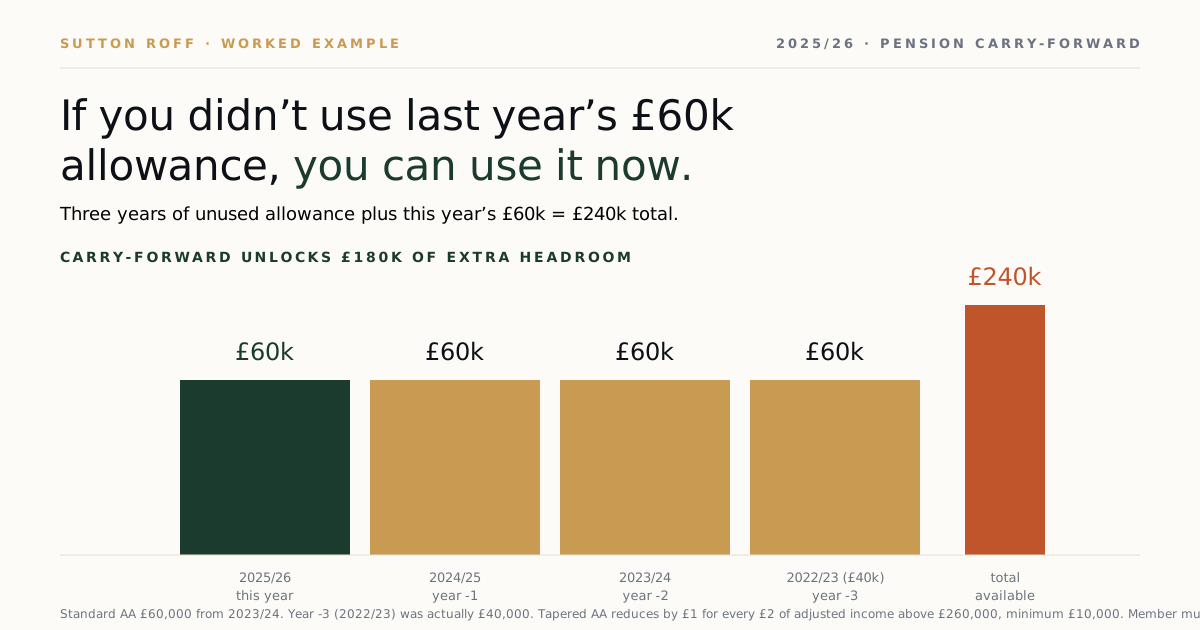
The £60,000 annual allowance is the headline. Carry-forward — bringing forward up to three prior years of unused allowance — is what most savers don’t use, leaving £180,000 of capacity expiring untouched. We see directors with one big-income year (business sale, large bonus, exit event) under-contribute when carry-forward could have absorbed £200,000+ at 60% effective relief.
The basic Annual Allowance for 2025/26
Every UK pension saver gets a £60,000 annual allowance (AA) for the 2025/26 tax year. This is the maximum gross contribution into pensions in the year — including your own contributions, employer contributions, and any salary-sacrifice — that gets full tax relief. Above the AA, contributions trigger an annual allowance charge that effectively claws back the relief.
The AA jumped from £40,000 to £60,000 in April 2023 — a substantial expansion. Before that, the AA had been frozen at £40,000 since 2014.
Carry-forward: the three-year stacking rule
Carry-forward lets you bring forward unused AA from the previous three tax years. So in 2025/26, you can use:
- Current year (2025/26) AA: £60,000
- 2024/25 unused: up to £60,000
- 2023/24 unused: up to £60,000
- 2022/23 unused: up to £40,000 (the lower limit that applied that year)
Maximum theoretical contribution this year: £220,000. Realistically, slightly less depending on prior contributions, but plenty of headroom for a one-off catch-up.
Three rules that make carry-forward work (or not)
1. You must have been a member of a UK pension scheme in each year you want to carry forward from. “Member” means an active or deferred member with a pot. Not the pension scheme of the moment, just any qualifying scheme.
2. You must use this year’s AA first before tapping carry-forward years. So if you want to contribute £150,000, you spend the current £60k first, then 2022/23’s allowance, then 2023/24’s, then 2024/25’s (oldest first within carry-forward).
3. Your contributions can’t exceed your earnings. Personal contributions getting tax relief are capped at 100% of your relevant UK earnings (employment income, self-employment profits — not dividend or rental income). Employer contributions don’t have this cap, so company contributions can exceed your salary.
The Tapered AA — the £260k threshold high earners often miss
If your “adjusted income” exceeds £260,000, your AA tapers by £1 for every £2 above the threshold, down to a minimum of £10,000 at adjusted income of £360,000+. So very high earners on full executive packages can have an AA as low as £10,000 — tiny compared to the standard £60,000.
Adjusted income is not the same as taxable income. It’s broadly your total income plus all pension contributions made in the year (including employer contributions). So a £200,000-salary executive with a £40,000 employer pension contribution has adjusted income of £240,000 — under the threshold and not affected.
For tapered AA savers, carry-forward is even more important — three years of preserved unused capacity at the higher pre-tapered amount can be hugely valuable in a year where business circumstances allow a one-off catch-up.
Anna’s catch-up — £196,000 contribution after selling her tech startup
Anna, a tech founder, sells her shares for £400k in 2025/26. She’s been a Ltd-company director with a small employer pension contribution of £8,000/year for the past four years. Earnings this year exceed £200,000 from a mix of consultancy and the share sale event.
Available headroom:
| Tax year | Standard AA | Anna’s prior contribution | Available headroom |
|---|---|---|---|
| 2025/26 (current) | £60,000 | £0 | £60,000 |
| 2024/25 | £60,000 | £8,000 | £52,000 |
| 2023/24 | £60,000 | £8,000 | £52,000 |
| 2022/23 | £40,000 | £8,000 | £32,000 |
| Total available this year | — | — | £196,000 |
She makes a £196,000 employer pension contribution this year (paid by her Ltd before the sale closes). Corporation tax relief on £196,000 = £37,240 saved at 19%. The pension grows tax-free; the 25% tax-free lump sum will be £49,000 when she reaches 55+.
This is the textbook use of carry-forward: a one-off high-income year, big pension catch-up, big CT relief.
Salary-vs-pension tactical timing
Carry-forward is most valuable when used before a year of unusually high income — a business sale, a large bonus, a property sale. Pension contributions reduce adjusted net income for tapered AA purposes, for the High Income Child Benefit Charge (covered separately in our HICBC piece), and for the £100k–£125k Personal Allowance taper (covered in our 60% trap piece).
So pension contributions don’t just save income tax — they can unlock benefits and allowances elsewhere in the system. The full picture is rarely “pension relief is 40%”; it’s usually “pension relief is 40-67% once you account for what else moves”.
The annual allowance charge
If you contribute above your available AA (current + carry-forward), the excess is added to your taxable income and taxed at your marginal rate. So contributing £80,000 when you have £70,000 of headroom means the £10,000 excess is taxed at your marginal rate, effectively cancelling the relief.
The charge is paid through self-assessment. It’s not a penalty — just a clawback of the relief that shouldn’t have been given.
When this is a bad idea
Don’t contribute beyond your relevant earnings just because carry-forward exists. Personal contributions exceeding your earnings get no tax relief on the excess. Employer contributions don’t have this cap, but the company must have profits or sufficient retained earnings to pay them.
Don’t forget that pension contributions tie up the cash. If you’re under 55 and contributing serious money, you can’t access it for years. Liquidity needs come first.
Don’t ignore the tapered AA if you’re a genuine high earner — exceeding the tapered limit triggers a charge. A pension calculation needs the adjusted-income test before contributing big sums.
Key takeaways
- 2025/26 standard AA is £60,000 (up from £40,000 since April 2023).
- Carry-forward: 3 prior years of unused AA can be used now — up to £160,000 stacked.
- Must have been pension scheme member in each year you carry forward from.
- Use current year first, then oldest carry-forward year next.
- Personal contributions capped at 100% of relevant earnings; employer contributions aren’t.
- Tapered AA cuts the AA for adjusted income above £260,000, down to £10,000.
FAQ
What if I wasn’t a UK resident in prior years?
Carry-forward needs UK pension scheme membership in the relevant year. Foreign pension contributions don’t carry forward. Years of non-residence with no UK pension scheme don’t generate carry-forward capacity.
Do salary-sacrifice contributions count as carry-forward?
Yes — salary sacrifice is treated as employer contributions. They count toward the AA limit and consume the same headroom. Combined personal + sacrifice + employer total against the £60k.
Can I carry forward beyond 3 years?
No — only the 3 prior tax years. Year 4 and beyond is permanently lost. Hence the urgency in years following high contribution — you can’t bank carry-forward indefinitely.
Had a high-income year ahead or behind you? Book a free 20-min review — we’ll calculate your full carry-forward headroom, model tapered AA exposure if your adjusted income exceeds £260k, and structure employer or personal contributions accordingly. Specialist UK pension and tax-planning accountants.