
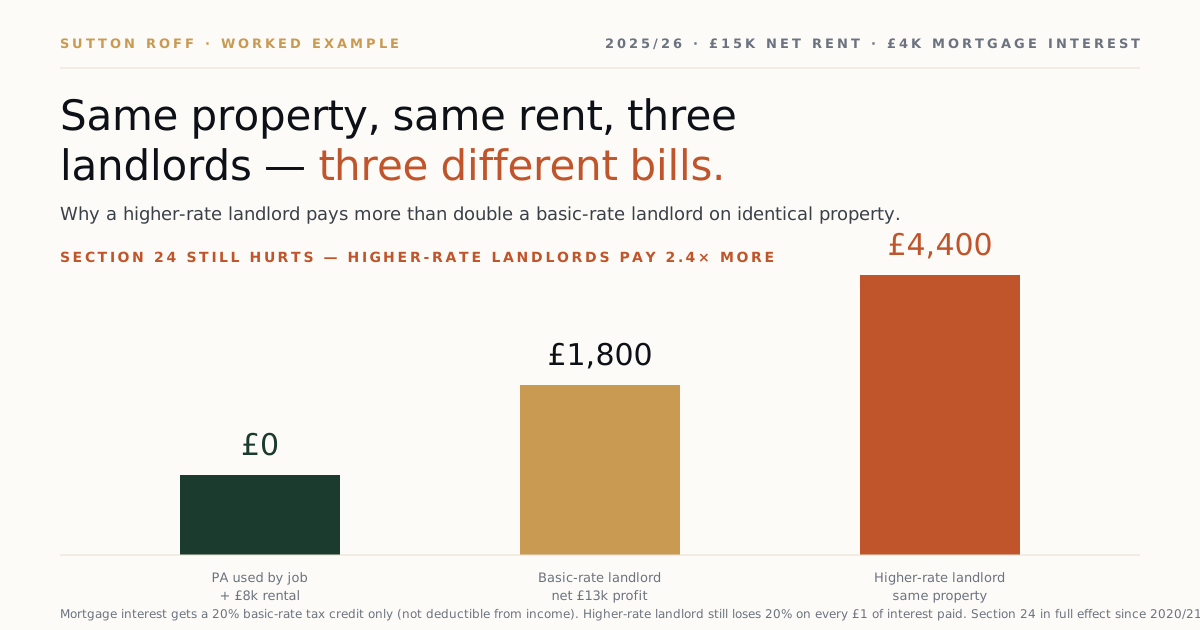
A £15,000 rental flat produces £0 of tax for a retiree, £1,800 for a basic-rate landlord, and £4,400 for a higher-rate landlord. Same property, same rent, same mortgage. Section 24 is why higher-rate landlords now pay 2.4× more on identical property — and why incorporation conversations have surged across leveraged portfolios. We see clients arrive nine months into the tax year still unaware Section 24 changed their effective rate years ago.
The basic mechanic for 2025/26
UK rental income is taxed as part of your normal income under self-assessment. You add net rental profit (rent received minus allowable expenses) to your other income and pay income tax at your marginal rate.
The complication: mortgage interest is no longer fully deductible. Since 2020/21 — when Section 24 rolled in fully — interest gets a 20% basic-rate tax credit instead of being deducted from rental income. That single change is the reason higher-rate landlords now pay roughly 2.4× more tax on the same property than basic-rate landlords.
What is still deductible from rental income (full deduction):
- Letting agent fees and commission
- Repairs and maintenance (not improvements)
- Buildings and contents insurance
- Council tax and utility bills you (not the tenant) pay
- Service charges and ground rent
- Replacement of Domestic Items (furniture, appliances, carpets)
- Travel to and from the property for letting purposes
- Legal fees on lease renewals (not on initial purchase)
- Accountancy fees for preparing the rental computation
Same property, three landlords, three very different bills
BTL flat earning £15,000 gross rent. £4,000 mortgage interest. £2,000 of allowable running costs. So net pre-tax rental profit = £15,000 − £2,000 = £13,000.
Landlord A — Sarah, basic-rate teacher with £30k of other income. Adds £13k rental to £30k = £43k total. All within basic-rate band. Income tax on £13k at 20% = £2,600. Less the 20% mortgage interest credit on £4k = £800. Net rental tax: £1,800.
Landlord B — Mark, higher-rate consultant with £60k of employment income. Adds £13k rental on top — pushes them deeper into the 40% band. Income tax on £13k at 40% = £5,200. Less the £800 credit. Net rental tax: £4,400.
Landlord C — Patricia, retired and accidentally landlord-ing her old house, £15k pension only. Adds £13k rental — fills remaining £12,570 PA, then £430 in basic-rate band at 20% = £86. Less the £800 credit means no tax to pay; the unused credit can’t be refunded. Net rental tax: £0.
Same property, same rent, three different landlords: £0 / £1,800 / £4,400. Section 24 hits Landlord B hardest because they’re paying 40% on the income but only getting a 20% credit on the interest.
The Section 24 trap — taxed on cash you never received
Mortgage interest is no longer “an expense” for tax purposes — it’s a separate 20% credit. That means a leveraged higher-rate landlord can pay tax on income that, in cash terms, never landed in their account.
Imagine £30k gross rent, £25k mortgage interest, £3k other costs. Pre-2020 calculation: £30k − £25k − £3k = £2k profit, £800 tax. Post-2020 calculation: profit is £30k − £3k = £27k, tax at 40% = £10,800, less 20% × £25k credit = £5,000, net tax £5,800. On £2,000 of actual cash profit. The cash position is still £2k positive in both years; the tax position differs by £5,000.
This is why incorporation conversations have surged among higher-rate landlords. We covered the full incorporation worked example in our Section 24 incorporation deep-dive, and the shorter “should I” framing in our put-rental-in-Ltd guide.
The £1,000 property allowance
If your gross rental income is under £1,000 across the year, you don’t need to declare it or register for self-assessment. The “property allowance” — the property cousin of the trading allowance.
Above £1,000 you can either deduct the £1,000 allowance from your gross rent or claim actual expenses — whichever is more favourable. For most landlords with mortgages, actual expenses (plus the interest credit) wins by a mile.
When this is a bad idea
Don’t try to recharacterise mortgage interest as something else (e.g. “fees”, “service charge”) to dodge Section 24 — HMRC has been on this for five years and the rules are robust. The legitimate fixes are: incorporation, splitting ownership with a basic-rate spouse, or downward repricing of leverage.
Don’t ignore the £2,500 (or £10,000 gross) registration trigger if you’ve crossed it for the first time — covered in detail in our self-assessment registration guide.
Key takeaways
- Net rental profit is added to your other income and taxed at your marginal rate.
- Mortgage interest gets a 20% basic-rate tax credit only — not a deduction.
- Higher-rate landlords pay roughly 2.4× the tax of basic-rate landlords on the same property.
- £1,000 property allowance covers very small rentals with no return needed.
- Replacement of Domestic Items relief replaces the old 10% wear-and-tear allowance.
- Repairs are deductible; improvements are capital and only relievable on sale.
FAQ
Do I report rental income on a partnership tax return?
If you and a co-owner formally trade as a property partnership (with deed of partnership), yes — partnership return + individual returns. Most jointly-owned property between spouses is just joint ownership reported on each spouse’s individual SA, not partnership.
What if my tenant pays bills directly?
You don’t include those bills in your rental income or expenses. The bills are between tenant and utility company. Your rental income is what the tenant actually pays you.
Are letting agent fees included in the £1,000 property allowance?
The £1,000 allowance is gross rental income vs deductible costs. Above £1,000, you can either claim the £1,000 or claim actual expenses (including agent fees). Not both. Most landlords with mortgages claim actual expenses.
Rental tax bill jumped this year and you’re not sure why? Book a free 20-min review — we’ll run the full Section 24 maths on your portfolio and show you whether incorporation, ownership splits or deleveraging actually pays back for your situation. Specialist UK landlord and property tax accountants.