
Married couples with jointly-owned property hit a default rule almost no one knows: rental income is taxed 50:50 regardless of actual ownership. Form 17 plus a deed of trust unlocks splits based on real beneficial ownership — and saves £1,000-£3,000/year for higher-rate-and-basic-rate couples. We see clients miss the 60-day filing window on Form 17 and lose the entire saving until the next change in beneficial ownership.
The default 50:50 rule
For property held in joint names by spouses or civil partners, HMRC’s default position is that rental income is taxed 50:50. This applies even when the actual beneficial ownership is unequal — say, the wife inherited 70% and the husband bought in for 30% — and even when one party is paying all the mortgage and recording all the rental receipts.
The default exists because spouses are deemed to share property income equally for tax simplicity. But it causes a real cash drag for couples with mixed marginal rates: a higher-rate husband and basic-rate wife both pay tax on £10,000 each rather than letting the basic-rate spouse soak up the income at the lower rate.
What Form 17 actually does
Form 17 (“Declaration of beneficial interests in joint property and income”) tells HMRC that the rental income should be split based on the actual beneficial ownership rather than the 50:50 default.
For Form 17 to be valid, three things must be true:
- The actual beneficial ownership must be unequal (e.g. 99:1 or 70:30).
- The income split must match the ownership split.
- You must file Form 17 with HMRC within 60 days of signing the declaration.
If any of those isn’t true, Form 17 is invalid and HMRC reverts to the 50:50 default. The 60-day window is unforgiving — file on day 61 and you have to wait for the next change in beneficial ownership before trying again.
The deed of trust that makes it possible
Form 17 doesn’t change ownership; it just declares what the ownership already is. So before filing, you usually need to change the beneficial ownership with a deed of trust — a written declaration that, while the legal title sits jointly (e.g. on the Land Registry), the beneficial interest is split, say, 99:1.
The deed of trust:
- Doesn’t require a Land Registry change (legal title can stay joint)
- Can be done at any ratio — 99:1, 95:5, 70:30, 1:99
- Doesn’t usually trigger SDLT for spouses (no consideration)
- Triggers no CGT (interspousal transfers are no-gain-no-loss)
- Costs £200-£500 in legal drafting
Once the deed is signed, Form 17 follows within 60 days, and the new income split applies from that date forward.
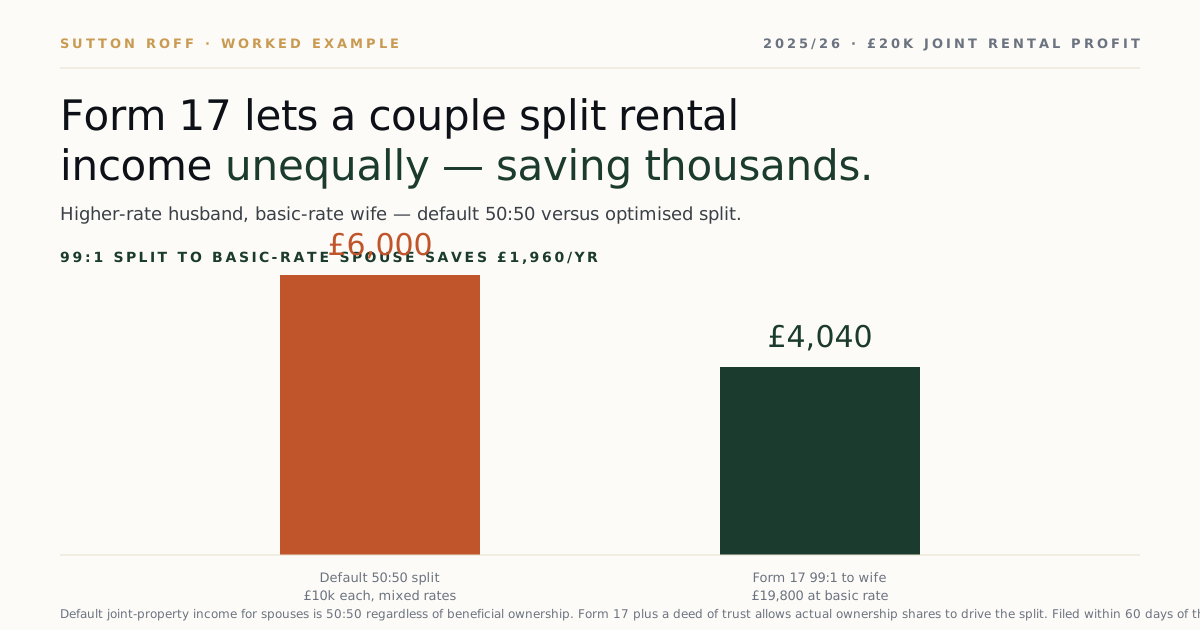
Higher-rate Raj, basic-rate Priya — £20,000 of rental profit
Raj and Priya jointly own a £300,000 BTL flat generating £20,000 net rental profit. Raj earns £80,000 PAYE (higher rate). Priya earns £35,000 PAYE (basic rate).
Default 50:50 split:
- Raj: £10,000 × 40% = £4,000
- Priya: £10,000 × 20% = £2,000
- Total: £6,000
After deed of trust + Form 17 at 99:1 in favour of wife:
- Husband: £200 × 40% = £80
- Wife: £19,800 + £35,000 employment = £54,800 total. £19,800 falls partly in basic rate (up to £50,270) and partly in higher rate (£4,530 above): basic-rate portion £15,270 × 20% = £3,054; higher-rate portion £4,530 × 40% = £1,812. Wife’s total rental tax: £4,866.
- Wait — that’s worse, not better.
The lesson: 99:1 isn’t always optimal. The right split is the one that keeps the basic-rate spouse at the basic-rate threshold, not over it. Rerun:
Optimal split — 76:24 in favour of wife:
- Wife: £15,200 rental + £35,000 employment = £50,200 total — just under £50,270 higher-rate threshold. Wife’s tax on £15,200 rental at 20% = £3,040.
- Husband: £4,800 × 40% = £1,920.
- Total: £4,960
The optimised split saves £1,040 over the default 50:50 — and £x more than the naive 99:1 because the wife isn’t pushed into higher rate. The right answer depends entirely on the wife’s other income.
When 99:1 actually works
99:1 is the right answer when one spouse is genuinely well below the basic-rate threshold and the rental income won’t push them over. A non-working spouse or part-time-earner under £30k of other income can often absorb £15-20k of rental income at basic rate cleanly.
For higher-earning basic-rate spouses (e.g. £45k+), the optimal split is calculated to fill the unused basic-rate band exactly — not to dump everything on them.
Other levers Form 17 unlocks
Beyond annual rental income tax, an unequal beneficial ownership also flows through to:
- CGT on sale — gain splits in the same proportions, with two annual exempt amounts. Covered in our CGT on rental sales guide.
- Mortgage interest credit — the 20% credit is split based on ownership shares.
- Inheritance tax — the deeming for IHT follows beneficial ownership, not legal title.
So a deed of trust set up for income-tax purposes also positions the eventual sale and the eventual estate.
What about unmarried couples?
The 50:50 default only applies to spouses and civil partners. Unmarried co-owners are taxed on the actual income they receive — based on beneficial ownership shares — without needing Form 17. So the form solves a problem only married couples have.
Mixed-rate unmarried couples can simply hold the property in unequal shares and the rental income follows the shares automatically.
When this is a bad idea
Don’t sign a deed of trust just before death — anti-avoidance rules and the 7-year IHT rules can override the structure. Lifetime planning works; deathbed planning doesn’t.
Don’t get the optimal split wrong. Pushing one spouse into higher rate (as in our 99:1 example above) costs more than the 50:50 default. The correct ratio depends on each spouse’s other income and needs annual review as incomes change.
Don’t file Form 17 without a corresponding deed of trust — without unequal beneficial ownership, the form is invalid.
Key takeaways
- Spouses’ jointly-owned property income defaults to 50:50 regardless of actual ownership shares.
- Form 17 + deed of trust unlocks splits based on actual beneficial ownership.
- Must file Form 17 within 60 days of signing the deed.
- Optimal split fills the basic-rate spouse’s band exactly — not always 99:1.
- Changes also flow through to CGT, mortgage interest credit, and IHT positioning.
- Unmarried couples don’t need Form 17 — just hold in unequal shares.
FAQ
Can I revoke Form 17 later?
Yes — you can revert to the 50:50 default by notifying HMRC. Or by changing the underlying beneficial ownership (a new deed of trust + new Form 17 reflecting the new shares).
Does this work for unmarried couples?
No — Form 17 is specifically for spouses and civil partners. Unmarried co-owners are taxed on their actual income shares automatically based on beneficial ownership, no Form 17 needed.
What’s the deed of trust cost?
Typically £200-£500 for a straightforward declaration of unequal beneficial interests. Solicitor or specialist tax accountant can draft. Cheap relative to the £1,000-£3,000/year saving from optimised income split.
One spouse higher-rate, the other basic-rate, both on the deeds of a rental? Book a free 20-min review — we’ll calculate the optimal split (it’s rarely 99:1), draft the deed of trust, and file Form 17 inside the 60-day window. Specialist UK landlord tax accountants.