
Higher-rate landlords with mortgaged BTLs save £1,500-£3,000/year by holding properties in a Ltd company — but the SDLT cost to transfer existing properties at 5% additional dwelling supplement (raised from 3% in October 2024) usually kills the case for single-property landlords. We see clients incorporate prematurely and wait 13+ years for the SDLT outlay to pay back.
The annual saving — and why it tempts every higher-rate landlord
For a higher-rate landlord with mortgage interest, holding rentals personally now costs notably more than holding them in a Ltd. The Ltd structure gets full corporation-tax deduction on mortgage interest — Section 24’s restriction doesn’t apply to companies.
For our standard worked example (£15k rent, £4k interest, £2k costs):
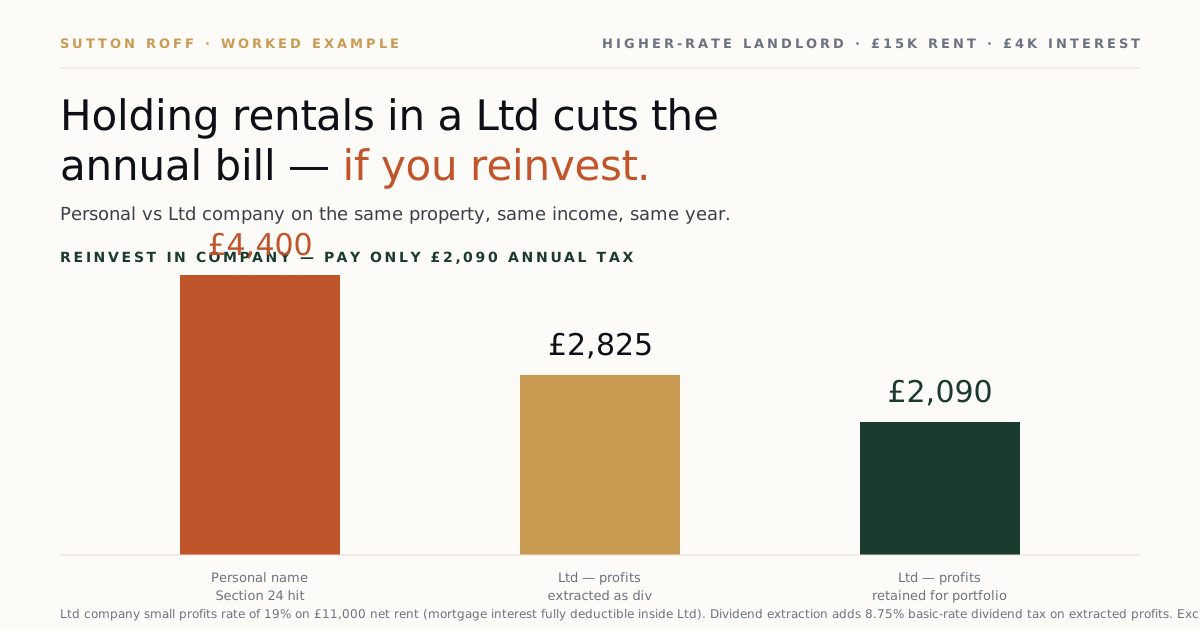
Personal name, higher-rate landlord: £4,400 in income tax (full breakdown in our rental income tax guide).
Ltd company, profits extracted as dividend: Net company profit £15k − £4k − £2k = £9k. CT at 19% small profits rate = £1,710. Director extracts the remaining £7,290 as dividend. After £500 dividend allowance, £6,790 × 8.75% basic-rate dividend tax = £594. Total: £2,304 — saves £2,096 versus personal.
Ltd company, profits retained for portfolio growth: Just £1,710 of CT. Saves £2,690 a year in tax on the same property — at the cost of the cash being locked in the company until you eventually extract or sell.
The £25,000 catch — SDLT to move existing properties
Moving an existing personally-owned BTL into a Ltd company is a sale for tax purposes. The company “buys” the property at market value, paying full SDLT plus the 5% additional dwelling supplement.
For a £350,000 BTL: standard SDLT £7,500 + 5% surcharge £17,500 = £25,000 of SDLT to incorporate one property. That kills the case for most single-property landlords, because the £2,000-3,000 annual saving needs ~10 years to recoup the SDLT outlay.
The exception is incorporation under Section 162 relief — a partnership-style migration that can claim SDLT relief if structured correctly. Walk-through with worked numbers in our Section 24 incorporation deep-dive.
When incorporation genuinely pays back
- Buying new properties. Buy them in the Ltd from day one — you pay SDLT once, and from year one your tax bill is structurally lower.
- Multi-property portfolios run as a partnership. Section 162 relief can roll the portfolio into a Ltd without SDLT — strict rules, but real for the right structures.
- Highly-leveraged portfolios. The bigger the mortgage interest as a share of rent, the worse Section 24 bites and the more incorporation pays.
- Long-hold landlords. 10+ year holds amortise the SDLT cost easily.
- Higher-rate landlords reinvesting. Compounding pre-tax inside a Ltd at 19% beats compounding post-tax at 40% personally — the gap widens every year.
When it doesn’t
- Single-property accidental landlord. SDLT on transfer kills it. Hold personally, or if you must move, do it on the next property purchase rather than this one.
- Basic-rate landlord. Section 24 doesn’t bite — you’re already paying the same effective rate either way.
- Short-hold landlords. Less than 5-7 years of hold rarely amortises the transfer cost.
- Landlords needing the rental cash personally. Extraction adds another tax layer; the savings shrink to £1,500-£2,000/year.
The lender complication
Buy-to-let mortgages for Ltd companies are a different product to personal BTL mortgages. Rates are typically 0.3-0.6 percentage points higher, deposits are higher (25%+), and there are fewer lenders. The interest premium can erode 30-40% of the annual tax saving.
Run the maths against actual quoted rates from a Ltd-friendly lender — not just personal BTL rates. The headline tax saving often shrinks once realistic Ltd-mortgage pricing is factored in.
What about CGT on transfer?
Transferring a personally-owned property into a Ltd is a CGT event for the individual. If the property has appreciated, you pay CGT on the gain even though no real money changed hands. Section 162 relief can defer this gain into the company’s base cost, but it’s structured around partnership-mode landlords with sufficient activity to be considered “running a business” — not buy-and-hold landlords with one or two properties.
When this is a bad idea
Don’t incorporate for the tax saving alone if you’ll then need to extract rental income to live on. The dividend extraction at 33.75% (higher-rate) wipes out most of the structural saving — Section 24 personally costs you 20%, but extracting from a Ltd costs you 19% CT + 33.75% dividend tax = 47.4% effective on extracted profits.
Don’t transfer on the basis of “saving £3,000/year” without modelling the SDLT, CGT, mortgage rate uplift and extraction tax. Those four together commonly leave the net saving at under £1,000/year for a single property.
Key takeaways
- Ltd ownership avoids Section 24 — full mortgage interest deductibility inside the company.
- Annual saving for higher-rate landlords typically £1,500-£3,000 per property.
- Transferring an existing property = full SDLT + 5% surcharge — usually £15-25k.
- Section 162 relief can defer SDLT and CGT for genuine landlord-partnerships.
- Best for long-hold, leveraged, higher-rate landlords reinvesting profits.
- Worst for single-property landlords needing rental cash for living costs.
FAQ
What’s Section 162 incorporation relief?
Section 162 TCGA 1992 lets you defer CGT on transferring property into a Ltd if your portfolio is run as a partnership/business with substantial activity (typically 20+ hrs/week). Doesn’t avoid SDLT, just defers CGT.
Can I incorporate one property at a time?
Yes — each property transfer is its own SDLT and CGT event. Single-property transfers usually fail the Section 162 substantial-activity test. Phased incorporation works for portfolio landlords with the right activity profile.
Do company BTL mortgages cost more?
Yes — typically 0.3-0.6 percentage points higher than personal BTL rates. Smaller pool of lenders, larger deposits required (25%+). The premium can erode 30-40% of the annual tax saving from incorporation.
Higher-rate landlord weighing whether your portfolio should sit in a Ltd? Book a free 20-min review — we’ll calculate the SDLT and CGT cost to transfer, the annual saving thereafter, and the actual payback period in years for your specific portfolio. Specialist UK landlord incorporation accountants.