
For a parent of a 17- or 18-year-old, two things are simultaneously true: insurance for young drivers is brutally expensive, and the answer to “should I run my car through my company?” for adult directors has moved decisively toward EVs. Combine the two, and there’s a tidy strategy: buy a low-cost EV through your Ltd company, let your teenager drive it, save thousands in CT relief while your kid pays minimal personal tax. Here’s the 2025/26 maths.
The setup
Your company buys (or leases) a car. The car is made available for personal use by you (or, more interestingly, by a member of your family). The benefit-in-kind (BIK) is calculated as list price × BIK percentage, with the BIK percentage driven by CO2 emissions.
For 2025/26, the BIK percentages for low- and zero-emission cars are:
| CO2 emissions | Electric range | BIK rate |
|---|---|---|
| 0 g/km (pure EV) | — | 3% |
| 1–50 g/km | > 130 miles | 3% |
| 1–50 g/km | 70–129 miles | 6% |
| 1–50 g/km | 40–69 miles | 9% |
| 1–50 g/km | < 30 miles | 14% |
| 51–54 g/km | — | 15% |
| 55–59 g/km | — | 16% |
| 60–69 g/km | — | 17% |
The future plan: EV BIK rises to 4% (2026/27), 5% (2027/28), 7% (2028/29), 9% (2029/30) — but in 2025/26, EV is the deal of the decade.
The two routes for the teenage child
Route A — kid is not a company employee. The car goes on your P11D. The BIK is added to your taxable income.
Route B — kid works for the company part-time. The car goes on the kid’s P11D. The BIK is added to their taxable income — and if their total income is under their personal allowance, they pay no tax at all.
Route B is dramatically better. Almost any plausible part-time role suffices: bookkeeping help, social-media admin, weekend reception cover. Pay the kid a proper market-rate salary for the actual work (typically £6,000–£10,000/year). Document the role.
A worked example — Tesla Model 3 for a 17-year-old
You buy a Tesla Model 3 (entry trim, list price £40,000) through your Ltd company for your 17-year-old to use as their first car. Assume your daughter does light part-time admin for the company, paid £8,000/year (under her personal allowance).
Personal cost (BIK on the kid’s P11D):
- BIK value: £40,000 × 3% = £1,200/year
- Daughter’s total taxable income: £8,000 (salary) + £1,200 (BIK) = £9,200 — entirely covered by the £12,570 personal allowance
- Personal tax cost: £0
Company costs and reliefs:
- Year 1 — 100% First-Year Allowance on new EV purchase: £40,000 deductible against CT
- CT saving in year 1 at 25%: £10,000
- Class 1A employer NIC on the BIK: £1,200 × 15% = £180/year. CT-deductible.
- Insurance — for a corporate-owned car driven by a 17-year-old, expect £3,000–£4,000/year (still better than a personal policy, where rates can be £4,000–£6,000)
- Charging costs (home or workplace): expensable to the company, deductible
5-year total cost, accounting for CT relief:
- Cost of car: £40,000
- Year-1 CT relief: −£10,000
- Insurance over 5 years (~£3,500/year × 5): £17,500
- CT relief on insurance: −£4,375
- Class 1A NIC × 5: £900
- CT relief on NIC: −£225
- Charging cost (~£600/year × 5): £3,000, less CT relief £750: £2,250
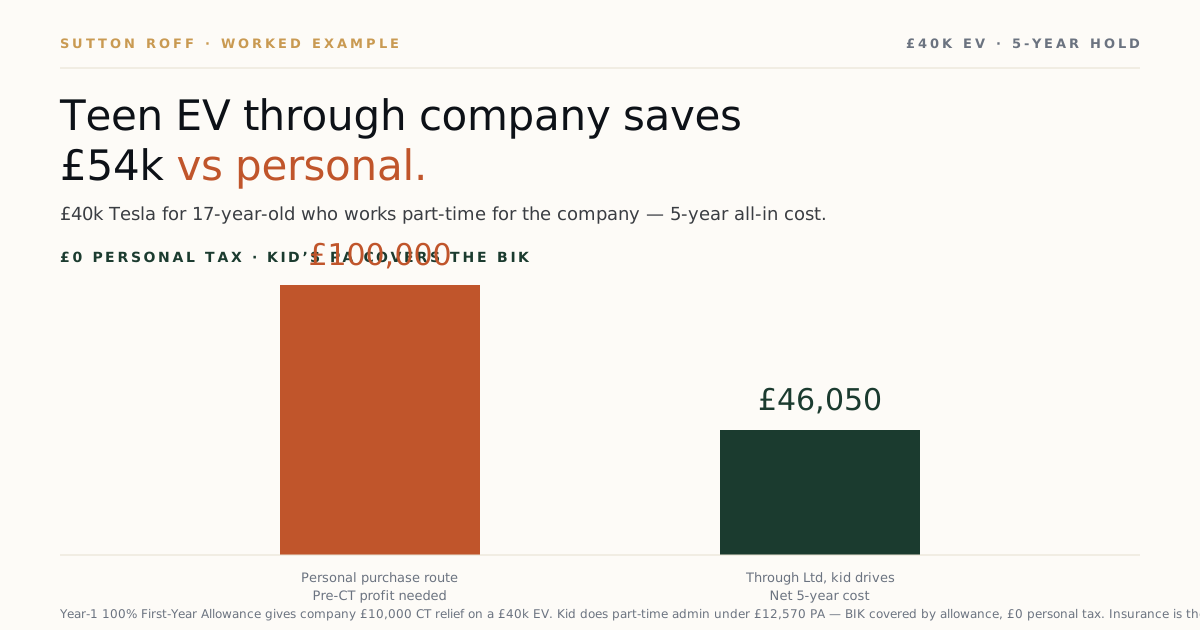
- Net 5-year cost to the business: £46,050
Compare to buying personally with post-tax dividend income: a £40k Tesla + 5 years of insurance (~£25,000 personally) would cost roughly £100,000 of pre-CT profit to fund. The company route saves about £54,000 over 5 years.
Watch-outs
- The kid must actually do work. A salary paid for fictitious labour is challengeable by HMRC. Set the role and pay rate at market-realistic levels.
- Insurance is the practical constraint. Corporate insurance for a 17-year-old isn’t cheap. Get quotes before you commit. Some specialist insurers (Marmalade, Adrian Flux) handle young-driver corporate cover better than mainstream.
- VED (road tax) on EVs ends from April 2025 — they now pay VED like any other car (£195/year standard). Used to be free.
- Future BIK rises. 3% in 2025/26, 4% in 2026/27, 5% in 2027/28, etc. The deal weakens slightly each year but stays favourable.
- The kid using the car for work-related driving would be taxed normally. Pure private use is the BIK-only scenario above.
Plug-in hybrids — still worth considering?
For a 17-year-old, an EV is now almost always the right answer (cheaper to run, BIK at 3% is unbeatable). PHEVs only really beat EVs if you have a specific reason — long-distance regular driving without charging access, towing requirements, etc. The 2025/26 reforms made PHEVs significantly less tax-efficient than they used to be.
Key takeaways
- EV BIK at 3% in 2025/26 makes a £40k EV cost ~£1,200 of taxable BIK per year.
- If your kid does part-time admin for the company under the £12,570 personal allowance, they pay £0 tax on the BIK.
- Year-1 100% First-Year Allowance gives the company a £10,000 CT relief on a £40k EV purchase.
- Net 5-year saving vs personal purchase: roughly £40,000–£60,000 for a typical higher-rate director.
- Watch insurance pricing — corporate young-driver cover is the practical limiter, not tax.
FAQ
Does my child need to actually do work for the company?
Yes — HMRC challenges salaries paid for fictitious labour. Set the role and pay rate at market-realistic levels (e.g. social media admin at £8-10/hour for 5-10 hours/week). Document the role, save deliverables, run a real timesheet.
What if my child is under 16?
Children can work in family businesses from 13 with restrictions. Below the £12,570 PA threshold there’s no income tax. The car BIK still works the same way — just be careful that the role is age-appropriate and complies with employment-law minimums.
Does this work for plug-in hybrids?
Less effectively. PHEV BIK rates (8-19%) are dramatically higher than EV (3%) in 2025/26. The kid’s £12,570 PA still absorbs some, but a £40k PHEV at 12% BIK = £4,800 BIK — only partially covered by their PA.
Have a teenager about to start driving and a Ltd company that could buy them a car? Book a free 20-min review and we’ll model the specific car/insurance/payment scenarios for your situation. Specialist UK accountants for family-owned businesses.