
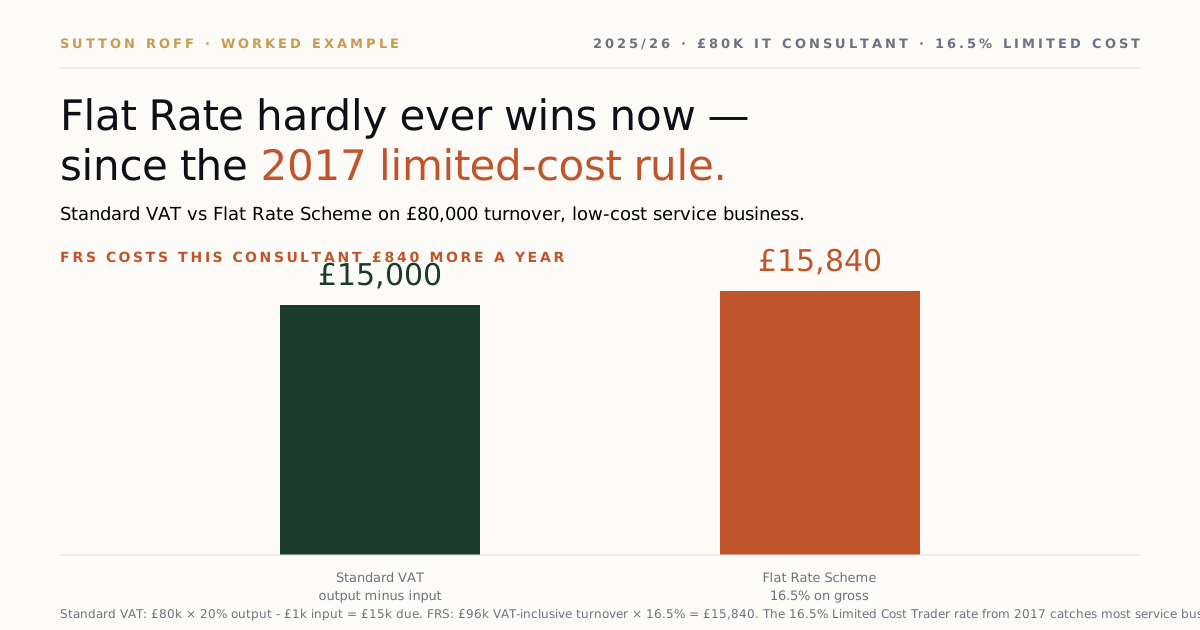
Until 2017, the Flat Rate VAT Scheme saved most service-based small businesses £1,000-£2,000/year. The Limited Cost Trader rule of 16.5% reversed the maths for 90% of consultants overnight. We still see clients on FRS paying £840/year more than they would on standard VAT — because no one’s run the numbers since 2017.
How the Flat Rate Scheme works
Standard VAT: charge 20% output VAT to customers, reclaim input VAT on purchases, pay HMRC the difference each quarter.
Flat Rate Scheme: charge 20% output VAT to customers as normal, but pay HMRC a flat percentage (between 4% and 16.5% depending on sector) of your gross VAT-inclusive turnover. You don’t separately reclaim input VAT — the flat rate is meant to approximate what your input VAT would have been.
Eligibility: VAT-registered, turnover (excluding VAT) below £150,000 in the next 12 months. You exit the scheme when turnover exceeds £230,000.
Why FRS rates flipped in 2017
Before 2017, sector-specific FRS rates ranged from 4% (food retailers) to 14.5% (computer/IT consultancy). Most service businesses paid 12-14.5%, and reclaimed nothing — but their actual input VAT was often <2% of turnover, so they pocketed the difference.
HMRC noticed and introduced the Limited Cost Trader rule in April 2017. If your annual goods purchases are below £250 OR below 2% of turnover, you must use a flat rate of 16.5% regardless of sector.
That 16.5% applies to the gross VAT-inclusive turnover. So on £100k of services billed at 20% VAT (£120k inclusive), you pay £19,800 to HMRC under FRS. Versus standard VAT of £100k × 20% – input VAT (£1k typically) = £19,000. FRS now costs the typical service consultant £800/year more, not less.
Adrian the IT consultant — Limited Cost Trader at 16.5%
Adrian, a solo IT consultant, has £80,000 annual revenue with low costs and £1,000 of input VAT.
| Calculation step | Standard VAT | Flat Rate Scheme (16.5%) |
|---|---|---|
| Turnover (excl. VAT) | £80,000 | £80,000 |
| VAT-inclusive turnover | — | £96,000 |
| Output VAT charged @ 20% | £16,000 | — |
| Input VAT reclaimable | −£1,000 | £0 (lost) |
| FRS rate applied to gross | — | £96,000 × 16.5% |
| Net VAT due to HMRC | £15,000 | £15,840 |
| Verdict for Adrian | FRS costs £840/year more — standard VAT wins | |
FRS costs £840 more per year on this typical consultancy. Plus you give up the right to reclaim the £1,000 input VAT separately, so the actual gap is exactly that.
Where FRS still wins
FRS still pays back when:
- You’re not a Limited Cost Trader — i.e. goods purchases above £250 AND above 2% of turnover. This applies to most retail, hospitality and trades.
- Your sector rate is genuinely below your effective standard-VAT rate. Builders pay 12% under FRS, retailers 7.5% — both genuinely below the standard 20% effective rate after typical input VAT.
- You value the admin simplicity. No need to track input VAT receipts, smaller bookkeeping load — saves on accountancy fees too.
So a self-employed builder with £80,000 turnover and £6,000 of input VAT on materials:
- Standard VAT: £16,000 – £6,000 = £10,000
- FRS (12% builders rate): £80,000 × 1.20 × 12% = £11,520
Standard wins by £1,520 — but the simplicity advantage means many builders still choose FRS. The annual saving on accountancy fees from simpler VAT records can offset the difference.
The first-year discount
FRS gives a 1% discount on the flat rate for the first 12 months of VAT registration. So a Limited Cost Trader pays 15.5% in year 1 and 16.5% from year 2. Useful for businesses who’ll eventually escape Limited Cost rate via spending more on goods.
Capital purchases above £2,000
One useful exception: capital purchases above £2,000 (inclusive of VAT) can be reclaimed separately, even on FRS. So buying a £3,500 computer can reclaim £583 of VAT directly, regardless of being on FRS.
Doesn’t apply to vehicles, services, or items for resale. Useful primarily for occasional larger equipment purchases.
How to switch — and when
Joining FRS: apply via VAT online services. Start date is usually the start of the next VAT quarter. Can apply mid-quarter but commonly takes effect from quarter start.
Leaving FRS: easier than joining. Notify HMRC, transition back to standard VAT from a chosen quarter start.
You can leave FRS voluntarily at any time. You must leave if your turnover exceeds £230,000 in the past 12 months.
The mid-year sector reclassification trap
You’re meant to reassess your sector each VAT period. If you change activities — say, an IT consultant who starts also selling hardware — your sector rate might change. The Limited Cost Trader test must be reassessed each VAT period using the rolling 12-month figures.
If your goods purchases jump above 2% of turnover for one quarter, you should drop to the sector-specific rate that period. If they fall back below 2%, you go back to 16.5%. The administrative overhead can be substantial — making FRS less of a “set and forget” choice than originally promised.
When this is a bad idea
Don’t join FRS just because it sounds simpler. Run the maths against standard VAT for 12 forward months. For most service businesses with input VAT under 2% of turnover, FRS costs more.
Don’t try to manipulate the Limited Cost Trader test by buying goods you don’t need just to escape the 16.5% rate. HMRC’s anti-avoidance for FRS specifically targets purchases that aren’t “genuinely for the business”.
Don’t ignore that capital expenditure above £2,000 reclaims separately — even on FRS, this is a useful one-off recovery.
Key takeaways
- FRS pays a fixed % of VAT-inclusive turnover instead of standard output-minus-input VAT.
- 2017 Limited Cost Trader rule of 16.5% catches most service businesses.
- Standard VAT wins by ~£800-£1,500/year for typical consultancy under £100k turnover.
- FRS still wins for sectors with genuinely high input VAT — builders, retail, hospitality.
- 1% discount on flat rate in first year of VAT registration.
- Capital purchases above £2,000 reclaim separately, even on FRS.
FAQ
Can I leave FRS at any time?
Yes — notify HMRC and you switch back to standard VAT from the next quarter start. No penalty for leaving, no minimum period to stay.
What’s the first-year discount?
New VAT registrants joining FRS get a 1% discount on their flat rate for the first 12 months from registration date. So a Limited Cost Trader pays 15.5% in year 1 and 16.5% from year 2.
Does FRS interact with cash accounting?
No — FRS is its own cash basis effectively, applying the flat rate to receipts. You can’t combine FRS with separate cash accounting; FRS replaces both standard accounting and cash accounting for the VAT calculation.
Currently on FRS and never reassessed since the 2017 rule change? Book a free 20-min review — we’ll run standard-versus-FRS against your last 12 months of turnover and switch you onto whichever genuinely wins. Specialist UK VAT scheme advisors.