
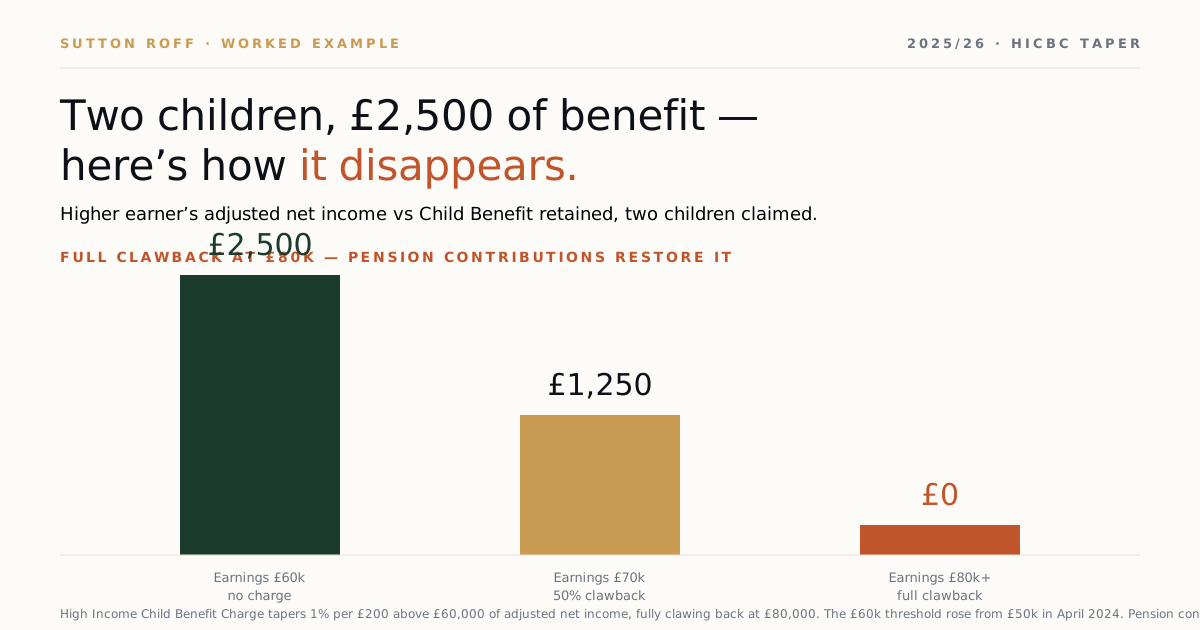
HICBC’s threshold rose from £50,000 to £60,000 in April 2024, pulling hundreds of thousands of households back into clean Child Benefit territory. We see families who stopped claiming under the old rules forget to restart — leaving £2,500/year on the table per family. Above £80,000 it claws back fully, but a single pension contribution can take adjusted income back below the threshold and restore the lot.
The High Income Child Benefit Charge mechanics
If anyone in your household earns above £60,000 of “adjusted net income” and you’re receiving Child Benefit, the higher earner pays a tax charge that claws back some or all of the benefit. The charge is:
- £60,000: 0% — full benefit retained
- £60,000 to £80,000: 1% clawback for every £200 over £60k. So at £70,000 you’ve lost 50% of the benefit.
- £80,000+: 100% clawback — full benefit reclaimed via tax
Critical detail: the £60,000 threshold rose from £50,000 in April 2024 — a meaningful change that pulled hundreds of thousands of households out of the charge. If you stopped claiming Child Benefit because of HICBC at the old threshold, you might want to restart your claim — many families now sit below the new £60k line.
What “adjusted net income” actually means
Adjusted Net Income (ANI) is your taxable income minus:
- Personal pension contributions you make (under net-pay arrangements)
- Gift Aid charity donations
- Trading or property losses brought forward
So a £75,000 salary plus a £10,000 personal pension contribution gives ANI of £65,000 — still in the taper zone, but with the charge halved compared to no pension contribution.
Salary-sacrifice pension contributions are different: they reduce your gross salary itself, so they reduce both taxable income and ANI. Even more efficient.
The Patel family — two children, £75k earner, three pension scenarios
Two children claimed for Child Benefit at 2025/26 rates (£25.60/wk for first child, £16.95/wk for second) = roughly £2,212/year total.
Mr Patel runs a Ltd company and takes £75,000/year (mix of salary and dividend). His wife is at home with the kids. HICBC kicks in at the income-tax level.
No pension contribution:
- ANI: £75,000
- £15,000 above £60k = 75% clawback
- Charge: £2,212 × 75% = £1,659
- Net benefit retained: £553
£10,000 personal pension contribution:
- ANI: £75,000 − £10,000 = £65,000
- £5,000 above £60k = 25% clawback
- Charge: £2,212 × 25% = £553
- Net benefit retained: £1,659
- Plus the £10,000 pension contribution gets 40% income tax relief = £4,000 saved on income tax
The £10,000 pension contribution doesn’t just save income tax — it also restores £1,106 of Child Benefit. Combined effective relief on the pension contribution: 51%.
£15,000 salary-sacrifice pension contribution:
- ANI: £75,000 − £15,000 = £60,000
- HICBC: £0
- Net benefit retained: £2,212
- Plus the £15,000 salary sacrifice gets 40% IT + 2% NIC + 15% employer NIC = 57% effective relief
The pension contribution that takes ANI back to exactly £60,000 maximises the family’s after-tax wealth — restores the full Child Benefit, gets full pension tax relief, and avoids any HICBC paperwork.
Should you keep claiming if you’ll lose it all?
Counter-intuitively: yes. Even if your ANI is well above £80,000 and you’d lose 100% of the benefit:
- You can claim the benefit and immediately opt out of payment (claim, no payment received)
- This still triggers National Insurance credit accrual for the parent who’s caring for under-12s
- The NI credits matter for state pension qualifying years for the carer
So if one spouse is the primary earner above £80k and the other is at home with children, the home spouse should still claim Child Benefit and opt out of payment. The lost benefit is identical (zero either way) but they preserve their state pension entitlement.
The carer test for 2026 onward
From April 2026, HICBC is changing again. Eligibility shifts from “household higher earner above £60k” to a household-income test based on combined ANI (joint £120,000 threshold, taper to £160,000). This is more equitable: a couple earning £55k each won’t be hit, where currently they aren’t either; but a couple earning £75k + £30k will lose more than they currently do.
The change is policy already announced. From the 2026/27 tax year, dual-income households need to model the joint-test against the current single-test position.
Pensions are the main lever for HICBC dodging
Three reasons pension contributions dominate the toolset:
- They reduce ANI directly — pound for pound
- They double-up with the underlying income tax saving
- They triple-up with the Personal Allowance taper if you’re between £100k and £125k (the 60% trap zone)
So a higher earner in the £100k–£125k zone with two children at HICBC threshold gets stacked benefits from a single pension contribution: 60% income tax + Personal Allowance restoration, plus full Child Benefit restoration. Combined effective relief regularly exceeds 70%.
What to claim and when
Even if you’ll have HICBC, claim the benefit and pay it back through your tax return. Don’t ignore it.
If you’re newly above £60k for the first year, register for self-assessment if you weren’t already in. The HICBC obligation triggers SA registration where it didn’t apply before — covered in our self-assessment registration piece.
Late HICBC payment carries the same penalty stack as late self-assessment filing. The £100 day-one penalty applies even on a £0 net charge.
When this is a bad idea
Don’t stop claiming Child Benefit because of HICBC at the old £50k threshold — the new £60k threshold may mean you’re back to claiming free of charge. Check current ANI before assuming.
Don’t gift income to a spouse “to dodge HICBC” — it’s the income earner who pays the charge, not the household. Splitting via a Ltd company employer pension contribution works (because that reduces ANI of the high earner); splitting via informal cash transfers doesn’t.
Don’t lose the NIC credit accrual by failing to claim. The pension impact for a stay-at-home parent over 30+ years can be tens of thousands of pounds of state pension lost.
Key takeaways
- HICBC starts at £60,000 of higher earner’s ANI (raised from £50k in April 2024).
- Tapers 1% per £200, fully clawing back at £80,000.
- Pension contributions and Gift Aid reduce ANI and can restore full benefit.
- Always claim and opt-out-of-payment if you’re above £80k — preserves NIC credits for the carer.
- From April 2026, threshold becomes household-income based (£120k joint).
- Pension salary sacrifice is the most efficient single lever — IT, NIC and HICBC all move together.
FAQ
Does HICBC apply to the partner with kids or the higher earner?
The higher earner pays the charge regardless of who claims the benefit. So a stay-at-home parent claims; the partner earning £75k pays the charge via their tax return. Doesn’t matter who is biologically the parent.
What if my partner doesn’t claim?
Then no charge applies — you’ve forfeited the benefit. But the stay-at-home partner loses NIC credits for state pension. Always claim and opt out of payment if at the £80k+ income level.
How does HICBC interact with the 60% trap?
They overlap at £100-£125k income. Pension contributions reduce ANI for both HICBC and the PA taper, restoring child benefit AND avoiding 60% marginal rate. Combined effective relief regularly exceeds 70%.
Stopped claiming Child Benefit when income crossed the old £50k threshold? Book a free 20-min review — we’ll check whether you’re back below the new £60k line, restart the claim, and model whether pension or salary-sacrifice contributions restore the benefit fully. Specialist UK personal tax planners.