
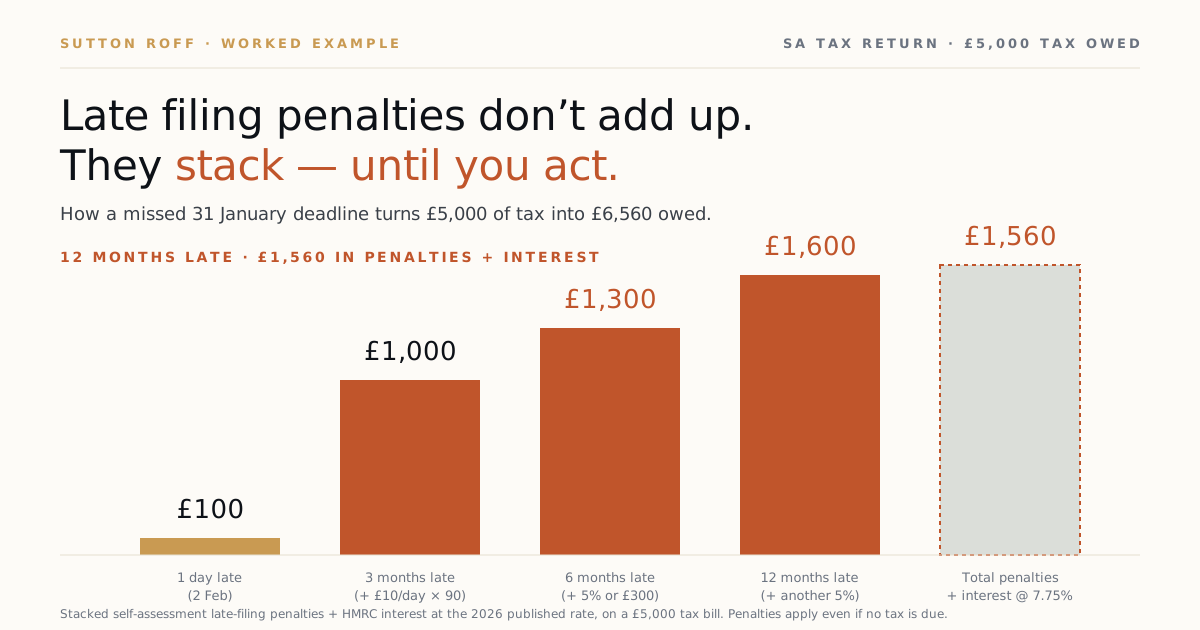
Filing one day late costs you £100 you cannot talk your way out of. Twelve months late on a £5,000 bill costs £1,600+ in penalties stacked on top — plus 7.75% interest and the new 6% late-payment surcharge from April 2025. We see clients arrive at this stack having tried to “ignore it until next year” — the worst call they could make.
The four-step penalty stack
HMRC’s late-filing penalties are mechanical, automatic, and stack on top of each other.
| How late | Penalty | Cumulative on a £5,000 tax bill |
|---|---|---|
| 1 day late (2 Feb) | £100 fixed (even if no tax due) | £100 |
| 3 months late (1 May) | + £10/day × 90 days = £900 | £1,000 |
| 6 months late (1 Aug) | + £300 or 5% of tax (whichever higher) | £1,300 |
| 12 months late (1 Feb following) | + £300 or 5% (or up to 100% if HMRC sees deliberate behaviour) | £1,600+ |
Plus interest, which is no longer a footnote
HMRC’s late-payment interest rate sits at 7.75% in 2026. On a £5,000 unpaid tax bill, that’s roughly £32 of interest a month accruing — separate from the penalties. Across a year of lateness, interest alone can reach £400.
And as of April 2025, HMRC also charges late-payment penalties (separate from late-filing). Pay the tax 16 days late and a 3% penalty kicks in; 31 days late and that climbs to 6%.
A worked example: filing eight months late on a £5,000 bill
A self-employed designer with £5,000 of self-assessment tax due files her 2024/25 return in late September 2026 — eight months past deadline. The penalty stack:
- 1 February: £100 fixed penalty
- 1 May: £10/day for the next 90 days = £900
- 1 August: £300 (since 5% of £5,000 = £250, and the rule is “£300 or 5%, whichever is higher”)
- Total filing penalties: £1,300
- Interest at 7.75% for 8 months on £5,000: roughly £258
- Late-payment penalties (6% of £5,000 after 30+ days): £300
Final cost on top of the £5,000 tax owed: £1,858. File one more month late and a second £300/5% penalty hits at 12 months, taking the total to £2,158-plus.
How to appeal — and when it might work
HMRC accepts appeals on grounds of “reasonable excuse”. The bar is genuinely high but not impossible. Recognised excuses include serious illness, bereavement of a close family member, fire or flood damage to your records, software failure on HMRC’s own systems, and being unexpectedly out of the country with no internet access.
Recognised not as reasonable excuse: being too busy, finding the rules confusing, your accountant being late, or saying you didn’t know about the deadline. Appeals must be lodged within 30 days of the penalty notice.
We see appeals fail at internal review because the letter argued “reasonable excuse” without anchoring to a recognised category. Even if your appeal is strong, file the return immediately while appealing. Late-filing penalties continue to stack until the return is in HMRC’s system — appealing doesn’t pause the clock.
If you can’t pay, file anyway and call Time-to-Pay
The single most expensive mistake people make: not filing because they can’t pay the tax. Filing late is more expensive than paying late. File the return on time even if you can’t settle the bill, then call HMRC’s Time-to-Pay line — they’ll usually agree to a 12-month instalment plan over the phone if your debt is under £30,000 and you’ve not used Time-to-Pay before.
This kills the late-filing penalties entirely. You only owe the late-payment penalties and interest, which are roughly half the cost of the full stack.
When this is a bad idea
Don’t ignore the first £100 thinking you’ll deal with it later. Within five months that £100 becomes £1,000, and within eight it’s £1,558 plus interest. The penalty curve is geometrically punishing in the first six months and gets uglier after.
Don’t try to argue “no tax was due” to avoid the £100 — the £100 fixed penalty applies even on a £0 return.
Key takeaways
- The £100 day-one penalty applies even if you owe no tax.
- By 6 months late, penalties hit £1,300 on any return; by 12 months, £1,600+ before interest.
- HMRC late-payment interest is 7.75% — on top of penalties.
- If you can’t pay, file on time and use Time-to-Pay — saves the entire filing-penalty stack.
- Reasonable-excuse appeals work for genuine emergencies, not for “I forgot”.
- Even when appealing, file the return immediately to stop the clock.
FAQ
Does the £100 penalty apply if I owe nothing?
Yes — the £100 fixed penalty applies regardless of tax owed. You can appeal it with reasonable excuse, but “I owed no tax” isn’t a reasonable excuse for late filing.
What counts as reasonable excuse?
Bereavement of close family, hospitalisation, fire/flood destroying records, HMRC system failure, postal disruption (paper-filed). Not: too busy, didn’t know, my accountant was late, software issue on your side.
Can I appeal multiple penalties at once?
Yes — one appeal letter can cover multiple stacked penalties (filing + payment + 12-month). Reference each penalty notice and apply your reasonable-excuse argument to each separately.
Missed the 31 January deadline or about to? Book a free 20-min review — we’ll get your return filed today, set up Time-to-Pay if you can’t pay in full, and assess whether the reasonable-excuse appeal has legs. Specialist UK self-assessment and late-filing accountants.