
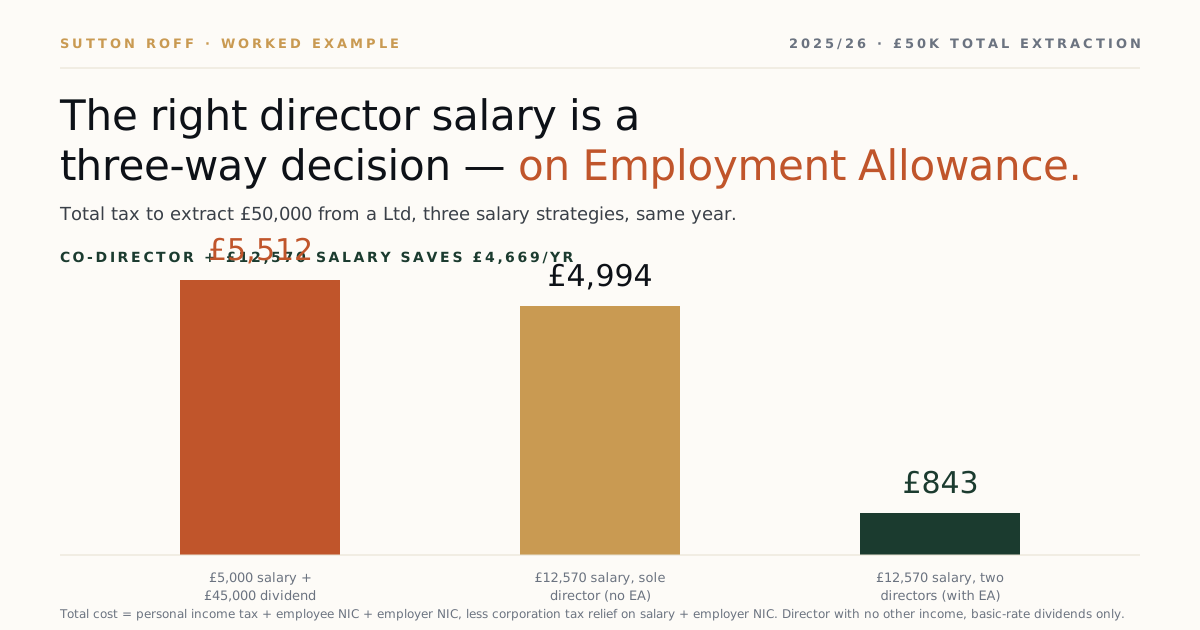
We see Ltd directors leave £4,669/year on the table because they take a £5,000 salary “to avoid NIC” — and miss that £12,570 plus Employment Allowance on a co-director Ltd is structurally cheaper for the same total compensation. The right director salary in 2025/26 isn’t NIC-led; it’s Employment Allowance-led. Most accountants still default to the wrong answer.
The three NIC thresholds that decide the answer
£5,000 secondary threshold — pay above this in the year and the company starts paying employer National Insurance at 15%.
£6,500 Lower Earnings Limit — earn at least this and the year counts as a qualifying year for your state pension. Below it, the year doesn’t count.
£12,570 Personal Allowance / employee primary threshold — pay yourself up to this and you owe £0 of personal income tax and £0 of employee NIC on the salary itself.
Stack the three together and the candidate “right” salaries are £6,500, £9,100 (a legacy choice), or £12,570. The deciding factor between them is whether the company can claim the Employment Allowance.
Why Employment Allowance is the lever most accountants miss
The Employment Allowance writes off the first £10,500 of employer NIC each year. Companies with two or more employees on payroll qualify; sole-director companies with no other staff do not. This single rule is why a co-director arrangement (often spouse plus director) can be dramatically more tax-efficient than going solo on the payroll.
With Employment Allowance, paying £12,570 each generates zero employer NIC and full corporation-tax deductibility on the salary. Without it, £12,570 still beats £5,000 — but by hundreds, not thousands.
Marcus extracts £50,000 — three different routes
Marcus runs a marketing consultancy through his Ltd. Same director, same company, same total compensation target of £50,000 across each strategy. No other personal income.
| Strategy | Salary structure | Employer NIC | CT relief | Dividend tax | Total cost |
|---|---|---|---|---|---|
| A | £5k salary + £45k dividend (sole director) | £0 | −£950 | £3,231 | £5,512 |
| B | £12,570 salary, no EA (sole director) | £1,136 | −£2,604 | £3,231 | £4,994 |
| C | £12,570 salary, EA (Marcus + Eleanor as directors) | £0 | −£2,389 | £3,231 | £843 |
Strategy C beats Strategy A by £4,669. That’s a salary-strategy decision, not a tax-planning miracle — and it tracks for every £50k of director compensation.
Strategy C beats Strategy A by £4,669. That’s a salary-strategy decision, not a tax-planning miracle — and it tracks for every £50k of director compensation.
Why the answer is rarely “all salary” or “all dividend”
Pure-dividend extraction (£0 salary) loses the corporation-tax deduction on salary and the state pension qualifying year. Pure-salary extraction means employer and employee NIC at full rates, plus income tax — much more expensive than a salary-and-dividend mix once you’re above basic rate.
The right mix in 2025/26 is almost always: salary at £12,570 (or thereabouts), then dividends to top up to your target draw. The dividend allowance of £500 is small but covers itself. Anything above the basic-rate threshold of £50,270 starts costing 33.75% on dividends — which is where pension contributions and the pension-vs-dividends comparison become the next decision.
When this is a bad idea
Don’t take £0 salary just because there’s no NIC at zero. You miss the state pension qualifying year, and the company misses corporation-tax deduction on the salary you didn’t pay. Both are quietly expensive over a decade.
Don’t take a six-figure salary “to look established to a mortgage lender” without modelling the personal NIC plus higher-rate tax cost first. Most lenders are happy with dividend income proven through SA302s and accounts. If you’d genuinely benefit from showing a bigger PAYE figure, it can be done — but cost it properly.
Key takeaways
- For 2025/26, the practical salary candidates are £6,500, £9,100 and £12,570 — all driven by NIC thresholds.
- Without Employment Allowance, £12,570 still wins over £5,000 by ~£500/year.
- With Employment Allowance (two directors, e.g. spouse), £12,570 each saves thousands every year.
- Always at least £6,500 to lock in the state pension qualifying year.
- Mix salary and dividends — pure-salary extraction is rarely cheapest above basic rate.
- Re-run the calculation each tax year — thresholds shift.
FAQ
Can a Ltd director also have a salary from another job?
Yes — but your Personal Allowance gets used by whichever employer applies it (usually the main one). Your Ltd salary then taxes at BR (basic rate) or D0 (higher rate) without PA. Not necessarily a problem — structure depends on combined income.
What about taking £0 salary entirely?
Loses two things: state pension qualifying year (need £6,500 LEL) and CT deduction on salary. Pure-dividend extraction is rarely optimal. Even £6,500 salary covers the qualifying year and a small CT deduction.
Does this change if I’m a non-resident director?
Yes — non-residents have different income tax allowances, may not access UK Personal Allowance, and may need to report under the National Insurance regime in their home country. Get specialist advice before structuring.
Ltd director extracting £50k+ and not sure your salary level is right? Book a free 20-min review — we’ll model your salary, dividend, pension and bonus mix at the correct ratio for your actual income picture, not generic templates. Specialist UK director extraction accountants.