
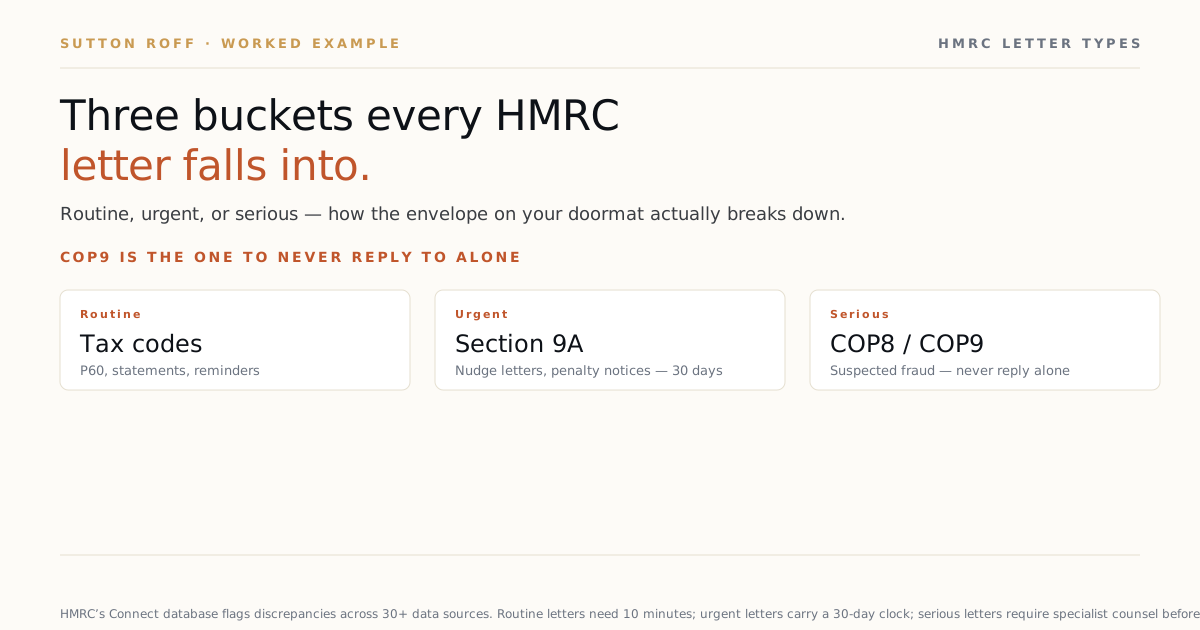
When the brown envelope lands, three buckets matter — routine, urgent, serious. Most are routine and need ten minutes; some need 30 days and an accountant; three need a tax-investigation specialist before you reply at all. We see clients reply to Code of Practice 9 letters themselves to “save the fee” and lock in penalties five times higher than necessary. The decision sequence is everything.
Three buckets — and the one you should never reply to alone
Routine — coding notices, tax-year statements, P800 over- or underpayment letters, generic filing reminders. These need a glance, not action. File or scan, move on.
Urgent — Section 9A enquiry letters, “one-to-many” nudge letters, voluntary disclosure prompts, simple compliance checks, penalty notices. You usually have 30 days to reply, and how you reply matters more than how fast.
Serious — Code of Practice 8 (suspected tax avoidance), Code of Practice 9 (suspected fraud — the contractual disclosure facility), Code of Practice 11 (cross-border evasion). Don’t reply yourself. Get specialist help before the letter you write becomes evidence in their file.
The five letters that land most often
1. PAYE coding notice (P2 / P6 / P9) — your tax code for the new year, or a mid-year change. Routine. Check the assumptions match your current income, especially benefits and pension contributions. If wrong, call HMRC to update it; otherwise you’ll over- or under-pay through PAYE all year.
2. Self-assessment statement — what you owe, when. Routine, but read the dates. The first payment-on-account in January often surprises new self-employed people.
3. Section 9A enquiry letter — HMRC has formally opened an enquiry into a specific tax return. They have 12 months from filing to do this on a normal return. Urgent. Reply within the deadline they specify (typically 30 days), provide only what’s asked, keep everything in writing, and consider getting an accountant involved before you reply.
4. “One-to-many” / nudge letter — a campaign letter sent to a list of taxpayers HMRC’s risk software has flagged. The 2024 platform-reporting nudge letters about Vinted, eBay and Airbnb sales are this category. We covered the playbook for these in our 30-day nudge-letter playbook — the short version: don’t ignore, don’t over-disclose, and decide whether voluntary correction is the cleanest answer.
5. Penalty notice — for late filing, late payment, or other compliance failures. You have 30 days to appeal. Reasonable excuse defences exist (bereavement, hospitalisation, IT failure on HMRC’s side) but the bar is genuinely high. If the penalty is for late filing, file the return immediately even while appealing — late-filing penalties stack until the return goes in.
The three you should never reply to without specialist counsel
Code of Practice 8 means HMRC suspects tax avoidance — usually a marketed scheme, an offshore structure, or aggressive planning they think didn’t work. The investigation can run for years. Your replies become part of the file.
Code of Practice 9 is the serious one. HMRC suspects deliberate fraud and is offering you the Contractual Disclosure Facility — full disclosure within 60 days in exchange for not pursuing criminal charges. Decline, lie, or partial-disclose, and prosecution becomes a real possibility. Never reply to a COP9 letter without specialist tax-investigation counsel.
Code of Practice 11 covers cross-border evasion. Same level of seriousness as COP9.
A general practice accountant is the wrong adviser for any of these three. Get a tax dispute specialist.
A worked example — Priya’s 30-day clock
Priya, a software founder, received a Section 9A enquiry letter on 12 January asking for documentation behind a £14,000 R&D claim on her 2023/24 return. The letter gave her until 11 February to reply.
Within seven days she acknowledged receipt in writing and confirmed the deadline. We gathered the supporting tech narrative, project costs and contemporaneous notes. We replied on day 28 with exactly what was asked for — no more — and a covering letter that pre-empted three follow-up questions HMRC predictably asks on R&D enquiries. The enquiry closed within four months with no adjustment. Replying late, replying with too much, or replying defensively are the three ways these go badly.
When this is a bad idea
DIY-ing a serious investigation letter to “save the accountancy fee” is genuinely the most expensive thing you can do with a brown envelope. COP8 and COP9 penalties scale based on cooperation and disclosure quality — both of which a specialist materially affects. The fees are usually a fraction of the difference in outcome.
Equally, ignoring a routine letter “because it looks routine” is how a wrong tax code costs someone £3,000 over a year, or how a missed penalty appeal locks in £1,600 of late-filing fees that were appealable.
Key takeaways
- Three buckets: routine, urgent (30-day clock), serious (specialist before replying).
- Most letters are routine — don’t panic, but don’t ignore.
- Section 9A enquiry letters and nudge letters need a calm, accurate, on-time reply.
- COP8, COP9 and COP11 letters need a tax investigation specialist before you write back.
- Penalty appeals run on a 30-day clock — and “reasonable excuse” is a real but narrow defence.
- Always reply in writing and keep copies of everything you send.
FAQ
Should I reply by post or online?
Most HMRC enquiry letters can now be replied to online via your Government Gateway account or via the email/portal address on the letter. Keep a copy and a timestamp. Track-and-record postal replies if you go that route.
Can my accountant deal with HMRC on my behalf?
Yes — you sign a 64-8 authorisation form letting your accountant be your tax agent. From that point, HMRC writes to them and replies pass through them. Standard for any complex enquiry.
What if I missed the 30-day deadline?
Reply immediately with an explanation. HMRC sometimes grants extensions for genuine reasons. After 30 days, your appeal options narrow but aren’t closed. Get a specialist involved before further communication.
Letter on the doormat and you’re not sure which bucket it belongs in? Book a free 20-min review — we’ll triage which category your letter is, draft the right reply for the 30-day clock, and only escalate to a tax-disputes specialist if it genuinely needs one. Specialist HMRC enquiry and investigation accountants.