
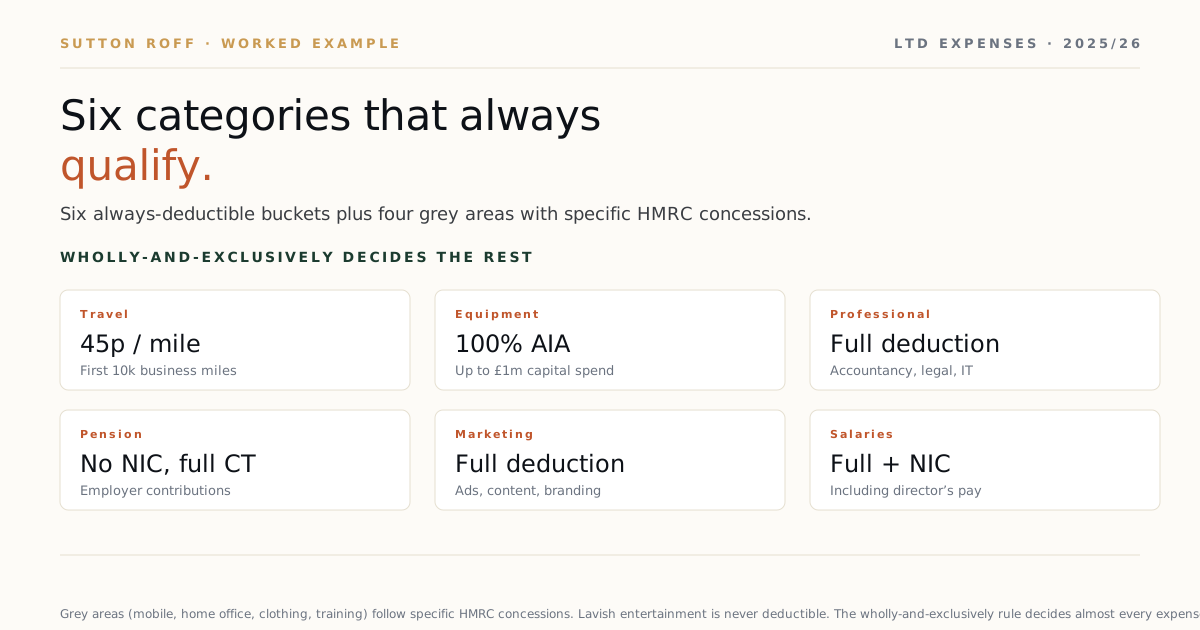
We see Ltd directors miss £4,000-£8,000 of legitimate corporation tax relief every year because they don’t claim what they’re entitled to — or claim things they shouldn’t and trigger benefit-in-kind charges. The wholly-and-exclusively rule decides 95% of expense questions; the grey areas have specific HMRC concessions worth knowing about.
The rule that settles 95% of expense questions
HMRC’s test for any company expense is the “wholly and exclusively” rule. The expense must be incurred wholly and exclusively for the purpose of the trade. If yes, it’s deductible against corporation tax. If there’s dual purpose — partly business, partly personal — it’s either apportioned, fully disallowed, or treated as a benefit-in-kind to the director.
That single rule decides 95% of expense questions. The grey areas are where dual purpose is genuinely unavoidable — home office, mobile phones, certain training — and those have specific HMRC concessions.
Six categories that always qualify
1. Travel and subsistence. Business journeys (not commuting), client visits, conferences, hotels and meals while away from your normal workplace. Mileage at 45p/mile for the first 10,000 miles, 25p thereafter, if you use your own car.
2. Equipment and capital items. Laptops, monitors, phones, office furniture. Annual Investment Allowance gives you 100% first-year relief on up to £1m of qualifying spend, so most small Ltd companies expense capital purchases in full in year one.
3. Professional services. Accountancy fees, legal fees, IT support, consultancy. Anything purchased to support running the business.
4. Pension contributions. Employer pension contributions to a director’s pension are corporation-tax deductible, with no Class 1 NIC, and don’t count toward the director’s £60,000 annual allowance — they’re paid by the company. The full picture is in our piece on pension vs dividends.
5. Marketing and advertising. Website costs, paid ads, branded merchandise, photography, content production.
6. Salaries and director’s pay. Including employer NIC and any pension contributions paid for staff. Optimal director salary structure is its own decision — covered in how much to pay yourself from a Ltd.
Four grey areas — and how to make them defensible
Mobile phone. If the contract is in the company’s name, 100% deductible with no benefit-in-kind on personal calls. If the contract is in your personal name, only the business proportion is deductible and tracking is awful. Switch contracts to company name — most providers will do this.
Home office. Two methods: HMRC’s simplified £6/week (£312/year) or apportioned bills based on space-and-time use. Detailed walkthrough in our home office through a limited company guide.
Clothing. Generic business clothing is not deductible — even bespoke suits worn only for work fail the “wholly and exclusively” test (HMRC’s argument: they keep you warm and decent, which is personal). Branded uniforms and protective clothing are deductible.
Training. Training to maintain or improve your existing trade skills is deductible. Training to acquire a new skill or new trade is treated as capital expenditure and not deductible against current-year profits — a common surprise for directors funding personal qualifications through the company.
James’s first-year SaaS Ltd — £29,668 of legitimate deductions
James runs a director-only SaaS Ltd, year one of trading. His annual deductible spend:
- Director salary £12,570 + employer NIC £1,136 = £13,706
- Employer pension contribution £4,000
- Laptop and monitor £2,500 (full AIA)
- Mobile contract (company name) £600
- Home office (simplified £6/wk) £312
- Accountancy £1,800
- Domain, hosting, software subscriptions £2,800
- Business insurance £450
- Marketing (Google Ads + LinkedIn) £3,500
- Total deductible: £29,668
Corporation tax saved at 19%: £5,637. That’s the difference between knowing what’s deductible and just paying tax on the gross.
What’s not deductible (even though it feels like it should be)
Client entertainment is never deductible against corporation tax. Lunches, drinks, sporting events, gifts above £50 to clients — all disallowed. Staff entertainment up to £150/head per year for an annual event is allowed, separately.
Personal expenses run through the company become benefits-in-kind. The director pays income tax on them, the company pays Class 1A NIC, and they’re often not even deductible against corporation tax — the worst of both worlds.
Fines and penalties from any regulator — including parking fines and HMRC late-filing penalties — are not deductible. The legislation specifically blocks them.
When this is a bad idea
Don’t test HMRC’s tolerance with marginal claims to save a bit of corporation tax. The cost of an enquiry — accountancy fees plus director time — usually swamps the tax saved on the marginal expense. The clean-spend strategy is to put genuinely-business spending through the company correctly, and keep personal life on the personal credit card.
Don’t forget that a benefit-in-kind reported to HMRC carries the director’s marginal income tax rate plus the company’s Class 1A NIC at 15%. A “saved” £1,000 personal expense via the company can cost £600 in tax once it’s properly reported.
Key takeaways
- The wholly-and-exclusively test decides almost every expense question.
- Six always-deductible categories: travel, equipment, professional fees, pension, marketing, salaries.
- Mobile contract in company name keeps it 100% deductible with no BIK.
- Home office: simplified £6/week or apportioned bills.
- Client entertainment is never deductible — staff events up to £150/head are.
- Capital allowances (AIA) give 100% relief in year one on most equipment up to £1m.
FAQ
What’s the difference between AIA and capital allowances?
AIA (Annual Investment Allowance) gives 100% first-year relief on up to £1m of qualifying capital spend — effectively expense it in year one. Capital allowances are the standard 18% Writing Down Allowance for items beyond AIA or for cars.
Are subscriptions to professional memberships deductible?
Yes — if HMRC has approved the body via List 3, the subscription is fully deductible. Includes ICAEW, RIBA, Bar Council, royal colleges, etc. Personal-development memberships (gym, social clubs) aren’t.
Can I claim training to learn new skills?
Training to maintain or improve current trade skills: yes, deductible. Training for a new skill or new trade: capital expenditure, not deductible against current profits. The boundary turns on whether the skill relates to your existing trade.
Newly Ltd or running one without much expense oversight? Book a free 20-min review — we’ll do a one-pass review of what’s been through the company versus your personal card, and surface the £500-£2,000/year most owner-managers leave on the table. Specialist UK Ltd company tax accountants.