
A higher-rate landlord on a £15,000 rental flat pays roughly £3,257 in tax — not the £6,000 most worried clients estimate. The gap is the legitimate revenue expenses they hadn’t tracked, plus the 20% mortgage interest credit. We see landlords pay £1,500/year more than necessary because the repair-versus-improvement boundary defeated them — and the £14,000 kitchen they “improved” was actually a deductible repair.
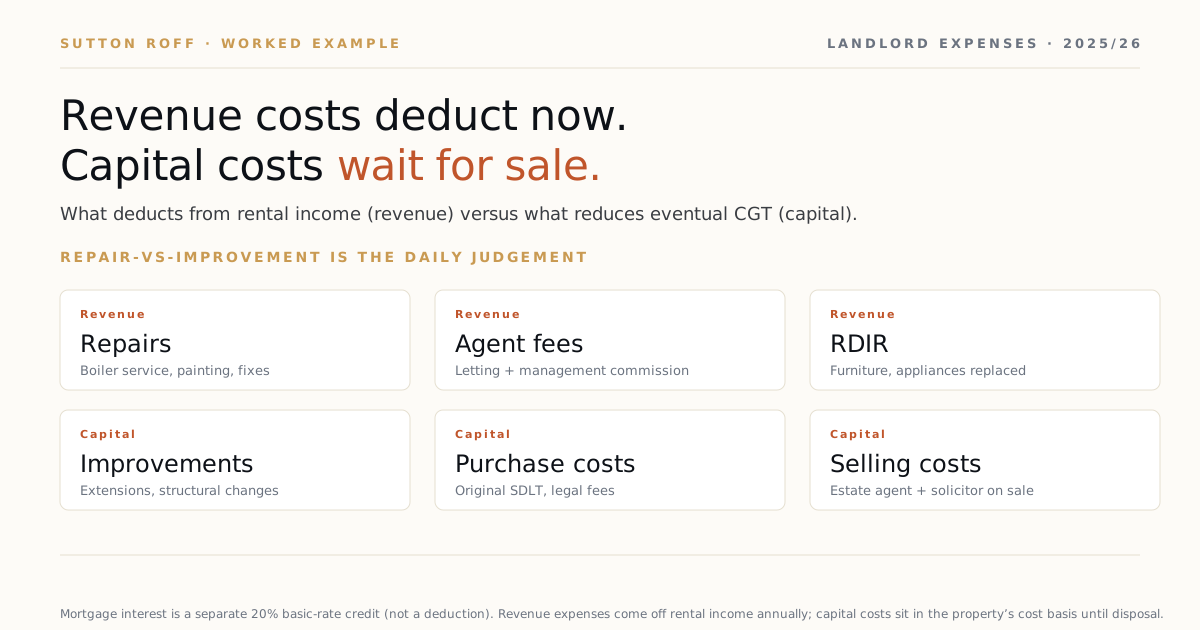
Fully deductible: revenue expenses
These come straight off your gross rent before tax is calculated:
- Letting agent fees — including initial tenant-find fees, ongoing management commission, and renewal fees
- Repairs and maintenance — boiler servicing, broken-window replacement, painting, like-for-like kitchen/bathroom repairs
- Buildings and contents insurance
- Council tax and utility bills — only when paid by you, not the tenant (e.g. between tenancies, or HMOs where you bear the cost)
- Service charges and ground rent on leasehold flats
- Replacement of Domestic Items relief — like-for-like replacement of free-moveable furniture, appliances, carpets, curtains
- Travel costs — to and from the property for letting purposes (45p/mile first 10,000 miles)
- Legal fees — for lease renewals, tenant disputes, debt recovery (NOT initial purchase legal fees)
- Accountancy fees for preparing the rental computation
- Bank charges on a dedicated rental account
- Phone calls and admin — proportionate use for the rental
- Advertising for tenants
The wholly-and-exclusively rule applies — these costs must be incurred for the letting, not for personal benefit.
The mortgage interest exception — Section 24 in one paragraph
Mortgage interest is no longer a deductible expense. Since 2020/21 it gets a 20% basic-rate tax credit instead — which we walked through in detail in the rental income tax guide.
The mechanics: you calculate rental profit ignoring interest, pay tax on it at your marginal rate, then subtract a credit equal to 20% of the year’s mortgage interest. Higher-rate landlords get less back than they paid out — the heart of Section 24.
Capital costs: deferred to sale
Capital costs aren’t deductible from rental income at all. They sit in the property’s “base cost” and reduce your CGT bill on eventual sale. The big ones:
- Improvements — extensions, loft conversions, knocking through walls, structural changes
- Initial purchase costs — solicitor fees, survey, original SDLT
- Selling costs — estate agent fees, solicitor fees on sale
- New kitchen or bathroom if substantially upgraded from original (replacement on like-for-like basis is a repair; significant upgrade is capital)
The repair-versus-improvement distinction is the daily judgement call. Replacing a 30-year-old kitchen with a similar new one is a repair. Replacing it with a £30k bespoke kitchen with new layout and granite worktops is an improvement. HMRC’s working test: would a reasonable buyer pay more for the property because of the work? If yes, capital. If just keeping it lettable, revenue.
Replacement of Domestic Items relief — like-for-like or nothing
Replaced the old 10% wear-and-tear allowance from 2016. You can deduct the cost of replacing free-moveable furniture, appliances, kitchenware and carpets in let property — but the deduction is capped at the cost of a like-for-like replacement, even if you actually bought a fancier version.
So if a £400 fridge breaks and you replace with a £900 American-fridge-freezer, you can claim £400 (the like-for-like equivalent), not £900.
The relief doesn’t cover the initial furnishing of an unfurnished property — only later replacements. First-time furnishing is a capital cost.
What you can’t claim
- Your own time as a landlord (no salary deduction for self-managed)
- Improvements — go to the CGT calculation on sale, not annual income
- Initial property setup — first-time furniture, original purchase legal fees
- Personal use portion if you stay in the property occasionally
- Pre-letting expenses earlier than 7 years before first letting
James’s £15k BTL flat — what’s actually deductible
James, a mid-portfolio landlord, has one £300k flat producing £15,000 gross rent:
- Letting agent commission (10%): £1,500
- Insurance: £400
- Boiler service + minor repairs: £450
- Ground rent + service charge: £1,800
- Replacement washing machine (like-for-like): £350
- Accountancy for SA: £250
- Travel to property × 4 visits at 60 miles each: 240 miles × 45p = £108
- Total deductible: £4,858
Net rental profit: £15,000 − £4,858 = £10,142. James’s mortgage interest of £4,000 then attracts a separate 20% credit of £800.
For a higher-rate landlord: £10,142 × 40% = £4,057, less £800 credit = £3,257 tax. That’s the genuine bill — not the £6,000 a worried client guesses.
When this is a bad idea
Don’t dress up improvements as repairs to grab the immediate deduction. HMRC has been on this for years and the test is well-established. The cost of getting it wrong includes back-tax, interest, and penalties starting at 30% for careless errors.
Don’t forget that improvement costs aren’t lost — they reduce your CGT bill on eventual sale. Keep a running schedule of every capital improvement with dates and amounts. We covered the eventual sale calculation in our CGT on rental sales guide.
Key takeaways
- Revenue costs (repairs, agent fees, insurance, RDIR replacements) deduct from rental income.
- Mortgage interest gets a separate 20% basic-rate credit.
- Capital costs (improvements, purchase fees, sale costs) reduce the CGT bill on sale.
- Replacement of Domestic Items relief covers like-for-like only.
- Repair vs improvement: would a buyer pay more because of the work?
- Keep capital improvements in a separate running schedule for sale-time CGT.
FAQ
Can I claim the cost of getting a property “ready” to let?
Pre-letting expenses up to 7 years before first letting are deductible (subject to wholly-and-exclusively). Routine cleaning, painting, minor repairs — yes. Major refurbishments to make habitable — capital improvement, deferred to CGT calculation.
What about insurance on contents?
Yes — contents insurance for the rental property is deductible against rental income. Buildings insurance (for furnished or unfurnished rentals): also deductible. Personal possessions in the property aren’t covered for landlord deduction.
Are mortgage arrangement fees capital or revenue?
Revenue — mortgage arrangement fees, broker fees, valuation fees on a BTL mortgage are deductible against rental income in the year incurred. The mortgage itself is capital but the fees to arrange it are revenue.
Self-managing your rental and not sure what’s deductible? Book a free 20-min review — we’ll review your most recent year of expenses, settle the boundary cases, and rebuild the schedule of capital improvements that saves CGT a decade later. Specialist UK landlord tax accountants.