
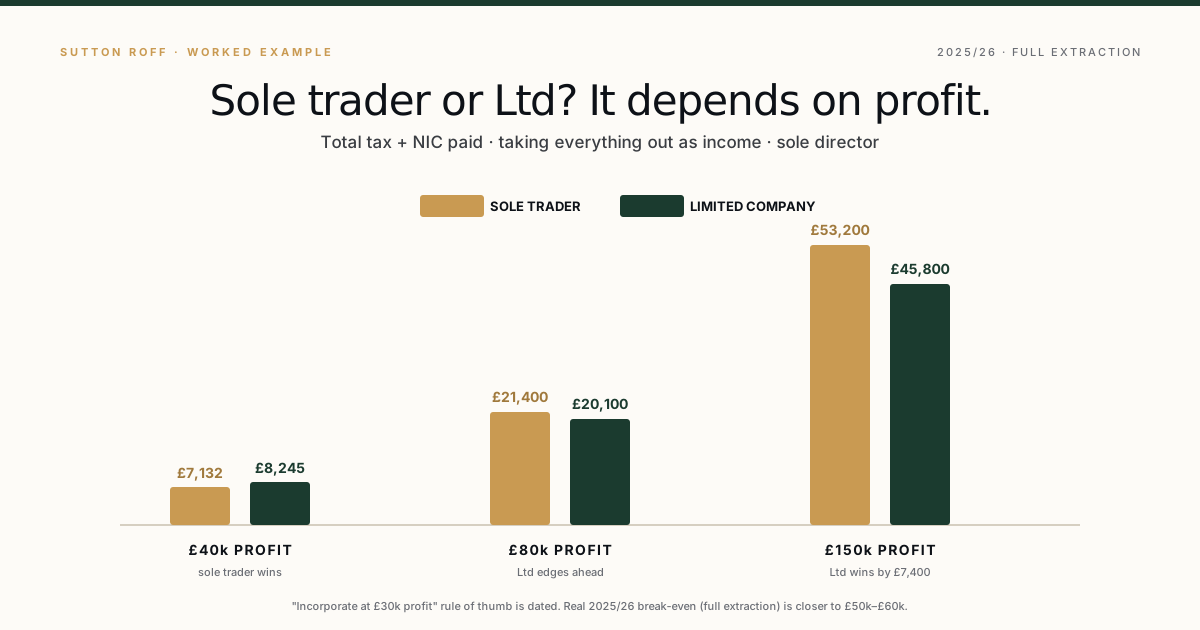
Every accountant has a rule of thumb for when a sole trader should incorporate. £30k. £40k. £50k. None of them are right in any general sense — the actual breakeven depends on your dividend pattern, what you take out vs leave in, your spouse’s tax position, and changes to corporation tax we’ve had since 2023. Here’s the real 2025/26 calculation.
Why the old rule of thumb broke
Three things changed since the simple “£30k = incorporate” advice:
- Dividend allowance dropped from £5,000 (2017/18) to £500 (2024/25 onwards). Dividends are now taxed almost from the first pound after salary.
- Dividend tax rates rose to 8.75% / 33.75% / 39.35%.
- Corporation tax went from a flat 19% to a banded 19% / 26.5% / 25% depending on profit level.
The result: incorporation still saves money, but the saving is smaller than it used to be — and the breakeven is higher than the rule of thumb suggests.
The 2025/26 numbers
For both options below, assume the trader takes out everything they earn (no retained profits in the company). Personal allowance £12,570, higher-rate threshold £50,270.
Sole trader on £40,000 profit:
- Personal tax (20% on income above £12,570): £5,486
- Class 4 NIC (6% on £12,570 to £50,270, plus 2% above): £1,646
- Class 2 NIC: scrapped April 2024 — £0
- Total: £7,132 (effective rate 17.8%)
Same trader through Ltd, taking everything as low salary + dividends:
- Salary: £12,570 (uses the personal allowance, deductible against CT)
- Profit before salary: £40,000. After salary: £27,430 (assuming no NIC since we’re using the £5k Employment Allowance is unavailable for sole-director companies, but salary at PA is below the £9,100 threshold for employer NIC anyway with the 2025/26 rates — actually the threshold dropped to £5,000 from April 2025, so there’s £7,570 × 15% = £1,135 of employer NIC. CT-deductible.)
- Corporation tax: £27,430 × 19% = £5,212
- Distributable: £22,218 dividend
- Personal tax on dividend: £22,218 less £500 allowance, taxed at 8.75% (under the higher-rate threshold even with the PA salary): £1,898
- Total: £5,212 + £1,135 + £1,898 = £8,245 (effective rate 20.6%)
At £40k profit, sole trader actually wins by about £1,100/year because of the new employer NIC threshold + reduced dividend allowance.
Same small-business trader on £80,000 profit, full extraction:
- Sole trader: tax + NIC ≈ £21,400
- Ltd: CT + employer NIC + dividend tax ≈ £20,100
- Ltd saves ~£1,300/year
Same trader on £150,000 profit, full extraction:
- Sole trader: tax + NIC ≈ £53,200
- Ltd: CT (mix of 19% / 26.5%) + dividend tax ≈ £45,800
- Ltd saves ~£7,400/year
What shifts the breakeven
The above assumes full annual extraction. The picture changes radically if any of these apply:
- You don’t need all the cash — retaining profit in the company at 19–25% beats paying 40–47% personal tax now and reinvesting later.
- You have a basic-rate-taxpayer spouse — making them a shareholder lets dividend income flow at 8.75%, doubling the available basic-rate band.
- You’re saving for a house, pension top-up or business purchase — corporate retention is much more tax-efficient than personal savings out of post-tax income.
- You want to sell the business in 5+ years — Ltd companies have BADR / Investors’ Relief on exit at 14% (2025/26, rising to 18% from April 2026). Sole traders selling goodwill have similar reliefs but less flexible structuring.
- You’re an IR35-determined contractor — Ltd company is required if you want to be paid as a corporate.
What stays better as a sole trader
- Sub-£40k profits with full extraction — sole trader is simpler and cheaper to administer.
- Activities likely to make sustained losses — losses against personal other income for sole traders are more flexible than corporate loss carry-back.
- Pre-incorporation costs and the £400-£800/year in extra accountancy + Companies House admin you’ll incur.
- Anyone valuing simplicity over a few hundred pounds saved.
Worked example: £85,000 profit, basic-rate spouse
Trader earns £85k profit, has a spouse with a £25k salary (basic-rate taxpayer with ~£15k of unused basic-rate band).
- Sole trader: tax + NIC = ~£23,200
- Ltd, sole shareholder: ~£21,800
- Ltd, 50/50 with spouse: salary £12,570 (trader) + dividends split 50/50 to use spouse’s basic-rate band. Total tax + CT + dividend tax ≈ £18,600
The spouse-shareholder route saves £4,600/year over sole trader at this income level, vs only £1,400 for sole-shareholder Ltd. The biggest single planning lever for many small businesses.
Key takeaways
- The “incorporate at £30k” rule of thumb is dated. Real 2025/26 breakeven for full extraction is closer to £50k–£60k.
- Below that, sole trader is often cheaper after the post-2024 dividend rules and employer NIC threshold change.
- If you don’t need all the cash, the corporate retention advantage kicks in much earlier — possibly £30k.
- A basic-rate-taxpayer spouse as 50% shareholder doubles the dividend allowance/basic-rate band available — typically the biggest single saving lever.
- Run the numbers properly. Rules of thumb cost real money.
FAQ
Is incorporation reversible?
Technically yes (close the Ltd, return to sole trader) but rarely worth the cost. Closure via MVL is £2-5k. Best to pick the right structure from the start, not flip back and forth.
Do I need to incorporate before VAT registration?
No — sole traders register for VAT the same way as Ltds. The £90,000 turnover threshold applies regardless of structure. Incorporation is a tax-structure decision; VAT is a turnover-trigger decision.
How does Class 2 NIC abolition affect the comparison?
Class 2 NIC abolished from 2024/25 saves sole traders ~£180/year. Modest, but it slightly improves sole-trader economics at lower profit levels. Doesn’t shift the £45-50k crossover meaningfully.
We model every breakeven scenario for new clients before recommending a structure. Book a free 20-min review and we’ll show you exactly what you’d pay either way, with your actual numbers and family situation. Helpful for any small or medium business.