
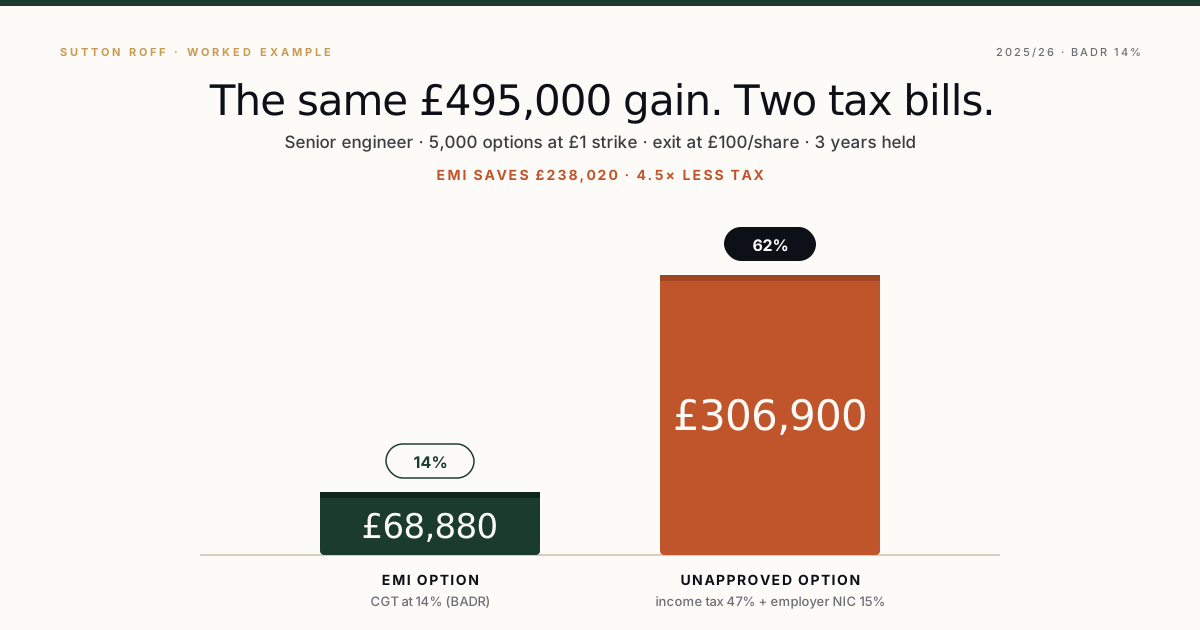
When a UK tech founder makes their first key hire and offers them equity, the choice between an EMI option scheme and unapproved options will shape that employee’s tax bill at exit by tens — sometimes hundreds — of thousands of pounds. We see founders pick wrong because the lawyer drafted the most flexible documents (unapproved), not the most tax-efficient (EMI). Here’s the framework we use.
The two regimes
EMI (Enterprise Management Incentives) is HMRC’s flagship tax-advantaged scheme for SMEs. Get it set up correctly and:
- No income tax or NIC on grant (option to buy at fair market value)
- No income tax or NIC on exercise (provided exercise price is at least the grant-date value)
- Capital Gains Tax on sale at 14% (BADR rate, 2025/26 — rising to 18% from April 2026) instead of 24%
- BADR’s 2-year holding period clock runs from the grant date, not the exercise date
Unapproved options (technically just “non-tax-advantaged options”) give the company total flexibility on terms but no tax advantages:
- No income tax on grant
- Income tax + NIC on exercise — at the gain at exercise (market value at exercise less exercise price), at the employee’s marginal rate up to 47%
- CGT on subsequent sale on any further uplift
- Employer NIC (15% from April 2025, was 13.8%) on the gain — the company pays it, often passed back to the employee via the option agreement
The numbers — a worked example
Senior engineer joins a UK SaaS pre-Series A. Grant: 5,000 options at £1 strike. Three years later, exit at £100/share.
Gain at exercise = 5,000 × (£100 – £1) = £495,000.
| Tax event | Under EMI | Under Unapproved |
|---|---|---|
| Income tax on grant | £0 | £0 |
| Income tax on exercise (45%) | £0 | £222,750 |
| Employee NIC on exercise (2%) | £0 | £9,900 |
| Employer NIC on gain (15%, often passed to employee) | £0 | £74,250 |
| CGT on sale | £68,880 (14% BADR less £3k exemption) | £0 |
| Total tax burden | £68,880 | £306,900 |
| Net to employee | £426,120 | £188,100 |
Difference: £238,000. On one hire. This compounds across the team.
Difference: £238,000. On one hire. This compounds across the team.
EMI eligibility — the gates
You qualify if all of the following apply:
- Company has gross assets ≤£30 million
- Company employs <250 full-time equivalent staff
- Company is independent (not >50% owned by another company)
- Company carries on a “qualifying trade” (most do — exclusions cover farming, hospitality, banking, leasing, royalties, some property)
- The employee works ≥25 hrs/week or ≥75% of working time for the company
- The employee owns <30% of the company already
- Total unexercised EMI options across all employees ≤ £3,000,000
- Per employee, total EMI option value at grant ≤ £250,000
Most early-to-mid-stage UK tech companies qualify comfortably. You can get an HMRC Advance Assurance on EMI eligibility before granting (3–4 weeks turnaround) — strongly recommended.
Setup — what’s involved
EMI implementation typically takes 4–6 weeks and involves:
- HMRC Advance Assurance (optional but recommended)
- Independent share valuation agreed with HMRC
- Plan rules drafted (usually a 5–10 page document)
- Option agreements per employee
- HMRC notification within 92 days of each grant (this is a hard deadline — miss it and the EMI status is lost forever)
- Annual EMI return (form ERS) by 6 July following the tax year
Total professional cost (legal + tax): typically £4k–£8k for the scheme setup plus £500–£1,500 per grant tranche thereafter. Trivial relative to the £200k+ per-employee tax difference.
When unapproved still makes sense
Three scenarios where unapproved options beat EMI:
- Non-employee grants — advisors, contractors, board members. EMI is for employees only. Unapproved (or growth shares) is the only route.
- Founders/directors with >30% ownership — disqualified from EMI. Granting them more equity needs a different vehicle.
- Companies that fail the trade test or asset/employee ceilings — typically larger scale-ups beyond £30m gross assets or 250 employees.
For typical employee hires at sub-Series-B UK tech companies (and many non-tech owner-managed businesses), EMI is almost always the right answer.
The 92-day notification deadline — don’t miss it
The single most expensive EMI mistake we untangle is missing the 92-day HMRC notification window after a grant. Late notification = the entire grant loses EMI tax status retroactively, with no reinstatement available. The grant becomes unapproved, with all the tax disadvantages above. This catches founders who use a generic stock-plan administrator that doesn’t follow up. Make sure your accountant or scheme administrator owns this deadline explicitly.
Key takeaways
- EMI vs unapproved makes a £100k–£250k per-employee difference at exit on typical UK tech grants.
- EMI gives 14% CGT (BADR) vs ~47% combined tax on unapproved exercise.
- Most UK tech SMEs (gross assets ≤£30m, <250 staff) qualify. Get HMRC Advance Assurance to confirm.
- 92-day notification deadline after each grant. Miss it and the entire grant loses EMI status — no rescue.
- Unapproved options remain the right tool for advisors, founders >30%, and companies past the EMI ceilings.
FAQ
What’s HMRC Advance Assurance and is it worth doing?
Advance Assurance is HMRC’s pre-grant confirmation that your company qualifies for EMI. Free, takes 4-6 weeks. Worth doing for confidence and to brief future investors. Most established UK tech companies get it.
Can I switch existing unapproved options to EMI?
No — once granted, options keep their original tax status. New grants can be made under EMI separately. Some companies cancel unapproved options and re-grant under EMI, but this triggers immediate tax events.
What’s the BADR holding period for EMI shares?
24 months from grant date (not exercise date). Most key hires hit this naturally before exit. Critical: keep the option agreement on file with grant date documented.
Setting up your first share scheme, or about to make a key hire with equity? Book a free 20-min review and we’ll model the EMI vs unapproved difference using your specific cap table and likely exit value. Specialist accountants for UK tech and SaaS.