
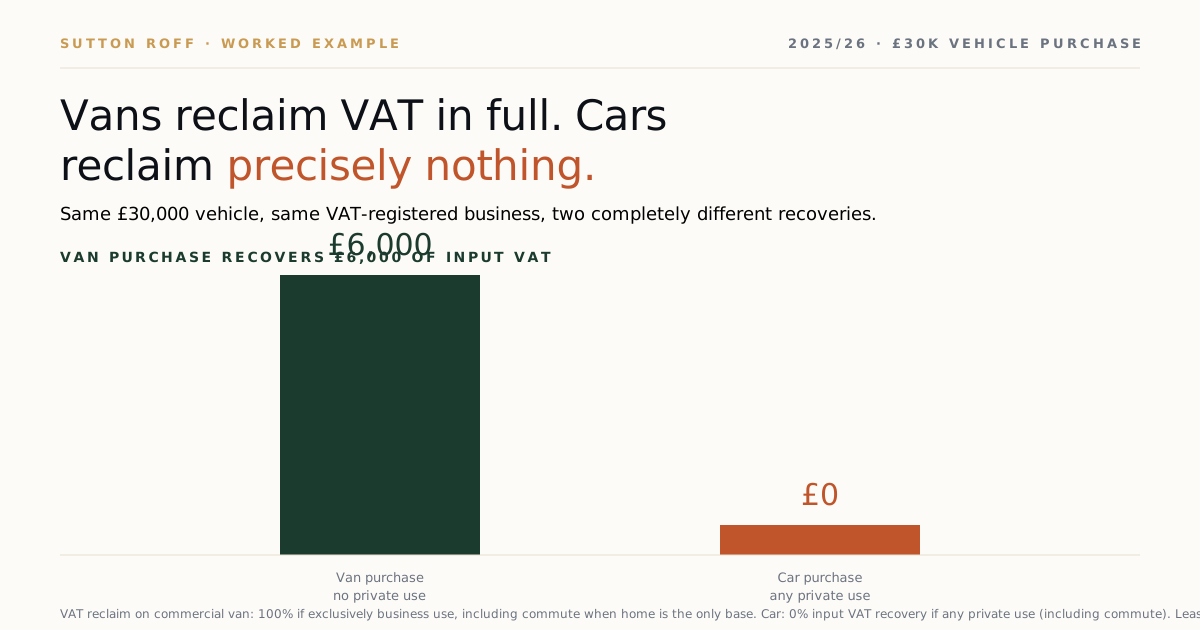
Buy a van for £30,000 + VAT and reclaim £6,000 of input VAT on day one. Buy a car for the same amount with any private use — including commute — and reclaim precisely zero. We see directors buy “commercial vehicles” expecting van treatment because the dealer used the word — and miss that HMRC’s test is about original design and primary purpose, not marketing copy. The April 2025 reclassification of double-cab pickups as cars caught a lot of fleet operators out.
The fundamental rule
For VAT-registered businesses:
| Vehicle type | Use case | Input VAT reclaim |
|---|---|---|
| Van (commercial vehicle) | No private use (commute may be OK) | 100% |
| Van | Any private use | 0% |
| Car (passenger vehicle) | Any private use including commute | 0% |
| Car | Exclusive business (taxis, driving schools, pool cars) | 100% |
| Car (leased) | Mixed business + private use | 50% on lease rentals |
| Servicing, tyres, MOT | Any vehicle | 100% |
| Double-cab pickup (post-Apr 2025) | Reclassified as car for VAT | Same as car rules above |
HMRC’s “any private use” interpretation includes commute from home to office. So a director’s £30,000 BMW that’s used for client visits during the week and personal trips at weekends gets zero VAT recovery. Same vehicle as a leased car instead: the lease attracts 50% reclaim on the rental payments but not on purchase or maintenance.
Van vs car — how HMRC decides
HMRC’s test for VAT purposes is largely about payload capacity:
- Vans: primarily designed for transporting goods, payload typically 1,000kg+, single row of seats
- Cars: primarily designed for transporting people
- Double-cab pickups: were treated as vans for VAT (and BIK) until October 2023 — when HMRC reversed this. From 1 April 2025, double-cab pickups are treated as cars for VAT and BIK purposes
The double-cab pickup change affected farmers, builders, and fleet operators who’d been buying them specifically for the favourable tax treatment. The reversal was driven by HMRC’s view that double-cab pickups are usually used dual-purpose.
Same £30,000 vehicle — van versus car, two completely different recoveries
Greg runs a VAT-registered Ltd and is buying a vehicle for his sole director use. Vehicle list price £30,000 + £6,000 VAT.
Commercial van, no private use:
- Reclaim £6,000 input VAT in next VAT return
- Capital allowances on £30,000 (typically 100% first-year via AIA)
- Effective net cost in year 1: £30,000 – £6,000 – £5,700 (CT relief at 19%) = £18,300
Same vehicle, but car with private use:
- Reclaim £0 of input VAT
- Capital allowances apply but at restricted rates (18%/6% writing-down allowances depending on emissions)
- BIK on private use: list price × CO2-band % × marginal rate (often 30-37% for ICE)
- Effective net cost in year 1: dramatically higher than the van
The £6,000 VAT is the headline difference, but the BIK on personal use is usually a bigger cost over multi-year ownership.
Lease cars — the 50% reclaim
If the company leases (rather than buys) a car with private use, you can reclaim 50% of the input VAT on lease payments. Not on the initial deposit, not on insurance, not on maintenance contracts — just the lease rental payments.
Why 50%? HMRC’s policy assumption is that 50% of typical lease use is private. The reclaim is fixed at 50% regardless of actual private/business split — making it useful but not maximally efficient.
Lease maintenance and insurance recover 100% of input VAT (no private-use restriction on these).
Electric vehicles: same rules apply
Common myth: EVs get special VAT treatment. They don’t. An electric Tesla used for any private purpose still gets 0% input VAT recovery on the purchase. The VAT rules predate the EV transition and weren’t updated.
BIK rates favour EVs (3% in 2025/26 vs 25%+ for ICE) — making salary-sacrifice EVs hugely tax-efficient as covered in our EV salary sacrifice piece. But VAT recovery is the same as any other private-use car: nothing on purchase, 50% on lease rentals.
Pool cars and how to qualify
“Pool cars” — vehicles used by multiple employees, kept on company premises, never taken home — get 100% VAT recovery on purchase. The qualifying conditions:
- Used by multiple employees (not just one)
- Kept overnight at company premises (not at any employee’s home)
- No private use by any employee
- Records kept of business use
These are strict. A “pool car” that’s actually used by the same employee every weekday and parked at their house overnight will fail the test if HMRC investigates. Genuinely shared, depot-based vehicles qualify.
Service costs and fuel
Servicing, tyres, MOTs: 100% input VAT reclaim regardless of private/business use, because the service relates to the vehicle’s condition, not its use. So even a private-use car gets full VAT recovery on servicing costs.
Fuel for company-supplied cars: 100% reclaim if the company pays for all fuel including private. But there’s then a “fuel benefit” charge on the director (separate BIK from the car), based on a multiplier of average car running costs. The fuel BIK is usually expensive — many directors end up paying for personal fuel themselves to avoid it.
Mileage rate fuel reclaim: for business journeys at the published advisory fuel rates, you can reclaim VAT on the calculated fuel cost element of the mileage rate. So a 200-mile business trip at 60p/mile claim includes a fuel-rate component on which you can reclaim the VAT. Useful for businesses where employees use personal vehicles.
Buying vans — “exclusively business” is forgiving
The “exclusively business” test for vans is interpreted more pragmatically than for cars. HMRC accepts:
- Commute to-and-from depot/office is business use (for vans)
- Occasional emergency private use (collecting a sick child, etc.) doesn’t disqualify
- The driver having the van available for private use overnight is OK if there’s a written prohibition
So a tradesperson taking their van home overnight, using it for site visits during the day, and never using it for personal trips: 100% VAT recovery. The same vehicle used for the school run on Saturdays: now treated as having private use, with consequences.
When this is a bad idea
Don’t claim 100% VAT on a car bought “for the business” if you’ll use it for any personal trips. HMRC’s anti-fraud teams specifically check vehicle reclaims via cross-referencing DVLA registration patterns.
Don’t try to recategorise a passenger vehicle as a van by “removing the back seats”. HMRC’s test is about original design and primary purpose, not after-market modifications.
Don’t ignore the post-2025 double-cab pickup change. If you bought one before April 2025 expecting van treatment forever, the new rules apply prospectively from your first VAT return after the change.
Key takeaways
- Vans (no private use): 100% VAT reclaim on purchase.
- Cars (any private use): 0% VAT reclaim on purchase.
- Lease cars: 50% reclaim on lease rentals only.
- Pool cars: 100% if multiple-employee, depot-based, no private use.
- EVs follow same VAT rules as ICE — no special treatment.
- Servicing and fuel reclaim 100% (with separate fuel BIK considerations).
- Double-cab pickups treated as cars from April 2025.
FAQ
What about a “crew cab” vs double-cab pickup?
Crew cabs (smaller second row) are generally classified as vans, double-cab pickups (full second row of seats) are now cars from April 2025. The exact payload and seating configuration matters — check with your dealer and accountant before purchase.
Can I reclaim VAT on accessories like satnav?
Accessories supplied with the vehicle as part of the original sale are part of the vehicle for VAT purposes — reclaim follows the vehicle treatment. Aftermarket accessories purchased separately can be reclaimed if for business use.
What if my employee uses the van privately?
Even occasional private use disqualifies the 100% reclaim. The fix: written prohibition of private use plus practice consistent with that (van kept at depot overnight, not used for school runs). The audit trail matters.
About to buy a vehicle through your Ltd? Book a free 20-min review before you sign — we’ll classify the vehicle for VAT and BIK purposes, model purchase versus lease versus salary-sacrifice, and tell you which is cheapest for your situation. Specialist UK company vehicle and BIK accountants.