
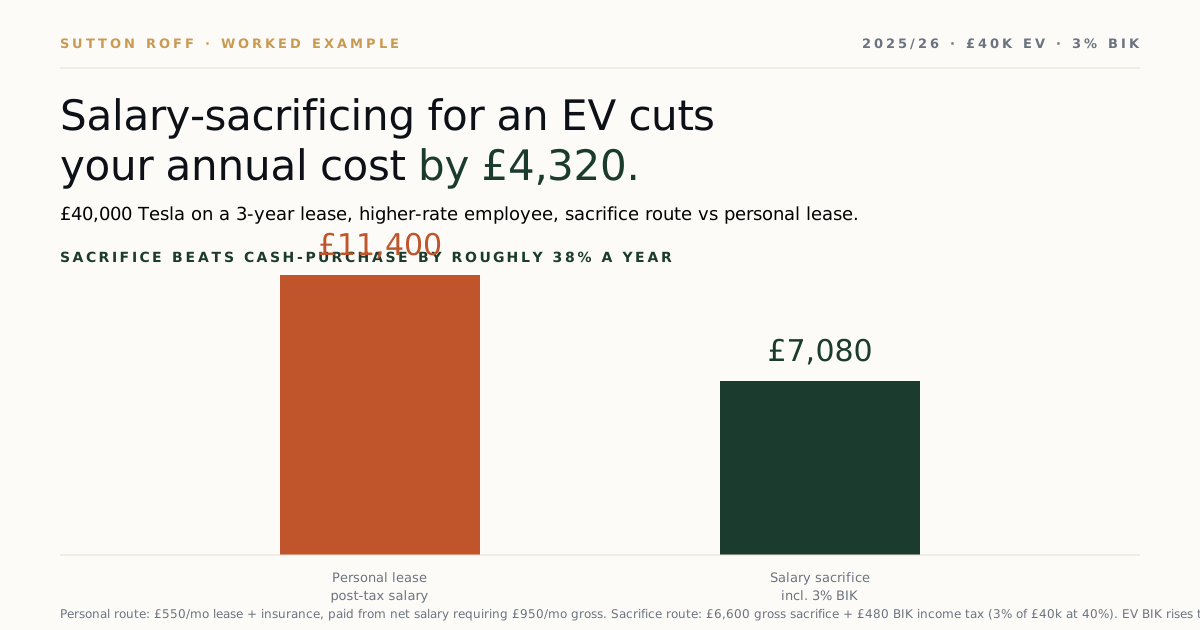
A £40,000 EV on a 3-year salary-sacrifice lease costs a higher-rate employee roughly £7,080/year all-in — versus £11,400 if bought from net salary. The 38% gap is structural, sustained by the 3% BIK rate on EVs through 2025/26. We see employees pass on the deal because the employer’s scheme communications were dense and no one made the case in plain numbers.
How EV salary sacrifice works
Salary sacrifice for an EV is a contractual reduction of your gross salary in exchange for the use of an electric car leased through your employer. The company leases the vehicle, the employee uses it, the gross-salary reduction pays the lease cost from pre-tax pre-NIC income.
The savings come from three places:
- Income tax saved on the sacrificed amount (40% in higher-rate band)
- Employee NIC saved at 2% above the upper threshold
- Employer NIC saved at 15% — usually passed back into the lease pricing
The cost reintroduced: a benefit-in-kind (BIK) tax on the use of the company car. For pure-electric vehicles, the BIK rate for 2025/26 is just 3%. So a £40,000 EV produces £1,200 of taxable BIK per year — at 40% income tax that’s £480 of tax. Net cost of the BIK on the £40k EV: £480/year.
Lewis’s £40,000 Tesla Model 3 — sacrifice versus personal lease
Lewis is a higher-rate-taxpayer employee considering a £40,000 EV on a 3-year sacrifice lease. Lease cost gross £550/month including insurance and tyres.
Personal lease alternative (cash purchase from net salary):
- £550/month lease cost = £6,600/year
- Plus insurance, breakdown, services as personal cost: £1,200/year
- Total post-tax cost needed: £7,800/year
- Pre-tax salary needed to net £7,800: roughly £950/month gross (after 40% IT + 2% NIC)
- Annual cost of personal lease route: £11,400 of gross salary
Salary sacrifice route:
- £550/month gross sacrifice from salary = £6,600/year (no income tax, no employee NIC)
- Plus 3% BIK on £40,000 = £1,200 taxable benefit at 40% = £480/year tax
- Annual all-in cost: £7,080
The salary sacrifice route saves £4,320 a year compared to the same car personally leased. Across a 3-year lease that’s £12,960 of saving — the cost of an entry-level second car, kept in your pocket.
EV BIK rates rise but stay competitive
Pure-electric vehicles have benefited from very low BIK rates as the government incentivises adoption. The published rate trajectory:
| Tax year | Pure-electric BIK | Annual BIK on £40k EV | Higher-rate tax |
|---|---|---|---|
| 2025/26 | 3% | £1,200 | £480 |
| 2026/27 | 4% | £1,600 | £640 |
| 2027/28 | 5% | £2,000 | £800 |
| 2028/29 | 7% | £2,800 | £1,120 |
| 2029/30 | 9% | £3,600 | £1,440 |
Even at the 9% BIK rate in 2029/30, an EV on salary sacrifice still beats a petrol or diesel alternative — petrol cars carry BIK rates of 25-37% based on emissions, with hybrid plug-ins typically in the 8-19% range depending on electric range.
The economic edge is structural, not a one-time perk. Salary-sacrificed EVs will be cheaper than personally-leased EVs throughout the next decade.
Two real downsides to model
1. Mortgage affordability. Salary sacrifice reduces your gross pay on the payslip. Mortgage lenders use gross pay for affordability. A £6,600/year sacrifice can knock 4-5x £6,600 (£26,400-£33,000) off your mortgage borrowing limit. If you’re buying or remortgaging within 12 months, this matters.
2. Lease commitment. Salary sacrifice locks you into a 24-48 month lease. Leaving employment usually transfers the lease to your name (with personal-lease pricing kicking in) or triggers early-termination fees. Job-stability matters before signing.
What about Ltd company directors?
For Ltd directors, the equivalent route is the company purchasing or leasing an EV directly — no salary sacrifice mechanic needed. The mechanics are similar but extracted differently:
- Company gets full corporation-tax deduction on the lease costs (typically 50-100% depending on private-use proportion)
- Director pays 3% BIK at marginal rate on the list price
- Capital allowances available if purchased outright (100% in year of purchase for new EVs)
For higher-rate Ltd directors, this is a similar 38-50% saving versus paying for the car from net dividend income. The mechanics for the typical EV-through-company decision were covered in our Tesla through company piece.
Salary sacrifice eligibility
Most UK PAYE employees can salary-sacrifice for an EV provided the gross-salary reduction doesn’t push them below the National Minimum Wage. So a £30,000 employee sacrificing £6,000/year (taking gross to £24,000) is fine; an £18,000 employee can’t sacrifice the same amount.
Some employer schemes restrict eligibility further — typically requiring 12+ months of service or excluding probation periods.
What charging arrangements are deductible
If your employer pays for charging, that’s part of the BIK calculation but historically has been free (no separate BIK on workplace charging). Home-charging reimbursement: if the employer reimburses electricity costs at the published 9p/mile electric advisory rate, that’s tax-free for the employee.
Installation of a home charger by the employer can be a tax-free benefit if it’s a qualifying installation under the OZEV grant scheme — though the OZEV grant itself was withdrawn for most homeowners in April 2022 (still available for flats, rented homes, and people with onstreet parking).
When this is a bad idea
Don’t sacrifice if you’re at or near National Minimum Wage — illegal for the employer.
Don’t sacrifice if you’re remortgaging or buying within 6-12 months. Time the sacrifice around the affordability assessment window.
Don’t sacrifice for a hybrid or petrol car at the same time — those have BIK rates 5-12x higher than EV, and the salary sacrifice maths reverses to net-cost-positive on most ICE vehicles.
Don’t ignore the lease cost itself. Salary sacrifice is a route to saving tax on the lease, not making the lease itself cheap. If your employer’s chosen lease provider is overpricing, the tax saving still won’t make a £750/month lease economical.
Key takeaways
- EV salary sacrifice saves higher-rate employees about 38% per year vs personal lease.
- BIK on EVs: 3% in 2025/26, rising to 9% by 2029/30 — still cheaper than ICE alternatives.
- £40k EV on 3-year sacrifice lease costs ~£7,080/yr all-in for higher-rate employee.
- Reduces gross payslip salary — affects mortgage affordability calculations.
- Locks you into 2-4 year lease term with employment risk.
- Ltd directors get equivalent benefit via company-purchased EV — different mechanic, similar savings.
FAQ
What happens if I leave my job?
The lease either transfers to your name (at personal-lease rates), or has an early-termination charge. Each scheme is different — read the contract before signing. Most schemes treat resignation as triggering termination.
Can I sacrifice for a hybrid?
Salary sacrifice can apply to any car, but BIK rates on hybrids (8-19%) are dramatically higher than EVs (3% in 2025/26). The maths usually fails for hybrids — the BIK eats most or all of the sacrifice tax saving.
Does the EV need to be a specific brand/model?
Depends on your employer’s scheme. Most schemes have a panel of leasing partners offering most major EVs. Some are restricted to certain brands. Check before falling in love with a specific car.
Your employer offers EV salary sacrifice and you’re hovering on whether it pays back? Book a free 20-min review — we’ll model the all-in cost against personal lease, factor in your mortgage timing, and tell you whether sacrificing now or waiting is the right call. Specialist UK personal tax accountants.