
Renting a room in your main residence is one of the cleanest corners of the UK tax code — £7,500/year tax-free, no return, no records. Above the threshold there’s a choice that catches most homeowners out: claim the allowance (Method A) or claim actual costs (Method B). Method A wins for 80% of cases — but the 20% who’d save more on Method B never get told.
The £7,500 line
If you let a furnished room (or rooms) in the property that’s your only or main residence, and the gross rental income across the year stays at or below £7,500, the income is automatically exempt. You don’t need to register for self-assessment, you don’t need to file a return for it, and you don’t need to track expenses.
If your gross rental from a lodger exceeds £7,500, you have a choice on how to be taxed:
- Method A: Deduct the £7,500 allowance from your gross rent and pay tax on the excess.
- Method B: Treat the income as standard property income — deduct actual expenses, claim Replacement of Domestic Items relief, and pay tax on the net.
You pick whichever gives the smaller bill, and you can switch between methods year by year. HMRC doesn’t lock you in.
What counts as Rent-a-Room income
- Rent from a lodger living in your main residence, sharing facilities
- Bed and breakfast income from your own home (provided it’s your main residence)
- Long-term Airbnb hosting in your main residence (not whole-property short-let)
What doesn’t qualify:
- Income from a separate property (BTL, holiday let)
- Whole-property let when you’re not living there
- Self-contained annexes that aren’t part of the main dwelling
- Office rental for someone running a business from your spare room (that’s commercial rent, different regime)
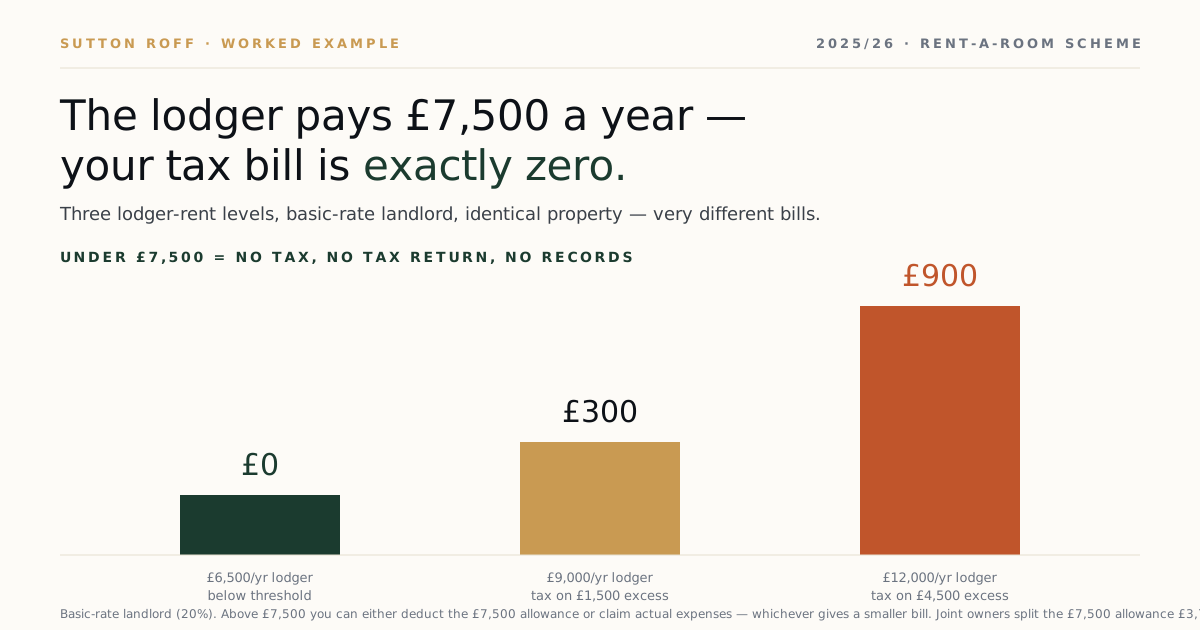
Three lodger-rent levels — three different tax answers
Basic-rate-taxpayer homeowner with one lodger.
Emily’s lodger pays £6,500/year. Under threshold. £0 tax. No return, no registration. The £7,500 covers everything.
David’s lodger pays £9,000/year. Above threshold. Method A: deduct £7,500 = £1,500 taxable, at 20% basic rate = £300 tax. Method B: claim actual expenses (let’s say £4,500 of allocated bills, council tax share, depreciation on furniture replacement) = £4,500 net taxable, at 20% = £900. Method A wins by £600.
Naomi’s lodger pays £12,000/year, with high actual costs (utilities, breakfast, cleaning all included). Method A: £12,000 − £7,500 = £4,500 taxable at 20% = £900. Method B: £12,000 − £8,000 actual costs = £4,000 net at 20% = £800. Method B narrowly wins by £100.
The rule of thumb: Method A (the £7,500 allowance) wins for most home-owners with low-to-moderate actual costs. Method B starts winning when your actual expenses are genuinely high — usually because you’re providing more than just the room (e.g. utilities included, breakfasts provided, cleaning service).
Joint occupiers split the allowance
If two people own the home (e.g. married couple), the £7,500 allowance is split £3,750 each — not £7,500 each. So the property as a whole still gets £7,500 of tax-free lodger income, but each owner sees the income halved on their own SA return.
This matters at the threshold: if total lodger rent is £8,000 split between two owners, each receives £4,000 and gets a £3,750 allowance — leaving £250 each taxable. Both owners need to file — registering even modest amounts is a registration trigger.
The lodger licence — not a tenancy
Critical legal point: a lodger sharing facilities in your main home is on a “licence to occupy”, not an Assured Shorthold Tenancy. You retain the legal right to enter the room, the lodger doesn’t have AST protection, and notice periods are short (typically 28 days). This is why Rent-a-Room is much lighter on the landlord side than a standard let.
If the “lodger” has their own self-contained space with separate entrance, kitchen and bathroom, they may legally be a tenant under an AST — at which point Rent-a-Room may not apply and standard rental rules kick in. A genuinely-shared-house arrangement is what the scheme is built for.
Mortgage and insurance considerations
Most residential mortgages allow lodger income subject to lender notification. Some require permission. Failing to disclose can technically breach mortgage terms — though in practice most lenders accept it.
Buildings insurance: notify your insurer about the lodger. Most home policies allow it; some require an endorsement or modest premium adjustment. Failing to disclose can void claims.
What about the lodger themselves?
Rent-a-Room is the homeowner’s relief — there’s no tax consequence for the lodger paying rent. They can’t deduct the rent against their income tax.
Both parties should retain a simple written licence agreement: term, rent amount, what’s included (bills, food, cleaning), notice period, and house rules. HMRC may ask for evidence of the arrangement if you eventually claim.
When this is a bad idea
Don’t try to use Rent-a-Room for short-let Airbnb income on a property you don’t actually live in. The “main residence” test is real and HMRC checks against electoral roll, council tax, and direct evidence of occupation.
Don’t forget Rent-a-Room interacts with Principal Private Residence Relief on home sale. If a single room is exclusively let (as opposed to shared-house lodger arrangement), you may compromise the PRR proportion on the let space — same trap as the home-office-as-rental structure we covered in our renting home to your Ltd piece. The Rent-a-Room scheme itself doesn’t affect PRR for genuine lodger arrangements where the lodger shares facilities.
Key takeaways
- £7,500/year tax-free under Rent-a-Room scheme — no return, no records.
- Above £7,500: choose between deducting the allowance or claiming actual expenses, whichever is lower.
- Joint owners split the allowance £3,750 each (not double).
- Applies only to your main residence; lodgers share facilities (licence, not AST).
- Notify mortgage lender and home insurer.
- Genuine shared-house lodger arrangements don’t compromise PRR on home sale.
FAQ
Does this apply if I run a B&B?
Yes — B&B income from your main residence qualifies for Rent-a-Room. Above the £7,500 threshold you can choose between the allowance and actual expenses, same as any lodger arrangement.
What about renting a room in a flat I rent?
Yes — you can use Rent-a-Room as a tenant subletting a room (with landlord’s permission). The relief applies to the property as your main residence, not based on ownership.
Does the £7,500 include utilities I charge?
Yes — Rent-a-Room income is gross of all charges including utilities, food, services. So a lodger paying £550/month + £100 utilities counts as £650/month = £7,800/year, just over threshold.
Got a lodger or thinking about it? Book a free 20-min review — we’ll confirm whether you’re under the threshold, model both methods if you’re over it, and handle SA registration if your rental crossed the line. Specialist UK Rent-a-Room and self-assessment accountants.