
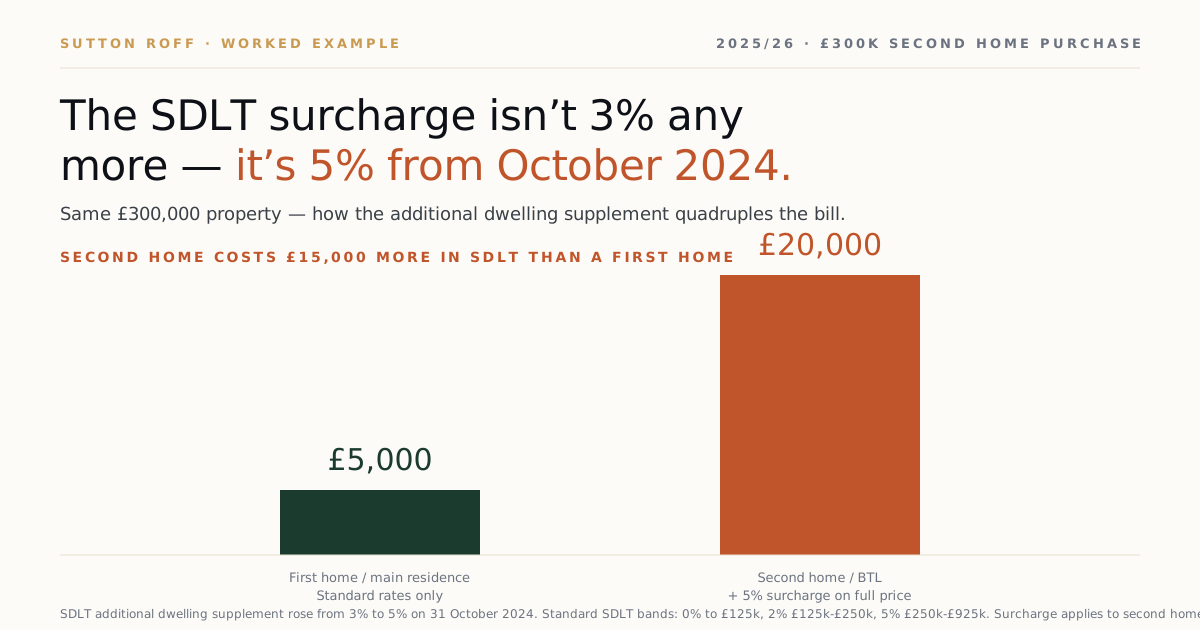
The “3% SDLT surcharge” rose to 5% on 31 October 2024 — and Multiple Dwellings Relief was abolished from June 2024 along with it. On a £300,000 second home, that’s £15,000 of extra cash on completion day versus 18 months earlier. We see clients exchange contracts without realising the surcharge has changed since they last bought, then absorb a five-figure surprise on completion.
What the additional dwelling supplement is
The Higher Rates of SDLT — sometimes called the “additional dwelling supplement” or just “the surcharge” — applies on top of standard SDLT when you buy a residential property and you’ll own two or more residential properties at the end of the day of completion.
The rate jumped from 3% to 5% on 31 October 2024. That single change adds £15,000 of SDLT on a £300,000 BTL purchase compared to the pre-October position, and £25,000 on a £500,000 second home.
It applies to the full price of the property, not the marginal slice — so even on a £150,000 BTL where standard SDLT is only £500, the surcharge adds £7,500.
£300,000 second home — first-property versus surcharge
| SDLT band | Rate | First home | Second / BTL (with 5% surcharge) |
|---|---|---|---|
| £0 – £125,000 | 0% | £0 | £0 (+ 5% surcharge applies separately) |
| £125k – £250k | 2% | £2,500 | £2,500 |
| £250k – £300k | 5% | £2,500 | £2,500 |
| 5% surcharge on full £300k | 5% | — | £15,000 |
| Total SDLT | — | £5,000 | £20,000 |
Same property, four times the SDLT. This is the gap that’s killed many second-home and BTL purchase decisions since November 2024.
Five reliefs that genuinely still work
1. Replacement of main residence. If you’re buying a new main home before selling the old one, you pay the surcharge on completion — but if you sell the old main home within 3 years, you can claim a full refund of the surcharge portion. This is the most common path back from a surcharge bill: buy first, sell within 36 months, refund.
2. Six-or-more dwellings rule. A single transaction buying six or more residential properties is treated as non-residential for SDLT purposes. Non-residential rates max out at 5% on the slice above £250,000, with no surcharge. For portfolio buyers, this can save tens of thousands per acquisition.
3. Mixed-use property. Property with genuine commercial use (e.g. shop with flat above, working farm with farmhouse) attracts non-residential SDLT. Strict tests — the commercial element must be substantial, not nominal.
4. Inherited property within 3 years. A property inherited within the past 3 years that you didn’t buy doesn’t count toward the “two-property” test for surcharge purposes — provided your beneficial interest was 50% or less and the property remains in the estate.
5. Subsidiary dwelling not separately marketable. Granny annexes that aren’t independently saleable can sometimes be treated as part of the main dwelling rather than a separate property — narrow rules but worth checking.
What 2024 took away — Multiple Dwellings Relief abolished
Multiple Dwellings Relief (MDR) was abolished from 1 June 2024. MDR used to let portfolio buyers pay SDLT averaged across multiple dwellings rather than on each separately. Its abolition removed the most flexible legitimate route to lower SDLT on small portfolio purchases (4-5 flats) — and it’s a common surprise for landlords who’d planned around it.
The 6+ dwellings non-residential treatment is now the only practical relief for portfolio buyers below the genuine commercial threshold.
What about Ltd company buyers?
Ltd companies pay the surcharge on every residential purchase from £40,000 upwards — there’s no “first home” exemption for corporate buyers. So a Ltd buying a £300,000 BTL pays the same £20,000 SDLT (£5,000 standard + £15,000 surcharge).
Ltd companies buying for £500,000+ also face the Annual Tax on Enveloped Dwellings (ATED) on a sliding scale — though most BTL Ltds qualify for the property-rental-business exemption from ATED. ATED rules are checked annually, and missing the exemption claim costs five-figure penalties.
When this is a bad idea
Don’t transfer your existing main home into a Ltd to “make the new purchase your first” — HMRC’s anti-avoidance treats this exactly how it looks. The surcharge applies to the new purchase regardless of how many properties are personally owned versus corporately owned by you.
Don’t try to claim mixed-use status on a “shop with flat above” if the shop has been empty for years. The rules require active commercial use — shuttered commercial space gets re-examined hard.
Don’t forget the 3-year refund window for replacement-of-main-residence. Sell the old home on day 1,096 and there’s no refund — and HMRC won’t extend the deadline.
Key takeaways
- The surcharge is now 5% (up from 3%) since 31 October 2024.
- It applies to the full purchase price, not the slice.
- On a £300k second home, the surcharge alone adds £15,000.
- Replacement-of-main-residence: full refund if you sell the old main home within 3 years.
- 6+ dwellings in one transaction = non-residential rates, no surcharge.
- MDR abolished from June 2024 — small-portfolio buyers lost the main relief.
- Ltd buyers pay surcharge from £40k upwards with no first-home exemption.
FAQ
Does the surcharge apply if I’m buying with an unmarried partner?
Yes — the surcharge applies based on the buyers’ combined property holdings at end of completion day. Unmarried co-buyers each contribute their property history. One owning a flat means the joint purchase pays the surcharge.
What about properties under £40,000?
Properties under £40,000 don’t trigger the surcharge. So a low-value second home (e.g. some mobile-home/houseboat purchases) escapes. Above £40k, the surcharge applies on the full price.
How does the 3-year refund window work?
You pay the surcharge on the new home at completion, then sell your old main home within 3 years to claim a full refund of the surcharge portion. Apply via gov.uk within 12 months of selling the old home.
About to buy a second property or BTL? Book a free 20-min review before exchange — we’ll confirm whether replacement-of-main-residence relief, the 6+ dwellings rule or mixed-use classification applies to your specific purchase, and structure the deal to claim every legitimate refund. Specialist UK landlord and SDLT accountants.