
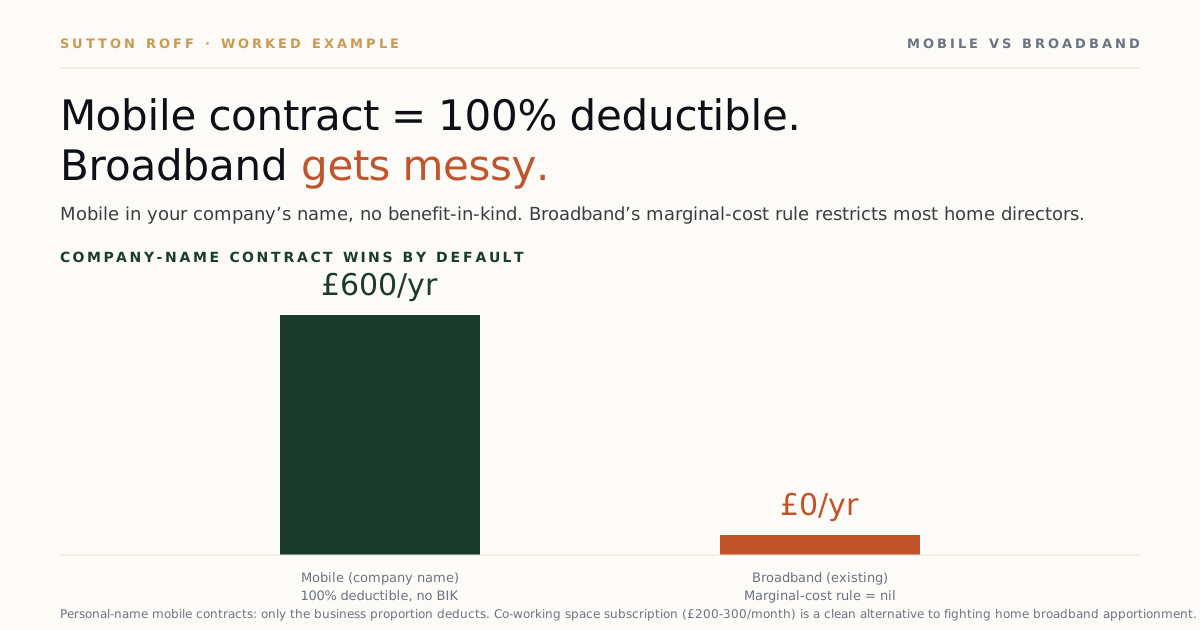
Mobile contract in your company’s name = 100% deductible, no benefit-in-kind on personal calls. Same contract in your personal name = the business proportion only, with paperwork no one wants to maintain. Broadband is messier — HMRC’s marginal-cost rule means most home directors can claim less than they expect. We see directors put their spouse’s phone through the company and get caught for BIK that costs more than the bill.
Mobile — the contract name decides everything
If your mobile contract is in the company’s name, it’s a fully-deductible business expense. The company pays the bill direct, claims VAT on it, gets corporation-tax relief on the cost, and there’s no benefit-in-kind charge on the director — even for personal calls. HMRC explicitly allows one mobile per director under the “no benefit charge” rule.
If your mobile contract is in your personal name, only the business-use proportion is deductible. You’d need to track call usage, time-apportion data, and submit an expense claim each month. In practice it’s so much hassle that directors either reimburse nothing or get scrutinised on apportionment.
The fix is almost always the same: switch the contract to the company. Most network providers will transfer an existing contract to a business account on request — sometimes with a small admin fee, often free. From the next billing cycle, the bill is fully deductible with no further argument.
Broadband — the marginal-cost rule that catches most directors
Home broadband is the awkward one. HMRC’s position is that if you already had a broadband connection at home before any business use, the connection itself was incurred for personal reasons. You can only deduct the marginal increase in cost caused by business use.
For most home directors, the marginal increase is zero — the contract you’d have anyway. So the deductible amount is, effectively, nothing.
The exceptions are narrow but real:
- You upgraded from a £30 home plan to a £70 business plan specifically to run the company. The £40/month differential is arguably claimable.
- You installed a separate business broadband line (e.g. dedicated fibre, business-grade router) on top of your existing home connection. The new line is fully deductible.
- You’re a sole trader running fully from home, and you can credibly demonstrate the connection wouldn’t exist without the business — though even then, HMRC tends to pin you to a percentage rather than 100%.
Three home setups — three different deductible amounts
Setup A — Andrew has existing £40/month home broadband. Uses it for company work but family also uses it. Deductible amount: £0. The connection was already paid for personally.
Setup B — Andrew upgrades to a £70/month business plan because video calls kept dropping. The upgrade was driven by business need. Deductible: arguably the £30/month differential, or £360/year. Keep the supporting reasoning written down — invoice from upgrade date, note explaining the business case.
Setup C — Andrew installs a second dedicated business line, separate router, separate billing. Fully deductible: £420/year on a £35/month contract. Cleanest path; HMRC has no argument because the connection only exists for the business.
The clean alternative: rent space, not bandwidth
For directors who genuinely need premium connectivity for business, a co-working space subscription at £200-£300/month is fully deductible with no marginal-cost argument. The cost is similar to a “business” home internet upgrade once you account for the awkwardness, and the premises also count for HMRC purposes as a business workplace — making travel between there and clients a deductible business journey rather than commuting.
What about TV streaming, Netflix, music subscriptions?
Generally not deductible, regardless of how strong your “I research industry content on Netflix” argument is. The exception: a specific paid subscription that’s directly relevant to the company’s trade — a stock photo library for a marketing agency, a research database for a consultancy, a software journal subscription for a developer Ltd. These pass the wholly-and-exclusively test if you can show direct business application.
If you have any dual-use, the cleanest answer is to leave the subscription on your personal card and accept it’s not a company cost. Trying to put a Netflix subscription through the company creates more risk than it saves.
When this is a bad idea
Don’t put your spouse’s mobile through the company unless they’re a genuine employee or director with a business need for one. HMRC will assess it as a benefit-in-kind on the director, with employee NIC, employer NIC and personal income tax all stacking up — often costing more than the bill itself.
Don’t put 100% of home broadband through the company “because I work from home full-time” without keeping evidence. If asked, you’ll need to defend the apportionment with usage logs, family-vs-business time, and contractual terms. The hassle and risk usually outweighs the few hundred pounds saved.
Key takeaways
- Mobile contract in company name = 100% deductible, no BIK on personal calls.
- Mobile contract in personal name = only business-use proportion, hard to evidence.
- Existing home broadband = usually £0 deductible (marginal cost rule).
- Upgraded plan or separate business line = the upgrade differential is deductible.
- Co-working subscription = fully deductible alternative to fighting home broadband apportionment.
- Streaming subscriptions are personal — exceptions need direct trade relevance.
FAQ
Can I claim the cost of switching contracts?
Switch fees and exit penalties on changing to a company contract are part of the cost of the new contract — deductible against corporation tax. Document the business reason for the switch.
What about a SIM-only plan vs full phone?
Both qualify if the contract is in the company’s name. SIM-only is operationally simpler and slightly cheaper. The handset can be expensed as equipment under AIA if owned by the company.
Is a broadband upgrade for video calls deductible?
The upgrade differential may be claimable if you can show it’s genuinely needed for business video calls. Document the technical reason (call-quality requirements, bandwidth specs). The base broadband stays personal; the upgrade is the deductible bit.
Trying to work out whether your phone bill or broadband should sit through the company? Book a free 20-min review — we’ll review your specific setup and tell you which route saves money without inviting a BIK charge. Specialist UK director expenses accountants.