
Since January 2024, Vinted, eBay, Depop, Airbnb and Uber have been quietly handing your sales data to HMRC. Cross £1,740 in sales or 30 transactions in a calendar year and your name, address and totals are already on file. We’ve spent the past 12 months untangling penalty positions for sellers who didn’t know the data trail had started — and the cost of fixing it after a nudge letter routinely runs 10× the cost of disclosing first.
The £1,000 trading allowance — and why “gross” matters
Every UK individual gets a £1,000 trading allowance per tax year. If your gross sales income from selling things — across every platform combined — stays under £1,000 in the tax year, you don’t need to tell HMRC, register for self-assessment, or pay a penny of tax on it. That’s true even if you’re profitable.
Cross £1,000 in gross sales (not profit — gross), and you’re in self-assessment territory. You either deduct the £1,000 allowance from your sales or claim your real expenses against them, then pay income tax and National Insurance on what’s left.
One twist: selling your own pre-owned belongings — last year’s coat, the kids’ outgrown trainers, the kitchen mixer you upgraded — isn’t trading at all. It’s the disposal of personal possessions, and it’s outside income tax entirely (capital gains rules might apply to high-value individual items above £6,000, but virtually never on second-hand clothes). The £1,000 line is for buying things to sell on, or making things to sell.
The 2024 platform-reporting change — and what HMRC now sees
From January 2024, online platforms — Vinted, eBay, Depop, Etsy, Airbnb, Uber — must report seller activity to HMRC where a seller crosses £1,740 in sales or 30 transactions in a calendar year. The platforms send HMRC your name, address, and what you sold for.
HMRC isn’t using this to chase Granny’s car-boot decluttering — they’re cross-checking it against self-assessment returns to find traders who’ve never registered. If you’re trading and not declaring, the data trail now starts at the platform. The HMRC nudge letter playbook has been getting a lot of use this past 12 months for exactly this reason.
Three sellers, three answers — same activity, different bills
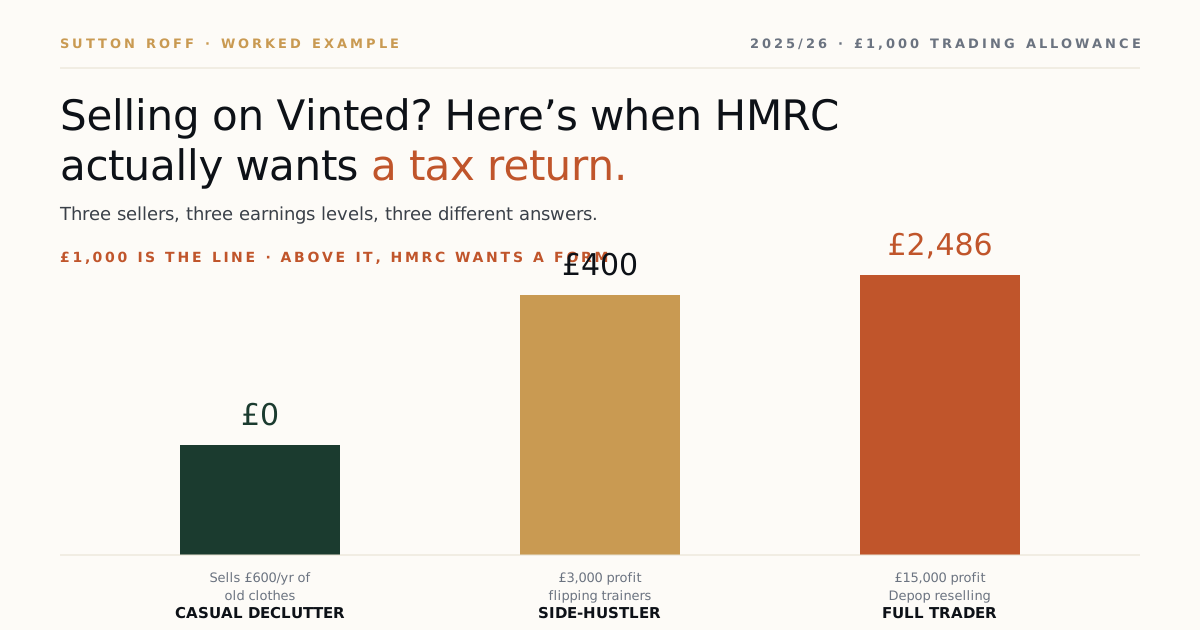
Claire, a teacher clearing her wardrobe, sells £600 of her own old clothes on Vinted across the year. She bought them years ago, wore them, and is clearing wardrobe space. Tax owed: £0. No return needed, no registration. Personal possessions, full stop.
Sam, an office worker who flips trainers at weekends, buys 50 pairs of trainers a year at car-boots and resells them on Depop. He grosses £4,500 with about £1,500 of cost-of-goods, so his profit is £3,000. He’s a basic-rate taxpayer with a day job already using his Personal Allowance. Tax owed on the side-hustle: roughly £400 (£3,000 minus the £1,000 trading allowance, taxed at 20% basic rate, plus a small Class 4 NIC sliver depending on his employed earnings). He needs to register for self-assessment by 5 October 2026 if this is his first year.
Faye, who quit her marketing job to resell vintage jewellery full-time, makes £25,000 in gross sales with £10,000 of stock costs and £500 of platform fees, leaving £14,500 of profit. She has no other income. After the £12,570 Personal Allowance, she pays 20% income tax and 6% Class 4 NIC on the remaining £1,930-ish — call it £500 in tax if it’s just this. But if she has another £40,000 of employment income, that £14,500 of self-employment profit lands fully in the basic-rate band, and her bill on the Depop activity alone is closer to £3,800 when income tax and Class 4 NIC are stacked.
Same activity, very different bills, depending entirely on what other income you’ve got.
When you absolutely must register for self-assessment
- Gross sales (any platform) over £1,000 in a tax year, and the items aren’t pre-owned personal possessions
- You’ve started buying stock specifically to resell — that’s trading from day one, regardless of how much you’ve sold yet
- You’re commissioning, making or upcycling items to sell — also trading from day one
- HMRC writes to you about platform-reported sales activity (the nudge letters started in 2024 and are still going)
The deadline to register for the 2025/26 tax year is 5 October 2026, with the first tax bill due by 31 January 2027.
When this is a bad idea
Don’t try to “spread” sales across multiple platforms to stay under £1,000 each — HMRC aggregates. The trading allowance is per person per tax year, not per platform. And don’t try to dress up trading activity as “selling personal items” if you’ve been buying things specifically to resell — the test is intent at the point of buying, not the type of item.
If you’ve been trading without registering for two or three years and are now nervous about platform reporting, voluntary disclosure is dramatically cheaper than waiting for the letter. Penalties on a voluntary unprompted disclosure can drop to 0%; on a prompted one (after HMRC writes), they start at 30% and climb.
Key takeaways
- Selling your own old stuff is not taxable — disposing of personal possessions sits outside income tax.
- The £1,000 trading allowance is the threshold: under it you don’t tell HMRC; over it you register for self-assessment.
- It’s gross sales, not profit, that counts toward the £1,000 line.
- Platforms now report your activity to HMRC at £1,740 / 30 transactions — there’s no hiding side-hustle income from 2024 onwards.
- If you’re a side-hustler with a day job, your bill is whatever your marginal rate is times your profit (less the £1,000 allowance).
- Late or missing registrations carry penalties; voluntary disclosure before HMRC writes is far cheaper.
FAQ
Do I need to register if I’m under £1,000 of sales?
No — below £1,000 of gross trading sales (across all platforms combined) you don’t need to register or file. Above £1,000 you must register for self-assessment by 5 October following the tax year.
Are donations or gifts to charity exempt?
Donations of items to charity for free aren’t taxable. Selling to charity at fair market value is normal trading. Charity-event gift sales (where proceeds go to charity) need separate handling — check Gift Aid eligibility.
What about international sales (eBay to US)?
Counts toward your UK trading allowance. Above £1,000 you register for SA. The buyer’s location doesn’t change UK tax position; VAT registration only kicks in above £90k of taxable turnover.
Got a platform-reporting nudge letter on the doormat? Or know you should have registered last year and never got round to it? Book a free 20-min review — we’ll model the voluntary disclosure cost (often 0% penalty) versus what a prompted disclosure would land at, and tell you which path is cleanest. Specialist UK self-assessment and back-period disclosure accountants.