
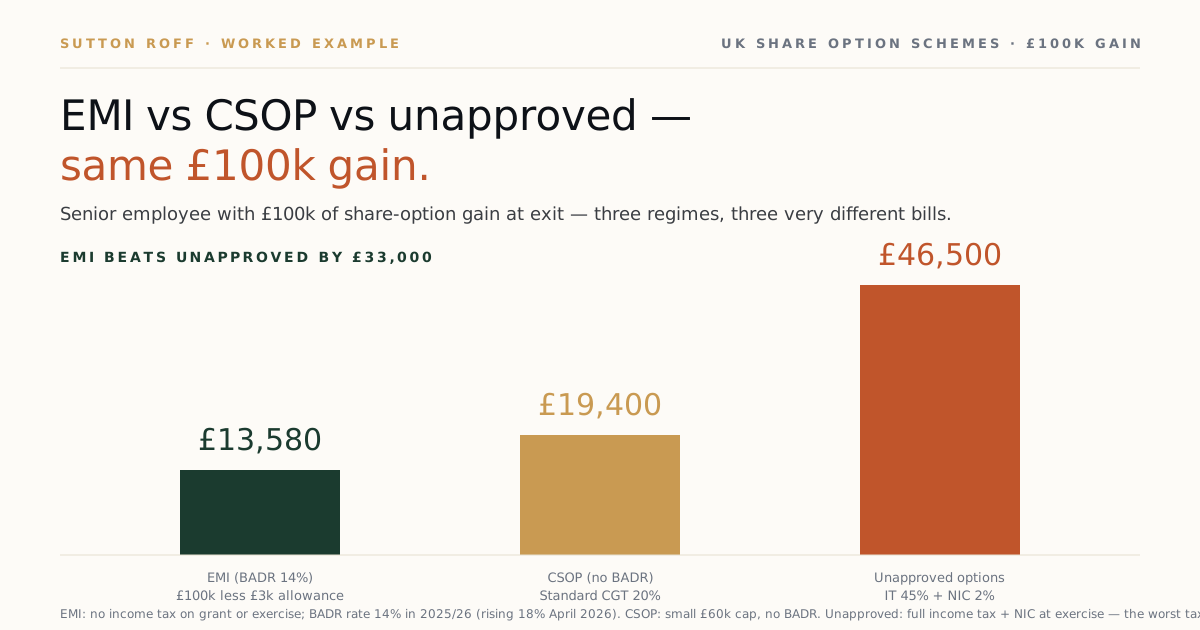
EMI options have a reputation for being a “tech founder” tool — and they’re under-used everywhere else. The reality is that EMI works for almost any qualifying owner-managed UK business: digital agencies, restaurant groups, consultancies, retail, professional services. If you’re trying to retain a key hire and would consider giving them equity at exit, EMI is the most tax-efficient way to do it. Here’s the non-tech version.
The basic deal
An EMI option gives an employee the right (not the obligation) to buy shares in your company at a fixed price (the “exercise price”), at some point in the future. Tax treatment:
- No tax on grant (when you give them the option).
- No income tax or NIC on exercise, provided the exercise price was at least the share’s market value on grant day. (If granted at a discount, income tax applies on the discount when exercised.)
- When the employee eventually sells, they pay Capital Gains Tax on the uplift between the exercise price and the sale proceeds.
- Most EMI sales qualify for Business Asset Disposal Relief (BADR) at 14% in 2025/26 (rising to 18% from April 2026), even for employees who don’t own 5%+ of the company — a significant relaxation of the normal BADR rules.
Eligibility
Your company qualifies if all of these apply:
- Gross assets ≤ £30 million
- Fewer than 250 full-time equivalent employees
- Trading (most non-investment businesses qualify; exclusions cover banking, leasing, royalties, dealing in land/securities/futures, and some property — not most owner-managed businesses)
- Not under the control of another company (i.e. you’re independent or held by individuals)
The employee qualifies if:
- Works ≥ 25 hours/week or ≥ 75% of their working time for the company
- Owns less than 30% of the company already
- Total EMI options held by them have grant-date value ≤ £250,000
Total EMI options across all employees is capped at £3 million in grant-date market value — a constraint that almost never bites in practice.
A worked example — restaurant group
You own a 4-restaurant group through a Ltd company, currently valued at £1.2 million. You want to give your operations director — who’s been instrumental in growing the business — a 5% stake to keep her motivated to a future exit.
Direct gift of 5% would create an income-tax hit of £60,000 (5% × £1.2m) at her marginal rate. As a higher-rate taxpayer, that’s £24,000 of tax on a “gift.” Disastrous.
EMI alternative:
- Grant her 5% as an EMI option at the current £60,000 market value (she has the right to buy 5% of shares for £60k whenever she chooses, within the next 10 years).
- No tax on grant.
- Three years later you sell the business for £3 million.
- She exercises (pays £60k to buy the shares) and immediately sells for 5% × £3m = £150,000.
- Gain on sale: £150,000 − £60,000 = £90,000.
- BADR at 14%: £12,600 tax. She nets £77,400 from the option after paying her £60k strike.
Same outcome via direct gift would have cost her £24,000 income tax up front (no cash to pay it with) plus 24% CGT on a smaller £60k gain at sale. EMI saves her roughly £35,000 and avoids the upfront-cash-flow problem.
What EMI usually costs to set up
- HMRC Advance Assurance (optional but recommended): free, just paperwork.
- Independent share valuation agreed with HMRC: £1,000–£2,500 from a specialist valuer.
- Plan rules drafted: £2,000–£4,000 with a legal/tax adviser.
- Per-employee option agreement: £300–£600 each.
- Annual EMI return (form ERS) by 6 July following each tax year: ~£300/year ongoing.
Total first-year setup: typically £4,000–£7,000. Trivial against the tax it saves the recipient over the lifetime of the option.
The 92-day notification deadline — don’t miss it
Once you grant an EMI option, you have 92 days to notify HMRC. Miss the deadline and the option permanently loses its EMI tax status — it becomes an unapproved option, with all the tax disadvantages of taxing the gain at exercise as income. There’s no rescue, no extension. The single most expensive EMI mistake we see.
Vesting and performance conditions
You can attach almost any reasonable condition to the option:
- Time-based vesting (e.g. 25% per year over 4 years)
- Continued employment (option lapses if they leave)
- Performance targets (turnover milestones, store openings, customer retention)
- Exit-only vesting (only exercisable on a sale of the company)
Exit-only vesting is the most common setup for non-tech owner-managed businesses — it means the employee can only convert their option to shares if and when you sell, which keeps things simple and aligns interests cleanly.
When EMI doesn’t work
- You’re a partnership or LLP — only Ltd companies can grant EMI.
- You’re already over 250 employees or £30m gross assets — outside the regime.
- The hire is a contractor or board adviser, not an employee — use unapproved options or growth shares instead.
- You don’t actually plan to sell — EMI works best with an exit event in mind.
Key takeaways
- EMI isn’t tech-only. Most owner-managed UK SMEs (under £30m assets, <250 staff) qualify.
- Tax: nothing at grant or exercise, then CGT at 14% (BADR) on sale — even for <5% holdings.
- Setup cost: £4,000–£7,000 first year. Saves the employee tens of thousands at exit.
- 92-day HMRC notification deadline is non-negotiable. Calendar it.
- Exit-only vesting keeps the structure simple for owner-managed businesses planning to sell.
FAQ
What’s the 92-day notification deadline?
Within 92 days of granting an EMI option, you must notify HMRC via the ERS service. Miss it and the grant loses EMI tax status forever — falls back to unapproved treatment with no rescue. The single most expensive EMI mistake.
Can I set up EMI for advisors or contractors?
No — EMI is for employees only (working ≥25 hrs/week or ≥75% of working time for the company). Advisors and contractors need unapproved options or growth shares instead.
What if my company has more than 250 employees?
EMI eligibility caps at 250 full-time equivalent employees. Above that, your alternatives are unapproved options, CSOP (Company Share Option Plan, smaller £60k limit), or other employee share structures with less generous tax treatment.
Thinking about giving a key employee equity? Or planning an exit and wishing you’d structured it better? Book a free 20-min review and we’ll walk through the EMI vs alternatives decision. Specialist UK accountants for owner-managed businesses.