
If you’re a UK Ltd director with profits above what you need to spend, the question isn’t “salary vs dividends” — it’s “dividends vs pension.” For long-term wealth, this is the most important question you’ll answer. The maths in 2025/26 strongly favours pension up to the £60k annual allowance, particularly for higher and additional rate taxpayers. Here’s the comparison.
The two routes — same starting point
Imagine the company has £10,000 of pre-CT profit it doesn’t need to retain or invest. Two ways to get it out (long-term):
| Step | Route A — Dividend then ISA | Route B — Employer pension contribution |
|---|---|---|
| Starting pre-CT profit | £10,000 | £10,000 |
| Corporation tax @ 25% | −£2,500 | +£2,500 saved (deductible) |
| Distributable / contribution | £7,500 dividend | £10,000 contribution |
| Personal tax | −£2,531 (33.75% higher-rate dividend) | £0 |
| Employer / employee NIC | £0 | £0 |
| Capital landed | £4,969 in ISA | £10,000 in pension |
| Future tax on withdrawal | None (ISA tax-free) | 15% effective (25% PCLS + 75% basic-rate) |
| Net wealth at retirement (15yr @ 6%) | £11,909 | £21,269 |
Pension wins by ~£9,360 per £10,000 contributed in this scenario — roughly 78% more retirement income.
That’s £10,000 vs £4,969 — the pension route puts twice as much capital to work, immediately. Compounding over 15 years at 6% real return:
- ISA route: £4,969 → £11,909 (tax-free withdrawal in retirement)
- Pension route: £10,000 → £23,966 — but with tax on withdrawal beyond the 25% tax-free lump sum
The withdrawal tax problem — and why pension still wins
You can take 25% of a pension as a tax-free lump sum from age 57. The remaining 75% comes out as taxable income. So the £23,966 pension breakdown looks like:
- 25% tax-free lump sum: £5,991 net
- 75% taxable income: £17,975 — taxed at the rate you’re in at retirement
If you’re a basic-rate taxpayer in retirement (most directors are, once they stop drawing dividends), the £17,975 taxable portion has £12,570 covered by personal allowance and the rest at 20%. Effective rate ~15%. After tax: £15,278 + £5,991 lump sum = £21,269 net from the pension route.
The ISA route delivers £11,909 net (no withdrawal tax).
Pension still wins by ~£9,360 per £10,000 contributed, in this scenario. Roughly 78% more retirement income.
Where the pension route loses
- You exceed the £60k annual allowance — annual allowance charge clawback at marginal rate. Tapered down for adjusted income over £260,000.
- You exceed the lifetime cap (now removed but tax-free lump sum is still capped at £268,275) — once your pension would create a tax-free lump sum bigger than this, marginal value drops.
- You’ll be additional-rate in retirement — rare but possible (very large pension pots). At 45% on the 75% taxable portion, the gap to ISAs narrows dramatically.
- You need access to capital before age 57 — pension is locked in. ISA isn’t. For a 35-year-old this is a real consideration.
What about the £60k annual allowance — and carry-forward
Standard annual allowance is £60,000 in 2025/26. Tapered down by £1 for every £2 of “adjusted income” over £260,000, to a floor of £10,000 for adjusted income over £360,000.
You can carry forward up to 3 years of unused annual allowance. So if you’ve not made pension contributions for 3 years, you could potentially contribute £60k × 4 = £240,000 this tax year — provided your salary plus employer contributions don’t exceed your “relevant earnings” cap.
Important: employer pension contributions don’t count against your “100% of relevant earnings” cap (the cap that limits personal contributions). So a director can have a low salary (£12,570) AND a £60,000 employer pension contribution — they’re not subject to the relevant-earnings cap. Carry-forward catches up too.
A worked example — director with £30k of “spare” profit
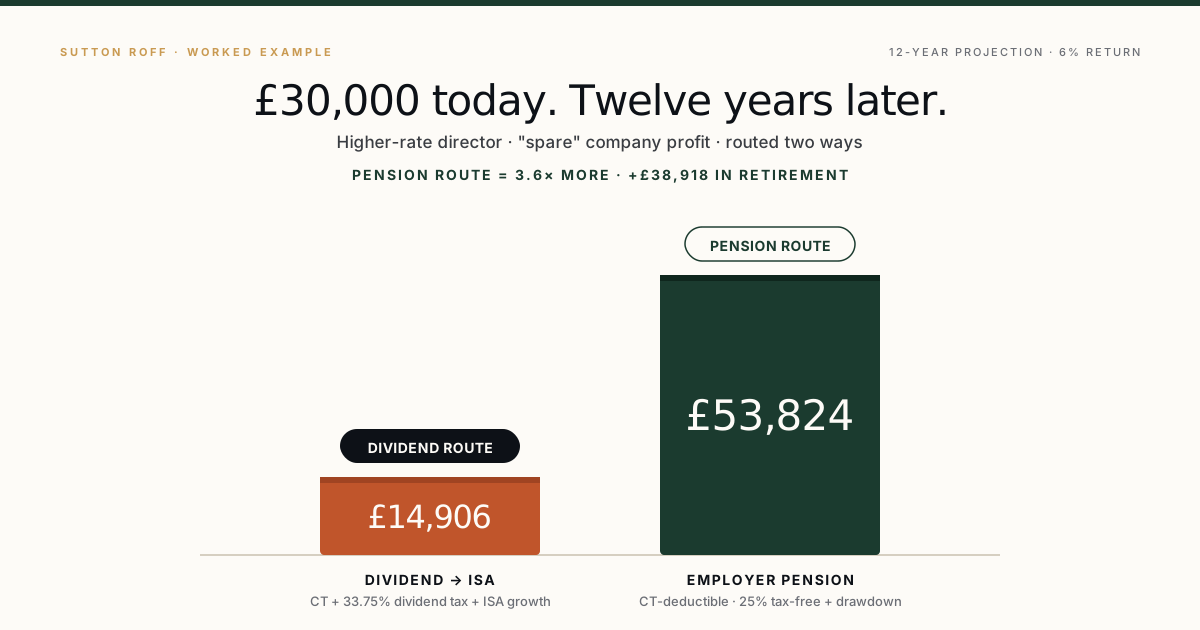
Sarah, sole director, takes £12,570 salary + £37,700 dividends, lives off £45k net. Her company’s profit before salary is £100k, leaving roughly £30k of post-extraction “spare” profit each year.
Route A — leave as retained profit, eventually distribute as dividend:
- £30k retained, CT at 25% = £22,500 distributable
- Dividend tax (higher rate, 33.75%) = £7,594
- Net to Sarah eventually: £14,906
Route B — employer pension contribution:
- £30,000 into Sarah’s SIPP
- Compound for 12 years to age 57 at 6% = £60,365
- Tax-free lump sum: £15,091
- Taxable income: £45,274 — at basic rate, £6,541 tax
- Net at age 57: £53,824
One year of redirected £30k → ~£40,000 more retirement wealth than the dividend route. Repeat for 12 years and the gap is half a million pounds.
Practical guardrails
- Never contribute more than the company has available in cash + reasonable trade-on profits — pension contributions need to be “wholly and exclusively” for the trade, which means commercially justifiable.
- Don’t contribute amounts that would breach the £60k annual allowance unless you’ve checked carry-forward availability.
- Contributions are usually best made before the company’s year-end so they fall in the right CT period.
- Keep personal contributions modest if the company is making employer contributions on top — avoid breaching annual allowance.
- SSAS / SIPP setup: if the pension is for the directors only, a self-administered scheme (SSAS) can also lend money back to the company up to 50% of the fund value. Niche but powerful.
Key takeaways
- For long-term wealth, employer pension contributions beat dividends by ~70–80% per pound of cash compared with the same money taken as dividend then ISA-invested.
- The standard annual allowance is £60,000 in 2025/26. Carry-forward goes back 3 years.
- Employer contributions don’t count against the “100% of relevant earnings” cap — directors with low salaries can still contribute £60k+/year.
- The constraint isn’t tax-efficiency — it’s access. Pensions lock until age 57 (rising to 58 in 2028).
- Best mix: pension up to AA + ISA above + dividends only for current spending needs.
FAQ
What if I’m under 40 and worried about pension access?
Liquidity is the real constraint, not tax. For under-40s, a balanced approach is pension up to half the AA + ISA above. Pension wins on tax; ISA wins on pre-55 access. Mix them.
How does this change if I’m at additional rate (45%)?
Pension still wins, but the gap narrows in retirement if you’ll also be at 45%. Most directors won’t be additional-rate in retirement, so pension still beats ISA-via-dividends by 50-70%.
Should I contribute personally instead of via the company?
Personal contributions get income-tax relief at your marginal rate. Employer contributions get CT relief (19% small profits, 25% main) plus avoid NIC. For most director-shareholders, employer contribution beats personal by 5-15% net.
If you’ve got “spare” profit your business doesn’t need, the difference between dividends and pension over 15 years could be £500k+. Book a free 20-min review and we’ll model the trade-off with your specific numbers and retirement timeline. Specialist UK tax planners.