
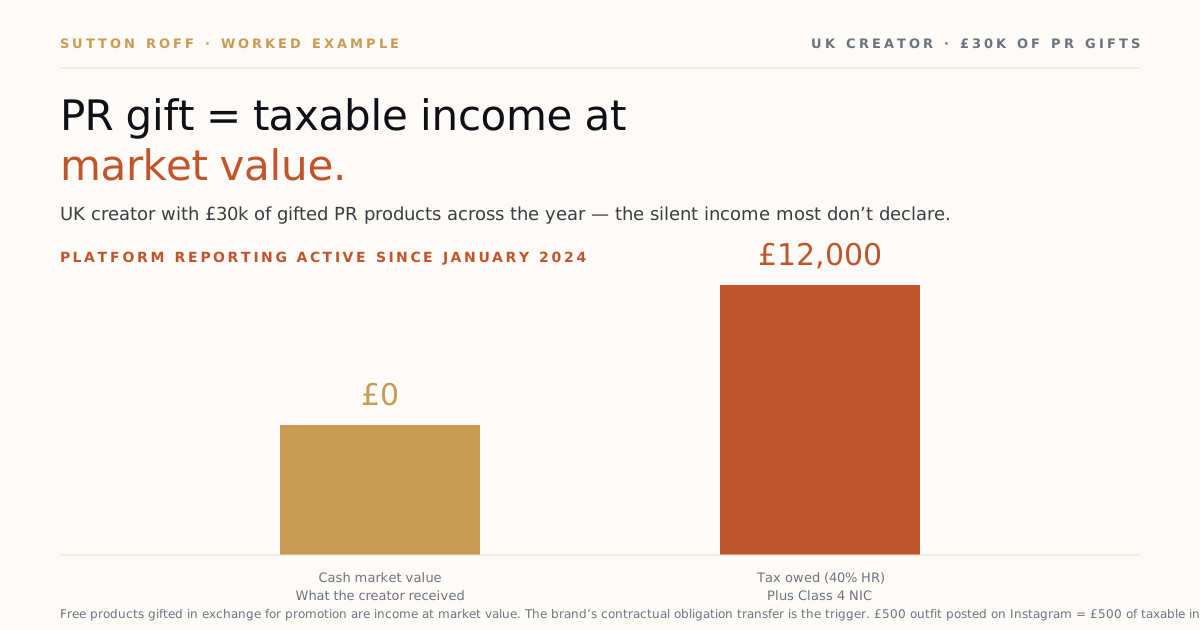
If you’re a UK creator earning from content, HMRC’s “Connect” data-mining system has almost certainly already linked your AdSense, Twitch, OnlyFans and Amazon-affiliate income to your name. Less obviously, it’s also pulling your Instagram brand-collab posts and YouTube sponsor videos. Since 2023, HMRC has issued thousands of nudge letters to creators about undeclared sponsorship and PR-gift income. Most go unanswered for months, then escalate. Here’s the playbook.
What HMRC actually wants
The legal position is straightforward: any income you receive in exchange for content — cash or non-cash — is taxable at market value. That includes:
- Cash sponsorship payments
- Affiliate commission (Amazon Associates, sub-affiliate networks, etc.)
- Free products sent in exchange for a post, story, mention, video or review
- “PR trips” (flights, hotels, experiences) provided in exchange for content
- Equity / tokens received from web3 brand deals
- Gifted services (manicures, haircuts, training, etc. with a content quid-pro-quo)
The test is quid pro quo. If the brand expected anything in return — a post, a story, a tag, a discount code — the value is taxable income. The fact that no contract was signed and no money changed hands doesn’t matter. HMRC’s Influencers and Online Earners guidance (updated 2024) is explicit on this.
What’s NOT taxable
- Genuine no-strings gifts from individuals (e.g. a friend sending a birthday present)
- Gifts received in a personal context with no business or content expectation
- Goods sent unsolicited where you neither requested nor posted about them
HMRC’s view of “unsolicited and not posted about” is narrow. If a brand sends 50 creators something speculatively and you post about it, that’s taxable — even if you didn’t ask for it.
Valuing the gift — at market value, not cost
The taxable amount is the retail market value of the gift, not what it cost the brand. A skincare brand might pay £8 wholesale to send you a £45 RRP serum; HMRC values it at £45. Logging takes 30 seconds per gift if you do it as you go — and is impossible to reconstruct 12 months later from receipts that don’t exist.
The HMRC nudge letter — what it looks like
The letter usually opens with: “We have information that suggests you may have additional income that has not been declared in your tax return…” It typically gives 30 days to respond, and offers two routes:
- Voluntary disclosure through the Digital Disclosure Service — you self-declare all undeclared income going back up to 4 years (longer if HMRC believes there was deliberate non-disclosure), pay the tax + interest + a reduced penalty (usually 0–10%).
- Wait for an investigation — penalties of 30%+, possibly publication of details for serious cases.
If you’ve received a nudge letter, the default response is voluntary disclosure. Penalties drop dramatically when you go in cooperatively.
The 30-day playbook
If a nudge letter has landed:
- Day 1–3: Don’t respond yet. Collect everything: bank statements (all accounts), PayPal/Stripe/Wise activity, Instagram/TikTok/YouTube DMs from brands, email folder, any spreadsheet or photos of received items.
- Day 4–10: Build the timeline year-by-year. List every collab, every cash payment, every gifted item with retail value. Be conservative — better to slightly over-declare than under.
- Day 11–15: Engage a specialist accountant. The disclosure document is a legal-quality narrative, not a spreadsheet — penalties hinge on how it’s written.
- Day 16–25: File the Digital Disclosure Service notification, then prepare the calculation.
- Day 26–30: Submit, pay the calculated tax + interest + reduced penalty. HMRC typically closes within 6–12 weeks.
Going forward — the simple system
- Spreadsheet (or Notion table) per content month — date, brand, deal type (cash / gifted / hybrid), retail value, content delivered.
- Separate business bank account — every cash payment from a brand goes there.
- Photo log of gifts — phone snap with the RRP visible.
- Self-assessment in January — straightforward once the data is logged.
Total time investment for a creator doing 30 deals a year: about 15 minutes a week.
Should you incorporate?
Above ~£50k-£60k of annual content income, a limited company structure usually saves significant tax — corporation tax at 19% on retained profits, dividends at 8.75%/33.75% rather than personal income tax at 20%/40%/45%. Below that, sole trader is simpler. We have a separate write-up on the breakeven calc if you’re around the line.
Key takeaways
- Sponsorships and PR gifts with a content quid pro quo are taxable at retail market value.
- HMRC has been actively writing to UK creators since 2023 — Connect uses Instagram, YouTube and TikTok metadata.
- If you receive a nudge letter, voluntary disclosure within 30 days reduces penalties to 0–10%.
- Going forward: log every deal in a spreadsheet, separate business bank account, photo every gift.
- Above £50–60k annual content income, incorporate — significant tax savings on retained profits.
FAQ
Do I owe VAT on barter income?
Yes if you’re VAT-registered and the gifts arrive as part of a contractual arrangement. Output VAT applies on the market value of the gifted item. The brand can usually reclaim the same amount, making it commercially neutral.
What if I send the gift back unopened?
If you genuinely refuse and return the gift before any contractual obligation kicks in, no income event arises. The risk: documentation. If HMRC sees the gift arrived and you posted, your story needs to hold up.
Are subscription tips income or gifts?
Income — OnlyFans, Patreon, Twitch, Substack subscriptions are payment for services (your content). Tips on top of subscriptions are also income. The “gift” framing doesn’t apply when you’re providing content in exchange.
Got an HMRC nudge letter, or worried you might? Book a confidential 20-min call — we’ll review what you’ve got and tell you whether voluntary disclosure is the right move. Specialist accountants for UK creators and influencers.