
If you’re a dentist on the NHS Pension Scheme and you’ve had a pay rise, hit a milestone, or moved between performer roles, there’s a very real chance you’ve been quietly accruing a five-figure annual-allowance tax charge. Most dentists only find out years later — and only because their accountant happened to look. This is the single most expensive thing we re-claim for new dental clients.
The two-minute version
The annual allowance (AA) is £60,000 a year in 2025/26 — the cap on how much your pension pots can grow tax-free across all schemes. The NHS scheme contributes to your “Pension Input Amount” (PIA) using a complex formula based on the change in your CPI-uplifted accrued benefits. A modest pay rise can cause a disproportionately large PIA — and you owe income tax on the excess at your marginal rate. For a dentist on additional rate (over £125,140) that’s 45%.
The kicker: HMRC sends you the bill via your self-assessment return, but the money is locked inside the NHS pension. So you’re paying real cash from your own pocket, on growth you can’t access for 25+ years.
Why generalists miss it
Three reasons:
- The PIA isn’t on your P60. It comes via an annual statement from NHS Pensions, often months late. If your accountant doesn’t ask for it, they won’t include it.
- The CPI uplift quirk. The PIA formula uses different CPI rates for opening and closing values. In years of high inflation (2022–24 especially) the formula produced inflated PIAs that didn’t reflect any “real” growth. We’ve seen dentists charged £15k+ on growth that was largely an artifact of the CPI methodology.
- Tapering. If your “adjusted income” exceeds £260,000, the £60k AA tapers down by £1 for every £2 over, to a floor of £10,000. Most dentists earning over £200k haven’t realised this applies to them.
A worked example
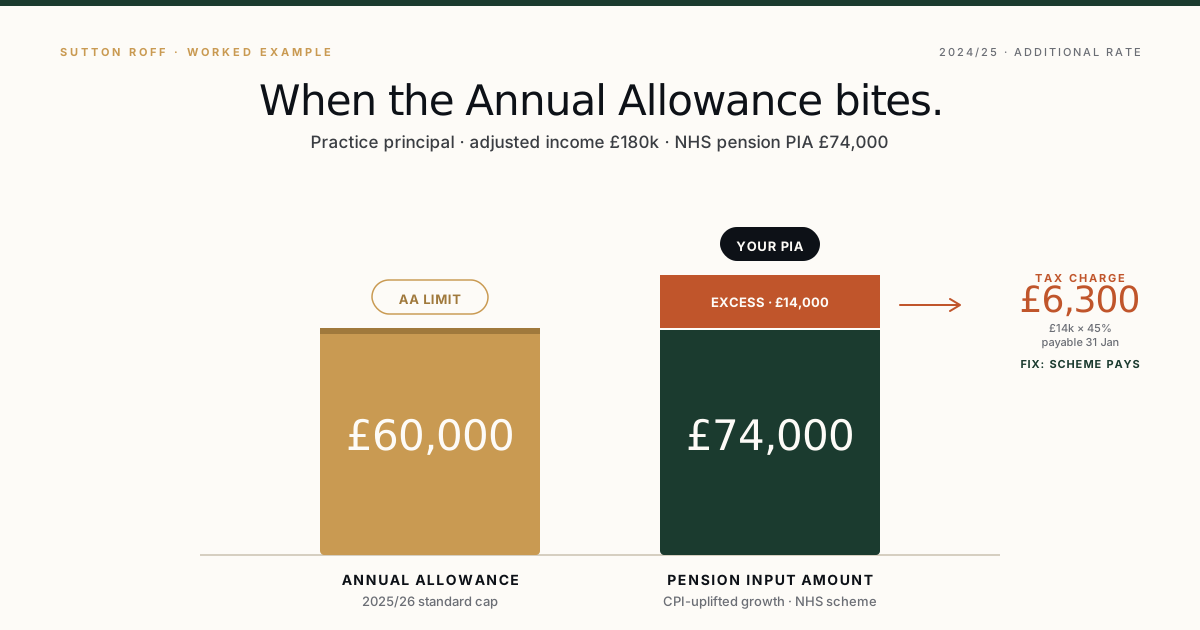
A practice principal, additional-rate taxpayer, with adjusted income of £180,000. NHS Pension PIA for 2024/25 is £74,000 (high-CPI year). AA is £60,000. The excess is £14,000, taxed at 45% = £6,300 charge.
If three previous years’ carry-forward allowance is fully used up (common after years of NHS service), the dentist owes the full £6,300 personally — but the growth is locked in the pension for decades. Without intervention, that’s a real cash hit with no offsetting access to the funds.
Scheme Pays — the fix
HMRC allows you to elect for the NHS scheme to pay the AA tax charge from your pension benefits, rather than from your own pocket. This is called Scheme Pays. Two flavours:
- Mandatory Scheme Pays — automatic if your PIA exceeds the AA and the charge exceeds £2,000. Election deadline: 31 July following the next 31 January self-assessment deadline.
- Voluntary Scheme Pays — available even when mandatory rules don’t apply (e.g. tapered AA situations). Useful and often missed.
Either way, the £6,300 above doesn’t have to come from your bank account. The charge reduces your future pension benefits instead — actuarially adjusted but typically a much better outcome than paying out cash today.
Backdated reclaims — the £30k+ retrospective
You can amend self-assessment returns up to four tax years back. If your previous accountant didn’t request your NHS Pension Statement and didn’t apply the AA correctly, we routinely recover £15,000–£30,000 in overpaid tax for new dental clients across those four years. Step one is requesting historic Pension Input statements directly from NHS Pensions (Pensions Online portal, or by post).
When this isn’t worth pursuing
- You’ve been on a stable salary with no PIA spikes and your accountant has actively managed the AA each year.
- You’ve already used Scheme Pays for the relevant years.
- You’re a basic-rate taxpayer (very rare for principals; the marginal-rate maths makes the charge smaller).
Key takeaways
- NHS Pension Annual Allowance charges are the single biggest tax leakage we see in dentistry — typically £6k–£15k per affected year.
- Request your Pension Input Amount from NHS Pensions every year. Without it, the AA can’t be calculated.
- The CPI methodology can inflate your PIA in high-inflation years — don’t assume it tracks “real” growth.
- Scheme Pays elections let the pension cover the charge instead of you. Mandatory deadline: 31 July following the relevant 31 January.
- You can amend self-assessment returns up to four tax years back. New clients routinely recover five-figure sums on review.
FAQ
Can I opt out of the NHS Pension partially?
Yes — you can scale back your NHS sessions (reducing pensionable income), or switch to a partial scheme like the Mid-Practice Pensions Plan. Total opt-out forfeits future NHS Pension benefits permanently — consider carefully.
How is “scheme pays” calculated?
Scheme Pays lets the NHS Pension scheme pay your AA charge directly, deducted from your eventual pension benefits. The actuarial reduction depends on your age at the charge year — typically each £1 of charge reduces your pension by ~£0.05/year.
Does this affect my private pension contributions too?
Yes — the Annual Allowance is a single global limit across all your pensions. NHS Pension contributions count first; remaining headroom is what you can put into private SIPPs etc.
Are you a UK dentist who’s never had Scheme Pays explained, or never asked for your NHS Pension Input statement? Book a free 20-min review. If we find an unclaimed charge, the first call has typically saved the dentists we work with five figures. Specialist dental accountants.