
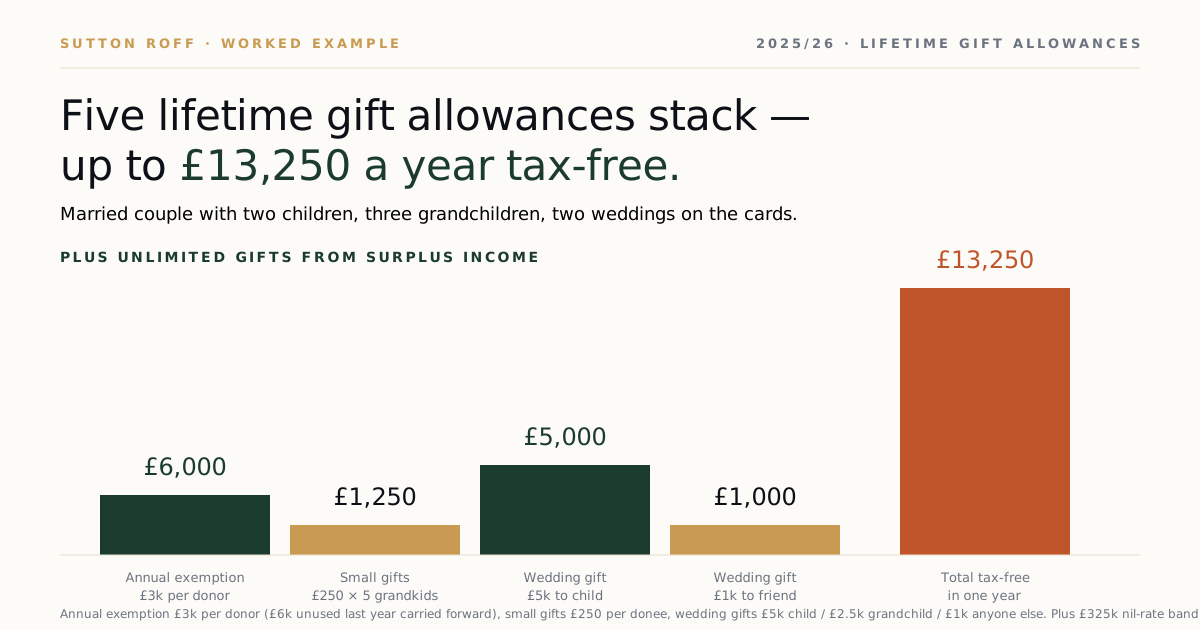
Five UK lifetime gift allowances stack to £13,250+/year per couple — plus unlimited gifting from regular surplus income, which most people have never heard of. Used annually for a decade, a couple can move £400,000+ to family without any IHT implications. We see estates pay 40% IHT on cash that could have been gifted at 0% if anyone had run the calculation 10 years earlier.
Five lifetime gift allowances that all stack
| Allowance | Amount | Per | Catch |
|---|---|---|---|
| Annual exemption | £3,000 | Per donor / year | 1 year carry-forward (£6k max) |
| Small gifts | £250 | Per recipient / year | Can’t combine with annual exemption to same person |
| Wedding gift — parent to child | £5,000 | Per wedding | Per parent (couple = £10k) |
| Wedding gift — grandparent to grandchild | £2,500 | Per wedding | Per grandparent |
| Wedding gift — anyone else | £1,000 | Per wedding | — |
| Normal expenditure out of income | Unlimited | Ongoing | Must be from income (not capital), regular, no lifestyle drop |
| Charity / political | Unlimited | Anytime | Outside IHT entirely |
Plus the seven-year rule for larger gifts: anything above the annual allowances is a Potentially Exempt Transfer (PET). Survive 7 years from the gift date and it falls out of your estate completely. Die between 3-7 years and taper relief reduces the IHT scaling from 80% reduction at 6+ years down to 20% at 3-4 years.
The Kapoors — married couple with two children and three grandchildren
The Kapoors are a couple in their 60s with two adult children and three grandchildren. Both children getting married in the next two years. The couple use every available gifting allowance:
This tax year:
- 2 × annual exemption (one per spouse): £6,000
- 5 × small gifts to different people (e.g. grandchildren and friends): £1,250
- Wedding gifts to children: £5,000 + £5,000 = £10,000 (one this year, one next)
- Total tax-free this year alone: £17,250
Plus normal expenditure out of income: £24,000/year (£2,000/month) sent to grandchildren’s education trust from regular pension and dividend income, with sufficient income remaining to maintain lifestyle. Because this comes from income (not capital) and is regular, it’s outside IHT entirely.
Annual lifetime giving without any IHT consequence: £41,250+. Over 10 years, that’s £412,500 moved from estate to family, immediately outside IHT and helping the next generation while the donors are alive to see it.
Bigger gifts and the seven-year clock
Larger one-off gifts (beyond the small allowances above) are PETs. If you’re 65 and gift £200,000 to your child, surviving 7 years takes it out of your estate completely. Die before 7 years and the gift becomes part of your IHT calculation, with taper relief between 3 and 7 years.
Critical: PETs use up the £325,000 nil-rate band first. So a £400,000 gift made 4 years before death uses all of the donor’s NRB, leaving the rest of the estate fully exposed. Big gifts work — but the timing and order of operations matters.
The “reservation of benefit” trap — keeping the rent kills the gift
You can’t gift an asset and keep using it. The classic example: gifting your home to your children but continuing to live in it rent-free. HMRC treats this as a “gift with reservation of benefit” (GROB) — the asset stays in your estate for IHT regardless of legal ownership.
The fix: pay full market rent to your children if you continue to live in the gifted property. The rent must be commercial (and reviewable), and you must actually pay it. Done correctly, the gift sits outside the estate after 7 years.
The same trap catches landlords gifting BTLs while continuing to receive the rent. Covered in detail in our IHT on rental properties piece.
Trusts as a gifting vehicle
Outright gifts work but give the recipient full control. Trusts allow the donor to make a gift for IHT purposes while retaining family-control levers — useful where the recipient is a minor, or where the donor wants to preserve flexibility about timing.
Three main UK trust types:
- Discretionary trust — trustees decide who gets what among a class of beneficiaries. Gifts in are Chargeable Lifetime Transfers (immediate IHT at 20% above NRB) but do start the 7-year clock.
- Bare trust — recipient becomes absolutely entitled at age of majority. Treated as a PET; growth is the recipient’s for tax.
- Family Investment Company (FIC) — modern alternative to discretionary trusts. Gifts of share value to children fall outside the estate over time; parents retain voting control. We covered FIC structuring in our IHT piece on rental property — they work for non-property assets too.
What happens when the donor receives interest or dividend income on a gifted asset
If you gift cash that gets invested in a building society account, the interest is the recipient’s income — they pay any tax. Same for dividends on gifted shares.
For minor children: the parental settlements rules can attribute investment income above £100/year back to the parent for tax purposes. So gifting £20,000 of cash to a 7-year-old child: the £600 of interest in a year is treated as the parent’s income because it’s above £100. Bare trusts and Junior ISAs structure around this.
When this is a bad idea
Don’t gift assets you’ll later need. Once gifted, you can’t take them back without triggering GROB rules. Plan with retained capital and income to last your lifetime first.
Don’t try to “spread” a £40,000 gift across 4 years’ annual exemptions retrospectively — the small-gift allowances apply to gifts in the year they’re made. Backdating doesn’t work.
Don’t ignore the IHT impact on the recipient if they die soon after. A child who receives £200,000 and dies before spending it has a larger estate that may push them above their own nil-rate band.
Key takeaways
- Annual exemption: £3,000 per donor, can carry forward one year (£6,000 max).
- Small gifts: £250 per recipient — but can’t combine with annual exemption to same person.
- Wedding gifts: £5k from parent / £2.5k from grandparent / £1k from anyone else.
- Normal expenditure out of income — unlimited if regular and from income, not capital.
- PETs above the allowances need 7 years to exit estate; taper between 3-7 years.
- Gift with reservation of benefit (keep using gifted asset) keeps it in estate.
FAQ
What counts as “regular surplus income”?
Income (not capital) that exceeds your normal living expenses, given regularly to family or charity. Pension income, dividend income, salary surplus — provided you maintain your standard of living. Documented well, completely outside IHT regardless of amount.
Do gifts need to be in writing?
Not legally, but yes for IHT purposes — you need evidence of date, amount, recipient and intent. Bank statements work; a simple letter or family record sheet of gifts dramatically helps your executor explain to HMRC.
Does gifting house deposits count as exempt?
Yes if it falls within an allowance (annual exemption, wedding gift, etc.) or if you survive 7 years (PET). Outside allowances, a £30k house deposit is a Potentially Exempt Transfer that escapes IHT after 7 years.
Estate above £1m and never mapped your gifting capacity? Book a free 20-min review — we’ll itemise the allowances, identify whether normal-expenditure-out-of-income applies for you, and structure a multi-year gifting plan around the 7-year clock. Specialist UK estate planning accountants.